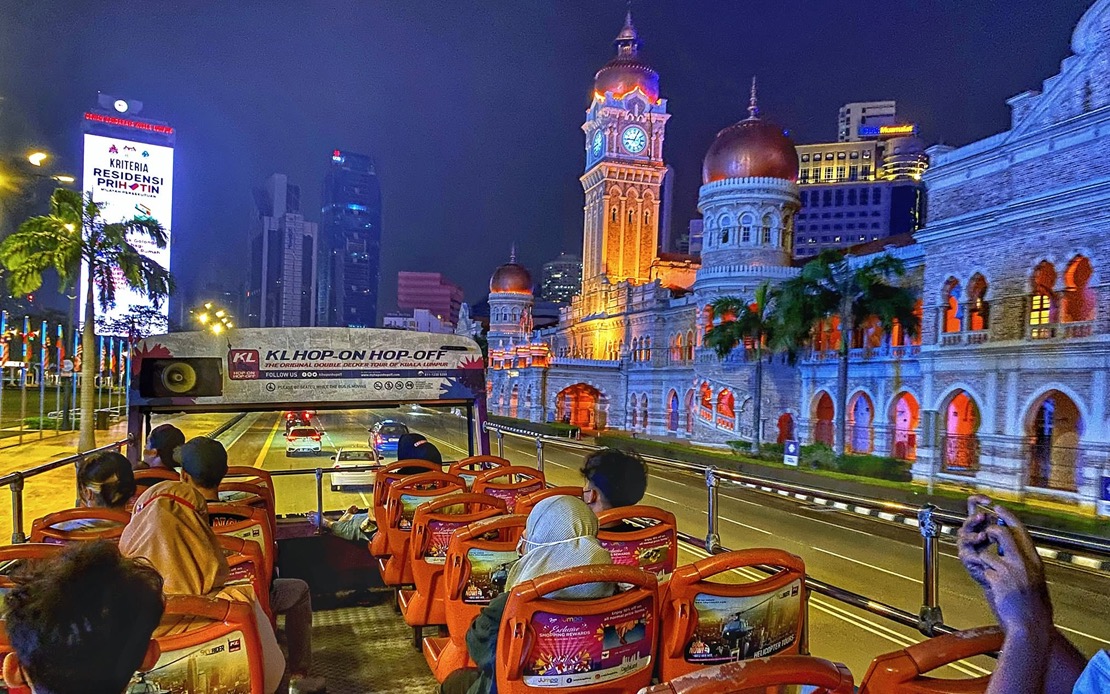
In a strategic move to energise domestic tourism ahead of Visit Malaysia 2026, Tourism Malaysia and KL Hop-On Hop-Off operator Elang Wah Sdn Bhd unveiled a collaborative campaign in Kuala Lumpur on June 24 that harnesses the visibility of iconic tourist buses to showcase the nation's diverse attractions to local travellers.
The partnership underscores the government's commitment to strengthening internal travel markets, which have demonstrated remarkable resilience and growth. Datuk Seri Tiong King Sing, the Minister of Tourism, Arts and Culture, emphasised that domestic tourism continues to function as a cornerstone of Malaysia's broader tourism strategy, directly contributing to economic expansion, employment generation, and the development of communities across the country.
Through this initiative, Tourism Malaysia positions domestic travellers as custodians of national tourism experiences, encouraging Malaysians to venture beyond their immediate surroundings and engage with the distinctive cultural, natural, and architectural heritage embedded within their own nation. By leveraging the extensive reach of hop-on hop-off bus networks—which operate across major urban centres—the campaign strategically places tourism promotion where potential visitors actively move through city landscapes, making the messaging both visible and accessible.
Six specially designed buses will serve as mobile billboards, their external wraps depicting major tourism destinations spanning all 15 states and three federal territories. The selection of featured landmarks deliberately balances Malaysia's geographic and cultural diversity, ranging from the architecturally significant Sri Sendayan Mosque in Negeri Sembilan to the geological wonder of the Pinnacles of Mulu in Sarawak. This approach ensures that passengers and pedestrians encounter representations of attractions beyond their immediate locality, potentially inspiring exploration of regions they might not otherwise consider visiting.
Innovation forms a central pillar of the campaign's design. Each bus wrap incorporates interactive QR codes that bridge the gap between passive observation and active engagement. Passengers and curious onlookers can scan these codes to access comprehensive information about Visit Malaysia 2026 travel packages, the official Calendar of Events, and dedicated state-level tourism promotional websites. This digital integration transforms the buses into more than mere advertising vehicles—they become interactive information kiosks, allowing individuals to pursue their interest in specific destinations at their own pace.
The timing of this campaign reflects solid momentum in Malaysia's domestic tourism sector. During 2025, domestic visitor numbers reached 290.1 million, representing a robust 21.3 per cent increase compared to the 260.1 million visitors recorded in 2024. This growth trajectory demonstrates that Malaysian travellers increasingly prioritise local exploration, whether driven by economic considerations, convenience, or a renewed appreciation for domestic offerings. The figures suggest that pandemic-era travel patterns—when many Malaysians redirected leisure spending toward local destinations—have evolved into a sustained behavioural shift rather than temporary adjustment.
Financial indicators reinforce the sector's strength. Domestic tourism expenditure climbed to RM121.0 billion in 2025, up 13.3 per cent from RM106.7 billion in 2024. This substantial injection of consumer spending circulates through local economies, supporting hospitality workers, restaurant operators, transportation providers, and countless other service sectors that depend on visitor traffic. For states outside the Klang Valley and Penang, which traditionally capture disproportionate tourism volumes, such campaigns potentially redistribute visitor flows and economic benefits more equitably across the country.
The campaign gains particular significance as Malaysia prepares for Visit Malaysia 2026, a national tourism initiative designed to elevate the country's profile as a regional destination and attract international visitors. By strengthening domestic tourism foundations and encouraging local travellers to develop familiarity with their nation's attractions, Tourism Malaysia creates a reservoir of informed, engaged advocates who can authentically promote Malaysia to overseas visitors. Domestic travellers who personally experience quality tourism infrastructure and distinctive offerings become credible ambassadors, their recommendations carrying weight beyond any marketing campaign.
For the hop-on hop-off sector specifically, the partnership offers tangible benefits through enhanced brand exposure and passenger engagement. The campaign positions these operators as integral stakeholders in Malaysia's tourism ecosystem rather than peripheral service providers, potentially elevating their status within the industry and creating opportunities for expanded operations or service enhancements. Urban tourism operators have increasingly recognised the commercial potential of domestic travel markets, and this formal collaboration signals government support for their continued growth and innovation.
The interactive QR code strategy demonstrates sophisticated understanding of contemporary consumer behaviour. Rather than relying solely on static imagery and text, the campaign recognises that modern travellers research destinations through digital channels before committing to visits. By embedding direct pathways to official tourism information and booking systems onto buses—environments where potential customers already congregate—Tourism Malaysia removes friction from the discovery-to-booking journey. This approach particularly appeals to younger Malaysian demographics increasingly comfortable conducting travel research on mobile devices.
Looking forward, this campaign represents a template for domestic tourism promotion that other Southeast Asian nations may observe with interest. Malaysia's demographic diversity, geographic spread, and developing digital infrastructure create conditions where campaigns simultaneously serving informational, promotional, and experiential functions can yield measurable results. As regional competitors intensify efforts to capture domestic tourism spending, initiatives like this demonstrate that sustained visibility, strategic messaging, and technological integration collectively drive traveller interest and expenditure.
The collaboration also reflects broader recognition that Visit Malaysia 2026 success depends fundamentally on the strength of underlying tourism infrastructure and service quality. Encouraging domestic visitation serves as a rigorous testing ground for facilities, customer service standards, and destination readiness. By the time international visitors arrive in 2026, Malaysia's tourism sector will have benefited from years of experience serving increasingly discerning domestic customers, thereby ensuring that VM2026 experiences meet international expectations.

