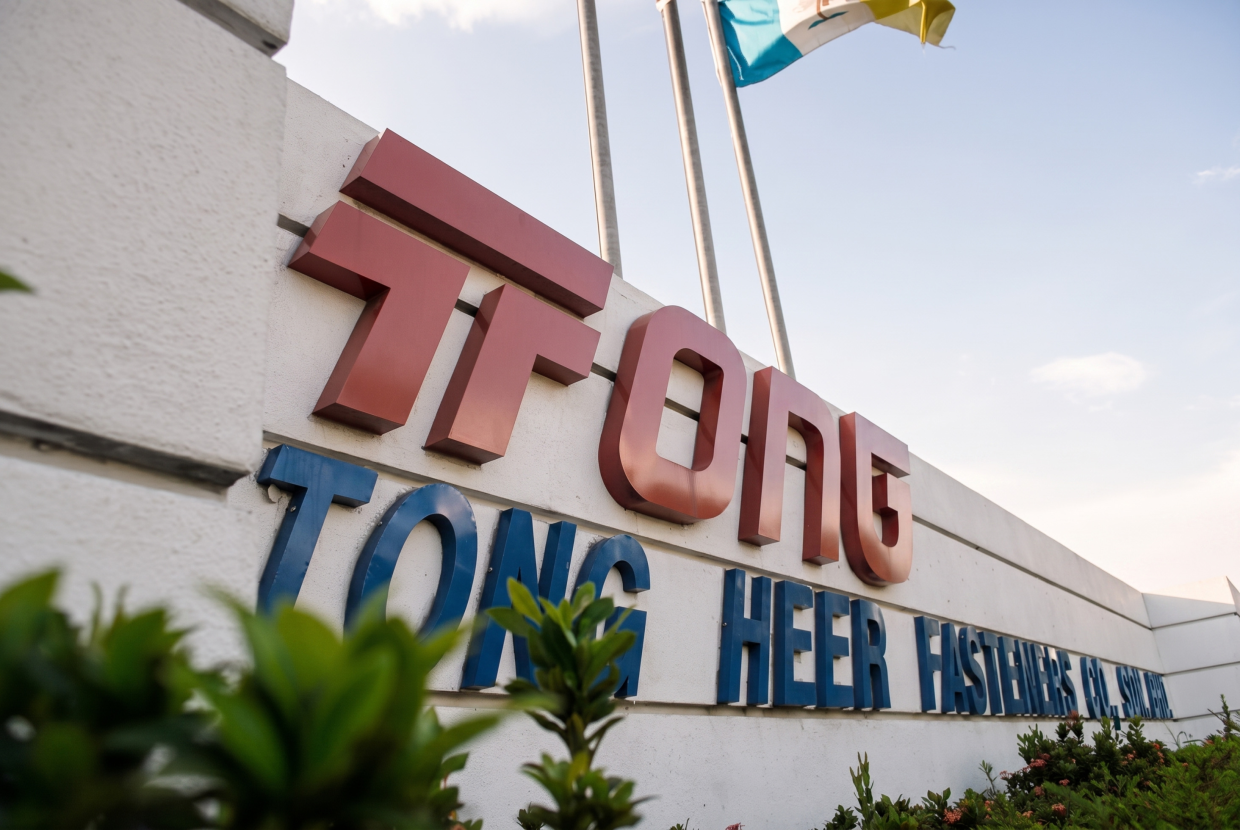
Major shareholders of Tong Herr are pushing forward with a privatisation proposal that would see the stainless steel fasteners and aluminium extrusions manufacturer delisted from Bursa Malaysia at RM2.55 per share. The offer represents a 34.2% uplift from the company's previous closing price of RM1.90, signalling a meaningful return for existing shareholders even as it signals the end of the company's public market tenure.
Allrich Corp and Richard Holdings Ltd, which respectively control 39.68% and 31.95% of Tong Herr's equity, have jointly tabled the delisting proposal alongside their associated parties and persons acting in concert. Together, these interests command approximately 74.5% of the issued share capital—or roughly 114.38 million shares—giving them sufficient firepower to push the transaction through if minority shareholders agree. The Bursa Malaysia filing details a methodology grounded in recent trading data, with the RM2.55 price calibrated to reflect the company's closing price and volume weighted average price through August 5, 2026, yielding a 41.7% premium to the RM1.80 closing price recorded on that specific date.
The mechanics of the proposed exit hinge on a selective capital reduction and repayment exercise, a structure that would effectively return cash to shareholders while simultaneously reducing the company's public footprint. Upon completion, the joint offerors intend to pursue immediate delisting with Bursa Securities, removing Tong Herr from the Main Market and terminating its listing status altogether. This approach contrasts with conventional takeover bids, offering minority shareholders both a defined exit price and certainty of outcome once regulatory and shareholder approvals materialise.
The fundamental driver behind the privatisation push is the company's chronic illiquidity—a problem that has persisted despite Tong Herr's operational presence in the market. Over the past three years, the company has recorded an average daily trading volume of just 21,075 shares, representing a mere 0.05% of its free float. This anaemic activity level underscores a persistent disconnect between the company's intrinsic value and its ability to trade freely, a dynamic that frustrates both management and patient shareholders seeking to reallocate capital. For Malaysia's equity market, Tong Herr exemplifies a broader structural challenge: numerous mid-cap industrials remain listed despite minimal investor engagement, creating artificial drag on the stock exchange's efficiency metrics.
The joint offerors contend that privatisation would liberate Tong Herr from the compliance costs, governance overhead, and management distraction inherent to maintaining listed status. By removing these burdens, the company could theoretically redirect resources towards organic expansion and competitive positioning within the fastener and extrusion sectors. This rationale resonates particularly for manufacturing-focused businesses operating in commodity-adjacent markets, where quarterly reporting cycles and investor relations demands may outweigh the liquidity benefits of public equity. The proponents further argue that privatisation enables immediate liquidity for shareholders trapped in an illiquid position, transforming a theoretical holding into realised cash at a material premium.
Approval architecture for the transaction remains complex and multi-layered. Non-interested shareholders must grant consent via special resolution at an extraordinary general meeting, requiring both a numerical majority and 75% support by voting value. Additionally, the proposal must not attract opposition from more than 10% in value of votes cast by non-interested parties—a threshold that effectively grants veto power to any coalition commanding one-tenth of the non-interested shareholding. Following shareholder approval, confirmation from the High Court remains mandatory, introducing judicial scrutiny into the capital reduction process and adding an additional checkpoint against potential unfairness to minority interests.
Tong Herr's non-interested directors now bear responsibility for evaluating the proposal and determining the company's formal response. Their deliberation will likely weigh the premium offered against minority shareholder expectations, the company's intrinsic value under various scenarios, and the broader implications of loss of listing status. For independent board members, the challenge involves balancing fiduciary duties to all shareholders against pressure from controlling shareholders who view the public market structure as unnecessary overhead. The company has signalled that further announcements will follow once these internal discussions conclude, suggesting that the formal regulatory journey remains in its early stages.
The privatisation bid arrives amid broader reappraisal of Malaysia's equity market composition. Regulators have increasingly flagged concerns about listed companies that operate with minimal trading activity, consuming market infrastructure and governance resources while contributing negligible liquidity to the broader ecosystem. The Tong Herr proposal, if successful, would represent one data point in an incremental rationalisation trend—a managed reduction in the number of low-liquidity lingers on the Main Market. For investors, the transaction highlights the importance of liquidity assessment when evaluating smaller-cap equity holdings; even solvent, operationally sound businesses can become stranded securities if institutional and retail participation does not materialise.
The offer price of RM2.55 sits at what appears to be a fair valuation threshold, benchmarked against recent trading data rather than audacious assumptions about future growth. The 34.2% premium to the last close suggests the joint offerors are prepared to pay a meaningful price to achieve certainty of exit and eliminate the friction of public market ownership. For shareholders who have endured years of minimal price discovery, the proposal offers a tangible pathway to realise trapped value. Conversely, dissenting shareholders will need to construct a compelling argument that the company's privatisation potential substantially exceeds the offered price, a case that becomes harder to sustain given the documented trading vacuum.
The wider Malaysian business context matters here as well. Tong Herr's core business—fasteners and extrusions—serves industrial customers across automotive, electronics, and construction segments, all of which have experienced cyclical pressures in recent years. A privatised structure could theoretically enable more aggressive strategic pivots, customer concentration bets, or capital allocation decisions that public market sensitivity would normally discourage. Conversely, the loss of public equity currency might constrain the company's ability to pursue acquisitive growth or access capital markets for expansion. The trade-offs between strategic flexibility and capital availability will ultimately shape the company's competitive trajectory under private ownership.
As the process advances, Malaysian market observers should monitor the non-interested shareholders' voting patterns and any expressions of dissent. The transaction mechanics suggest that approval is likely if management and the board conclude the offer represents fair value, given the controlling shareholders' substantial stake. However, if independent directors identify material fairness concerns or if minority shareholders mobilise coordinated opposition, the deal could face headwinds. For now, the proposal remains in the deliberation phase, with regulatory and shareholder responses still to come. The outcome will carry implications not only for Tong Herr stakeholders but also for the broader conversation about listed company exit strategy and market efficiency in Malaysia.

