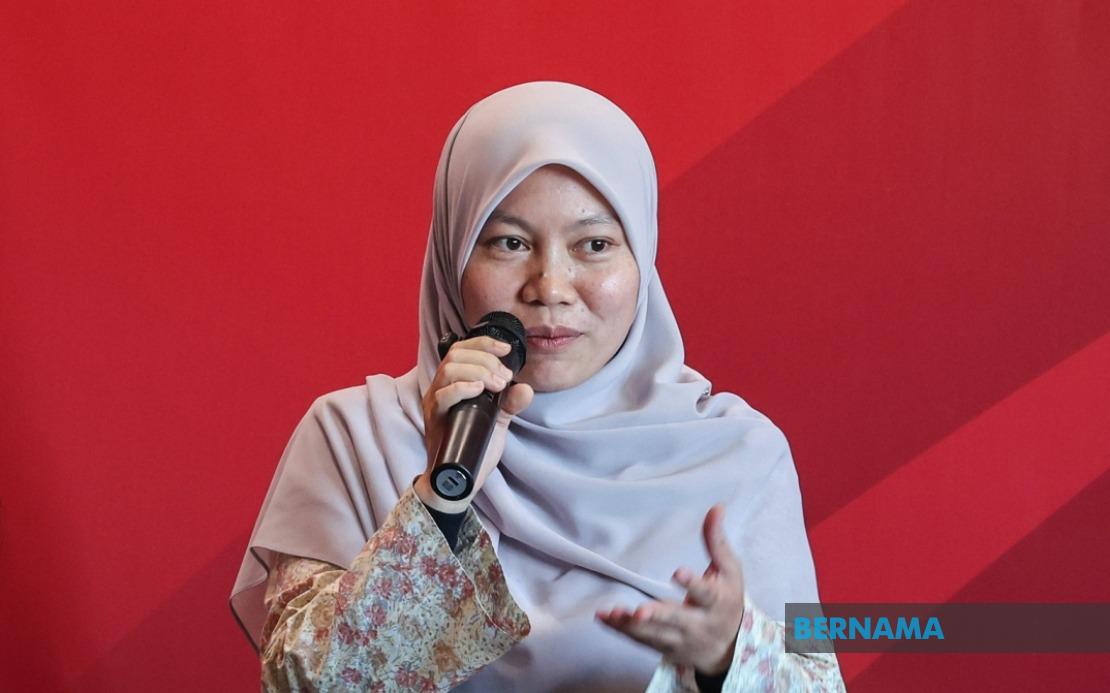
The Tiram state seat has emerged as one of the most strategically significant contests in the 16th Johor state election, with Pakatan Harapan's decision to field DAP candidate Nor Zulaila Abd Ghani marking an audacious attempt to wrestle control from Barisan Nasional in what has historically been one of the coalition's safest territories. The 38-year-old candidate, who serves as private secretary to Deputy Finance Minister Liew Chin Tong, is making her first bid to represent a Malay-majority constituency where nearly 60 per cent of the 117,000 registered voters are Malays. Political observers have characterised the move as a calculated risk that carries significant symbolism for PH's broader electoral strategy in the state.
Tiram's electoral history reveals a complex political narrative that complicates assumptions about the seat's allegiances. While BN has dominated the constituency since 1959, PKR—under the PH banner—managed to claim victory in 2018 before the coalition relinquished it four years later when BN reclaimed the seat in 2022. This pattern of volatility, coupled with the relatively narrow margins in recent contests, suggests that demographic shifts and voter mobilisation tactics may prove decisive in determining which coalition ultimately prevails. The seat's recent political fluctuations have transformed it into a microcosm of broader contests unfolding across Malaysia's electoral landscape, where traditional strongholds have become increasingly competitive.
Nor Zulaila acknowledges that her candidacy represents a departure from conventional political strategy. By being the first DAP candidate to contest the Malay-majority seat, she is directly confronting entrenched perceptions about the party's appeal among Malay voters—a formidable challenge that many observers regard as verging on political peril. Yet in her interview with Bernama, she reframed her decision as a principled commitment to democratic participation rather than a reckless gambit. She articulated a pragmatic platform focused initially on addressing granular local concerns such as hawker permits and street infrastructure before tackling larger systemic issues including traffic management that would require coordination across multiple governmental tiers. Her positioning emphasises accessibility and incremental problem-solving over sweeping ideological commitments.
The traffic congestion afflicting Tiram residents represents the constituency's most pressing grievance and serves as a litmus test for any candidate's credibility. The congestion has cascading effects, forcing motorists to divert through smaller residential roads and village thoroughfares, creating hazardous conditions where overloaded heavy vehicles now traverse neighbourhoods designed for local traffic. Residents like Farah, a 34-year-old Kampung Sungai Tiram resident, articulate frustration not about stagnation but rather about development that has failed to maintain pace with demographic growth and vehicular expansion. Her observation that Tiram's infrastructure planning has become obsolete—unable to accommodate contemporary realities—captures a sentiment that transcends party affiliation and speaks to widespread disappointment with governance continuity.
Barisan Nasional's candidate, Datuk Abdul Halim Suleiman, brings substantial political credentials to the contest. As a former two-term Puteri Wangsa assemblyman, current Tebrau UMNO division chief, and Dewan Negara senator, he represents the establishment's attempt to retain influence through fielding an experienced figure with longstanding institutional connections. His campaign messaging emphasises coordinated governance and stakeholder consultation, proposing a structured masterplan for development that would integrate input from local authorities, federal agencies, developers, and community representatives before implementation. This framework ostensibly addresses resident frustrations about haphazard or uncoordinated development, though it also reflects acknowledgment that traffic and infrastructure challenges require inter-governmental cooperation beyond the reach of individual state representatives.
A third candidate, Dr Harith Fakhrudin Abdul Malek from Parti Bersama Malaysia, similarly identifies traffic congestion and road safety as paramount concerns while contextualising these as long-standing deficiencies spanning more than a decade. His presence in the race, though unlikely to determine the ultimate outcome, reflects broader electoral fragmentation that may influence final vote distributions, particularly if specific demographic segments view him as an ideologically preferable alternative. The three-cornered contest introduces additional uncertainty into turnout predictions and coalition calculations, potentially affecting how votes distribute across competing camps.
Political analyst Dr Mazlan Ali has identified Tiram as a genuine battleground where PH retains meaningful chances of victory, though the outcome hinges critically on voter participation rates. He characterises BN's 2022 victory with a 9.4 per cent majority as potentially misleading, noting that turnout in that election hovered around 50 per cent—well below 60 per cent in some instances. This extraordinarily low participation rate raises the possibility that BN's victory reflected abstention by certain voter cohorts rather than robust grassroots support, a distinction with profound implications for 2024. Mazlan's analysis suggests that if participation exceeds 75 per cent in Saturday's polling, PH could secure a narrow advantage capable of reclaiming the seat.
Demographic realignment may further influence Tiram's electoral outcome. Mazlan anticipates that Chinese voters will participate in significantly greater numbers than during the previous Johor state election, a trend he attributes to recent political developments that have reportedly alienated non-Malay and middle-class constituencies. These alienating factors include reported cooperation between PAS and BN in specific constituencies and ongoing controversies surrounding former Prime Minister Datuk Seri Najib Tun Razak. If Chinese voter mobilisation materialises at anticipated levels and translates into PH support, the coalition could leverage this surge to offset any Malay voter defections, thereby altering the constituency's competitive equilibrium.
Tiram's electoral trajectory reveals considerable instability in voter preferences when compared against BN's earlier dominance. The coalition secured overwhelming majorities of 74.6 per cent in 1995, 73.0 per cent in 2004, and 31.7 per cent in 2008—representing a dramatic erosion of support even before PH's 2018 breakthrough. PH's 2018 victory with a 16.1 per cent majority demonstrated the seat's susceptibility to political currents and persuasion, contradicting portrayals of Tiram as immovable BN territory. This historical volatility provides grounds for both coalitions to harbour genuine victory hopes, though it also illustrates how marginal shifts in turnout composition or voter sentiment can produce dramatically divergent outcomes.
For Malaysian observers, the Tiram contest encapsulates broader questions about coalition resilience and voter behaviour in an era of heightened political competition. The seat exemplifies constituencies where traditional demographic advantages no longer guarantee victory, where local governance competence and infrastructure responsiveness can overcome partisan loyalty, and where turnout mechanics determine electoral outcomes as much as ideological persuasion. The presence of three-cornered competition adds additional complexity to predictive models, potentially fragmenting support in ways that previous elections did not demonstrate. Whether Nor Zulaila's gamble yields breakthrough results or reinforces DAP's challenges in Malay-majority constituencies will carry significance far beyond Tiram itself, signalling broader possibilities for coalition realignment across Malaysia's political landscape.

