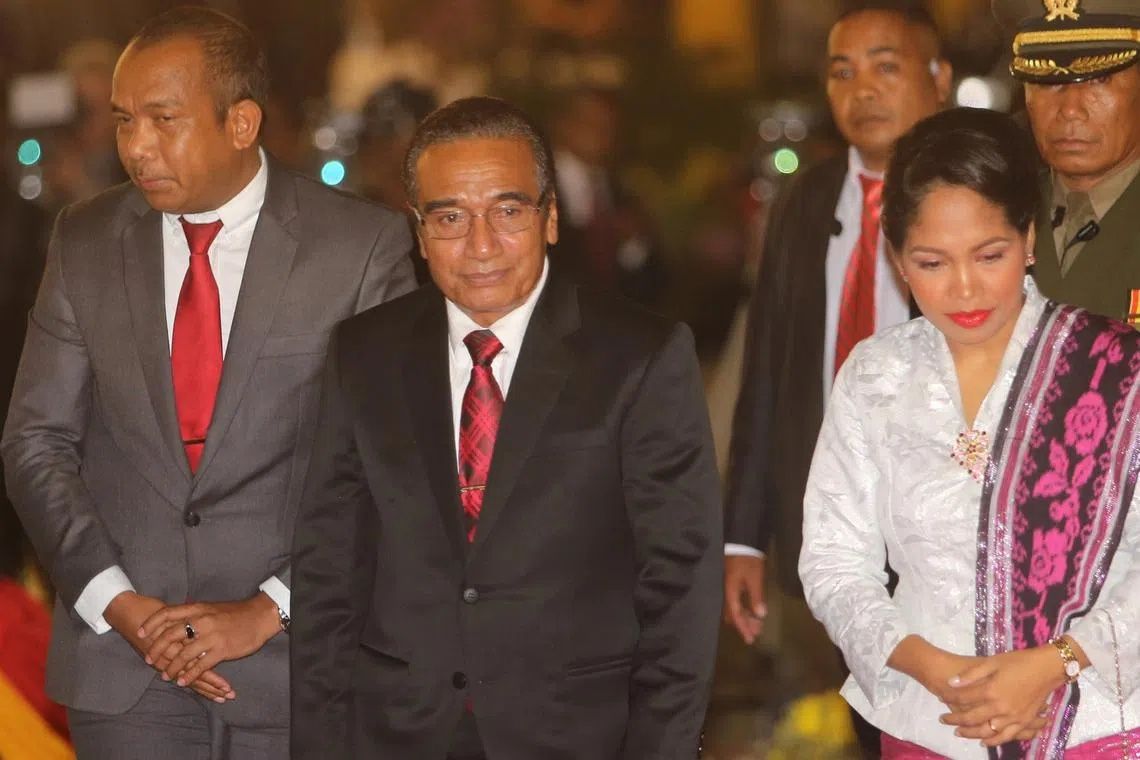
Timor-Leste entered a period of national mourning on June 22 following the death of former president Francisco "Lu-Olo" Guterres, who passed away over the weekend at a hospital in Malaysia. The 71-year-old figure towered over his nation's modern history, having spent more than four decades engaged in the armed and political resistance that culminated in East Timor's independence from Indonesia in 2002. His death marks the end of an era for a country whose founding generation of resistance leaders is rapidly diminishing.
The government of Timor-Leste immediately initiated the traditional protocols of state mourning, directing that flags be lowered to half-mast across all public institutions, government buildings, embassies and diplomatic missions abroad. The formal declaration came through official channels on Monday, signalling the gravity with which the nation regards the loss of one of its principal architects. Guterres's body is scheduled to arrive in Dili, the capital, on Tuesday, according to his brother Domingos Guterres, who informed the media that funeral arrangements are still being finalised with the family.
Guterres served as Timor-Leste's sixth president during a five-year tenure from 2017 to 2022, having captured the electorate's confidence with more than 57 percent of the vote in the 2017 presidential election. His ascension to the presidency represented the pinnacle of a lifetime devoted to liberation struggle and nation-building. Yet his grip on power proved temporary; when he sought reelection in 2022, he encountered defeat in a run-off ballot against Jose Ramos-Horta, a Nobel Peace Prize laureate whose victory demonstrated that even iconic independence fighters face electoral vulnerability when competing against other prominent resistance heroes.
Ramos-Horta, now occupying the presidential office that Guterres recently vacated, released a statement acknowledging his predecessor as a "great patriot" whose departure constitutes "a great loss for the nation". The language reflects a relationship between former rivals characterised by mutual respect rooted in shared sacrifice during the independence struggle, transcending the political competition that separated them at the ballot box. The government extended formal condolences to Guterres's immediate family, to Fretilin, the Revolutionary Front for an Independent East Timor party that he had previously led, and to the broader Timorese population.
Guterres emerged from modest origins, rising through the ranks of the resistance movement during Indonesia's 24-year occupation of East Timor, a period marked by systematic violence and repression that claimed an estimated 200,000 lives. His transformation from a young activist into a senior military and political commander reflected both personal courage and organisational capability. The independence victory of 2002, achieved through a combination of armed resistance and international diplomatic pressure, vindicated decades of struggle by people like Guterres who refused to accept foreign domination.
The Guterres family has appealed for privacy during this period of grief and reflection, asking the public and media to respect their space as they mourn and contemplate his legacy. In their statement, they wrote: "We ask everyone to respect the family's privacy at this difficult time, as we join in prayer and pay tribute to his memory, his legacy, and his dedication to the Timorese people." This request underscores how intensely Guterres remains woven into the national consciousness, with ordinary citizens feeling entitled to participate in collective mourning.
Regional leaders have begun offering their own tributes to the departed statesman. Malaysian Prime Minister Datuk Seri Anwar Ibrahim conveyed his sorrow at Guterres's passing and sent condolences to both the family and the people of East Timor. Anwar stated that "Malaysia mourns his passing alongside the Timorese people. He will be remembered here with respect and affection." The involvement of the Malaysian prime minister underscores Guterres's significance beyond his own nation and hints at the regional diplomatic relationships he cultivated during his presidency and military career.
Guterres's death arrives at a pivotal moment for Timor-Leste, a young nation still consolidating its institutions and confronting significant economic and security challenges. The loss of senior independence figures like Guterres raises questions about generational renewal in leadership and whether younger Timorese political figures can command the same moral authority. His passing also coincides with a period of regional rebalancing in Southeast Asia, where Timor-Leste's strategic location between Indonesia and Australia continues to hold geopolitical significance.
The former president's life embodied the trajectory of Southeast Asian decolonisation movements, representing a generation that sacrificed personal security and stability to achieve national self-determination. His ability to maintain relevance in national politics after independence, culminating in his 2017 presidential victory, demonstrated the enduring reverence with which Timorese citizens regard authentic liberation heroes. Yet his 2022 electoral defeat to another respected independence veteran illustrated that even monumental historical contributions do not guarantee political permanence in democratic systems.
As the nation enters its week of mourning, Timorese citizens and government officials will contemplate not only Guterres's personal achievements but also the broader implications of the independence generation's mortality for a nation less than two decades old. The week of official mourning provides space for this reflection, allowing Timor-Leste to honour a man whose name remains inseparable from the hard-won independence that defines the nation's very existence.

