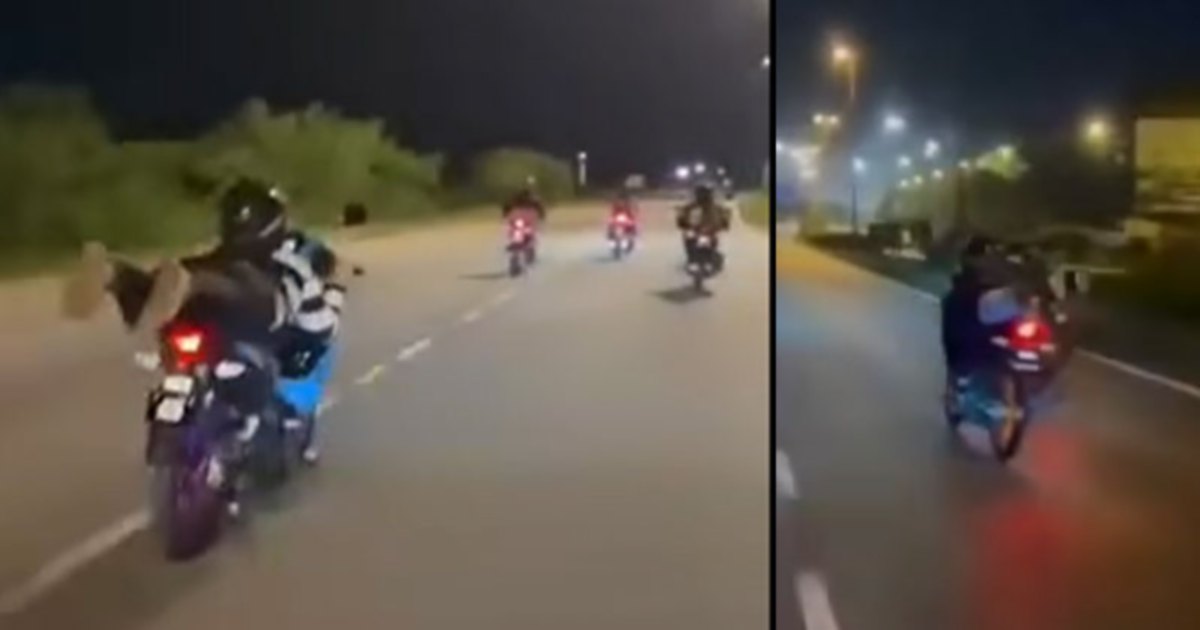
Authorities in Kuantan have detained three teenage girls following their involvement in a dangerous motorcycle stunt that rapidly spread across social media platforms. The incident occurred on Jalan Kuantan Bypass-Gebeng road, where the teenagers were filmed performing 'Superman' manoeuvres—a risky riding technique where operators lose control of their bikes momentarily to create a dramatic visual effect.
The viral nature of the stunt highlights an escalating concern among road safety officials and law enforcement agencies throughout Malaysia regarding reckless behaviour by young riders who seek online attention. The 'Superman' motorcycle trick has become increasingly popular among teenage motorists seeking to accumulate views, shares, and likes on social media platforms, despite the severe risks involved. This particular incident in Kuantan represents one of the more documented cases where authorities have successfully identified and apprehended those responsible for such dangerous public displays.
Motorcycle stunts of this nature carry substantial consequences for the riders themselves and pose genuine threats to other road users. The technique requires riders to deliberately lose grip on their handlebars while travelling at significant speeds, creating scenarios where collision with other vehicles, pedestrians, or roadside infrastructure becomes highly probable. Emergency responders have consistently documented serious injuries and fatalities resulting from such riding practices, making them among the most dangerous activities conducted on Malaysian roadways.
The police response demonstrates a growing determination to crack down on what authorities classify as deliberate traffic violations endangering public safety. By successfully tracking down and arresting the individuals responsible, law enforcement agencies aim to send a clear message that such behaviour will face legal consequences regardless of its entertainment value online. The arrests follow increased pressure from road safety advocates and the public who have become increasingly vocal about dangerous riding trends among teenagers.
Social media's role in amplifying and normalising these activities has drawn scrutiny from child safety experts and researchers. Content featuring motorcycle stunts, even when capturing the dangerous nature of the activity, tends to inspire imitation among younger audiences who may underestimate or disregard the serious injury risks. The algorithmic promotion of viral video content creates incentive structures that reward increasingly extreme behaviour, establishing a problematic feedback loop between dangerous actions and online engagement metrics.
This case emerges within a broader context of motorcycle safety concerns affecting Malaysia and the broader Southeast Asian region. Young riders, particularly those operating between the ages of 13 and 19, represent a demographic experiencing disproportionately high rates of motorcycle-related injuries and fatalities. Road safety statistics consistently reveal that excessive speed, stunt riding, and lack of protective equipment constitute primary risk factors in accidents involving teenage motorcyclists.
The legal framework governing such incidents in Malaysia provides law enforcement with multiple avenues for prosecution. Beyond basic traffic violation charges, authorities may pursue more serious offences related to endangering public safety, operating vehicles recklessly, and potentially charges related to the creation and distribution of content promoting illegal activities. The detention of these three teenagers suggests investigators are considering the full range of applicable charges rather than treating the incident as a minor traffic matter.
Parental involvement and family education represent crucial components in addressing this trend, according to road safety specialists. Many teenagers engaging in dangerous stunt riding may not fully comprehend the severity of potential consequences or may believe they possess sufficient control and skill to execute such manoeuvres safely. Educational initiatives targeting both teenagers and parents have become increasingly important as social media continues to expose younger generations to normalised depictions of hazardous behaviour.
The Kuantan Bypass-Gebeng corridor, as a designated major thoroughfare, carries substantial daily traffic volume from both private motorists and commercial vehicles. The decision by teenagers to conduct dangerous stunts in such a location magnified the public safety implications beyond the riders themselves. Other road users traversing the highway during the incident faced unexpected hazards created entirely by the deliberate actions of the teenage performers, raising questions about liability and collective responsibility for road safety.
Looking forward, this incident may prompt intensified surveillance and enforcement efforts along commonly identified locations where dangerous stunt riding occurs. Traffic police units throughout Pahang and other states have begun implementing more targeted operations addressing motorcycle stunting, viewing the problem as requiring sustained, coordinated responses rather than isolated incident responses. Community policing initiatives have also expanded to engage young people directly about the consequences of such activities.
The case also underscores the intersection between digital culture, youth behaviour, and public safety—a complex challenge without straightforward solutions. While law enforcement action addresses the immediate incident, longer-term prevention requires collaboration among schools, parents, social media platforms, and community organisations. These stakeholders must work together to cultivate cultures emphasising safety and responsibility rather than online notoriety among teenage riders.

