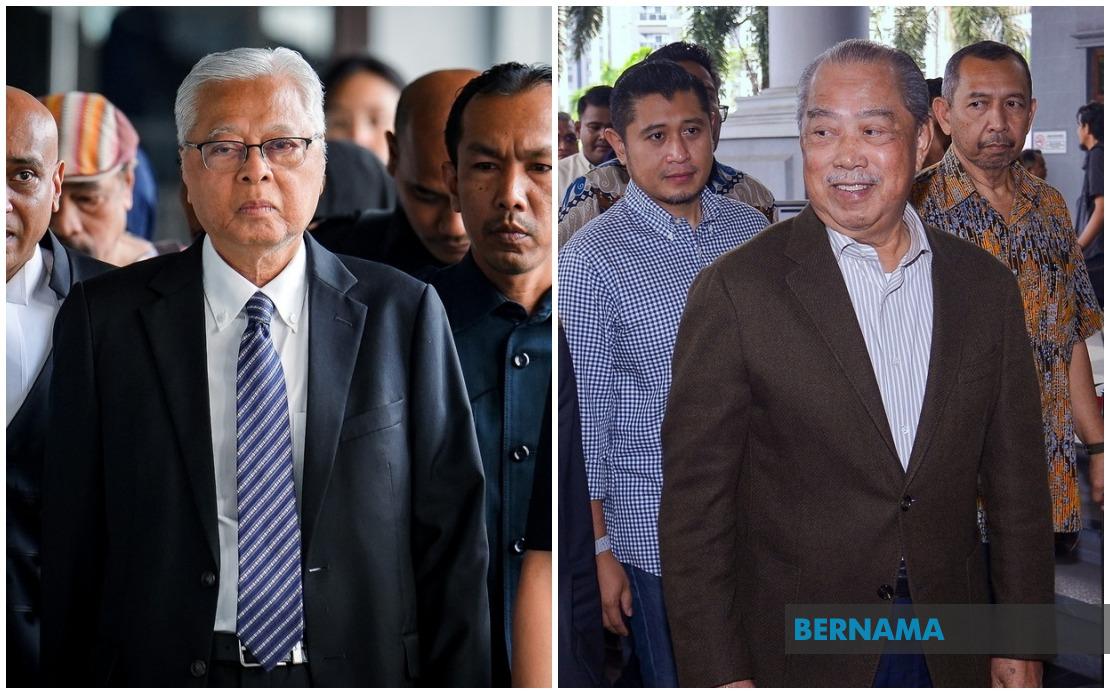
A singular convergence of Malaysia's recent political leadership unfolded at the Kuala Lumpur Court Complex on August 27 when three former prime ministers appeared for separate legal proceedings on the same day—an occurrence that veteran journalists describe as historically unique and unlikely to recur. The simultaneous presence of Datuk Seri Najib Tun Razak, Tan Sri Muhyiddin Yassin, and Datuk Seri Ismail Sabri Yaakob transformed the court complex into an epicentre of political and legal activity, drawing hundreds of media personnel and prompting extensive security arrangements that had not been anticipated on such a scale in recent Malaysian judicial proceedings.
Veteran court correspondent V. Anbalagan of Free Malaysia Today reflected on the magnitude of the moment, characterising it as a watershed event in Malaysian journalism. With decades of courtroom reporting experience spanning multiple administrations and political crises, Anbalagan emphasised that witnessing three former heads of government attending the same judicial venue simultaneously represented an occurrence entirely without precedent in his professional career. His assessment carries particular weight given the evolving nature of Malaysia's political landscape and the frequency with which senior government figures have faced legal scrutiny in recent years.
The rarity of such an occurrence extends beyond Malaysia's borders, according to Anbalagan's analysis. He suggested that the confluence of three former national leaders undergoing separate court proceedings at an identical location and time would be exceptionally uncommon in most jurisdictions, reflecting both the unique political dynamics at play and the accumulated legal challenges facing Malaysia's immediate past leadership. The journalist predicted that such an alignment of circumstances would prove extraordinarily difficult—if not impossible—to repeat, effectively cementing August 27 as a singular moment in the nation's democratic and judicial record.
The logistical and organisational challenges confronting media organisations proved substantial. Bernama TV news officer Siti Zanariah Nor Zin, drawing on sixteen years of journalism experience, described the situation as extraordinary within her professional memory. The staggered arrival times of the three former prime ministers and their respective legal representatives afforded the assembled media sufficient operational space to coordinate coverage and transmit real-time updates to their respective newsrooms. This carefully managed timeline prevented the kind of chaotic overlap that might have compromised journalistic access or compromised the security perimeter surrounding each proceeding.
Utusan Malaysia journalist Amirul Aiman Osman characterised the atmosphere as simultaneously hectic and controlled, having arrived at the Jalan Duta complex at 7 am to position himself for comprehensive coverage. Despite the congestion of television crews, photographers, and reporters competing for vantage points and documentary opportunities, the presence of robust security protocols prevented any escalation of tension or breach of decorum. The journalist's early arrival reflected the intensity of competition among media outlets to secure favourable positioning for what had quickly been recognised as a historically significant news event.
Authorities had mobilised substantial resources to manage the predictable challenges arising from such unprecedented circumstances. Personnel from the Sentul district police headquarters, court security officers, and the Palace of Justice police force coordinated their deployment across the court complex to maintain orderly proceedings and prevent disruption. A court official, speaking on condition of anonymity, revealed that preparations had commenced the previous afternoon, reflecting the seriousness with which judicial authorities approached the coordination challenges inherent in managing three simultaneous high-profile legal proceedings. The logistical groundwork proved essential in ensuring that the movements of the former prime ministers, their entourages, and the assembled media proceeded without incident.
Security infrastructure incorporated a granular system of categorised access passes, differentiating between the general public, journalists covering open proceedings, and those requiring access to video-link facilities. Between three and six distinct pass categories facilitated the orderly flow of people through the court complex while maintaining security integrity. Security officer Nik Zainab Jusoh confirmed that a comprehensive briefing held the preceding day ensured all personnel understood their responsibilities and remained alert to potential complications. Monitoring efforts concentrated on the upper floors adjacent to courtrooms where the three proceedings took place, whilst ground-level areas maintained stability and orderly movement throughout the day.
The three former leaders faced markedly different legal circumstances reflecting the diverse nature of allegations confronting Malaysia's recent executive leadership. Najib attended civil proceedings related to a USD5.64 billion suit initiated by 1Malaysia Development Berhad (1MDB) and its subsidiary, heard before Judicial Commissioner Mohamad Redzuan Idrus. This case represents one of the most significant financial litigation matters in Malaysian corporate history, encompassing allegations of misappropriation and misconduct spanning multiple years of Najib's tenure as prime minister.
Muhyiddin confronted criminal charges encompassing seven counts, with proceedings conducted before Judge Noor Ruwena Md Nurdin addressing allegations of abuse of power and money laundering connected to the Jana Wibawa programme. These criminal matters carry substantially more severe potential consequences than civil litigation, including the prospect of custodial sentences should conviction eventuate. The allegations reflect scrutiny of Muhyiddin's governance during his relatively brief tenure as prime minister and particular focus on the financial administration of government programmes during his administration.
Ismail Sabri faced distinct charges concerning the failure to declare substantial personal assets, including RM14.7 million in cash held domestically, significant holdings in multiple foreign currencies, and precious metal reserves. Judge Suzana Hussin presided over these proceedings, which concentrate on questions of transparency and compliance with asset declaration requirements incumbent upon holders of public office. Notably, Ismail Sabri posted bail of RM300,000 with one surety and departed the court complex at 11.43 am, suggesting a relatively straightforward bail hearing compared to more complex legal determinations his colleagues faced.
The August 27 convergence illuminates the challenging political trajectory Malaysia has navigated following the dramatic political transitions of recent years. The simultaneous appearance of three former prime ministers at a judicial venue underscores the multiple layers of legal accountability that have ensnared the nation's recent leadership, ranging from financial mismanagement allegations to governance failures and asset declaration violations. For Malaysian citizens and regional observers, the day symbolises both the judiciary's assertion of authority over even the nation's highest offices and the complex legacy of governance challenges that continue to occupy courtroom time and public attention.
The event carries particular significance for Malaysian democracy and the principle of accountability. That three former occupants of the highest executive office could simultaneously undergo judicial scrutiny—albeit for distinct offences—suggests institutional mechanisms capable of asserting checks on executive power, even retroactively and across political transitions. For regional peers observing Malaysia's governance trajectory, the spectacle of such judicial proceedings, openly covered by a free press, and managed through transparent security and judicial protocols, offers insight into the functioning of Malaysia's democratic institutions despite the substantial political turbulence the nation has experienced.

