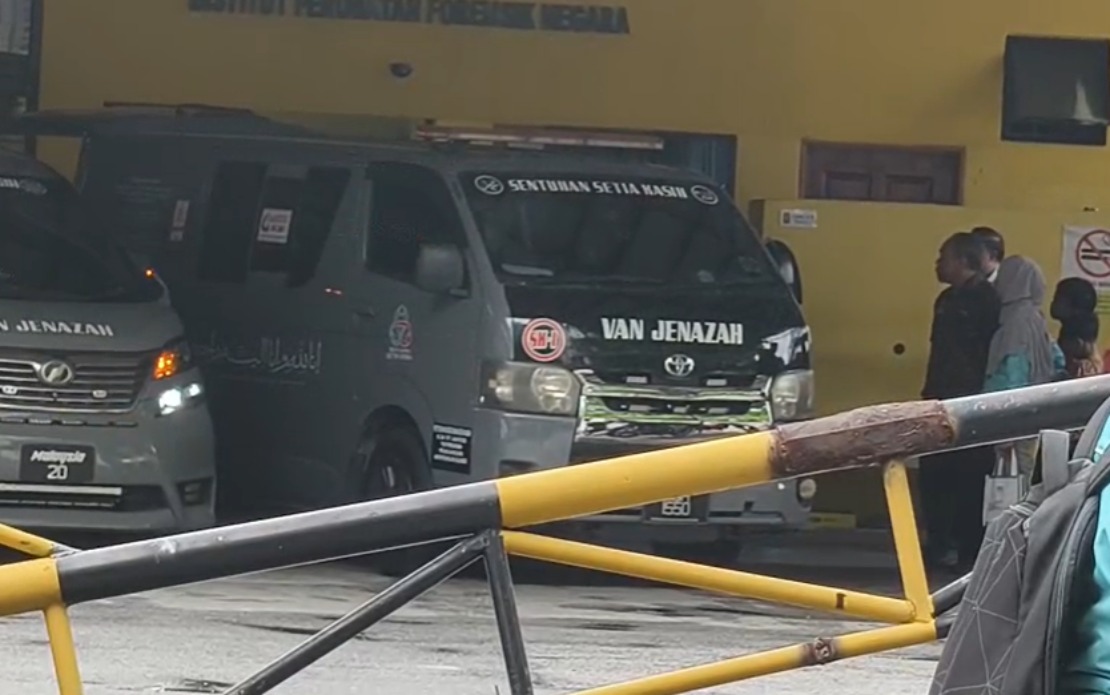
A fatal traffic accident involving a Malaysian Immigration Department (JIM) vehicle has claimed the lives of three members of a single family in Kuala Lumpur, with their remains now released for funeral rites and eventual burial in Perak. The National Institute of Forensic Medicine (IPFN) at Kuala Lumpur Hospital completed post-mortem examinations on Shaik Mohd Firdaus Shaikh Yahya, 53, and his daughters Siti Nor Sazlin, 25, and Siti Darwisyah Auni, 12, releasing their remains at approximately 5.45 pm on August 19 for handover to family members.
According to reports, the tragedy unfolded in the early morning hours of August 19 when the JIM Black Maria lorry, operating without passengers aboard, collided with multiple vehicles at the Maju Junction intersection on Jalan Sultan Ismail. The vehicle was reportedly en route to Chow Kit to conduct enforcement operations targeting undocumented migrants, with its beacon lights and siren activated at the time of the incident. The collision resulted in three fatalities and left another individual sustaining serious injuries.
Investigations suggest that the lorry, despite having its warning systems active, proceeded through the Maju Junction intersection against a red traffic light before striking a Proton Saga that was legitimately traversing the junction under a green light. The force of this primary collision caused the lorry to lose directional control and skid across the intersection, subsequently striking four pedestrians and an Inokom Matrix multi-purpose vehicle in its path. This sequence of events raises critical questions about the circumstances surrounding the lorry's movement through the junction and whether proper protocols were followed during the enforcement operation.
The family's remains will be transported to Jamiul Ehsan Mosque located on Jalan Pahang in Kuala Lumpur, where Islamic funeral rites including ritual washing, shrouding, and funeral prayers will be conducted. Following these ceremonies, the bodies will be conveyed to Kampung Air Hitam Labu Muslim Cemetery in Kampar, Perak, for final interment. This arrangement necessitates coordination between the family, religious authorities, and transportation logistics during what is undoubtedly an exceptionally difficult period for the relatives left behind.
The incident underscores ongoing concerns about the conduct of enforcement operations by government agencies in urban areas, particularly regarding vehicle operation during high-speed raids. The activated beacon lights and siren system, intended to alert other road users and facilitate safe passage, appear in this instance to have proven insufficient to prevent the tragedy. The fact that the lorry allegedly violated traffic signals raises questions about whether operators of government vehicles receive adequate training in defensive driving techniques and intersection safety protocols.
Traffic incidents involving government vehicles executing enforcement operations have periodically garnered public attention in Malaysia, prompting debates about balancing operational efficiency with public safety. While agencies such as the Immigration Department undertake necessary enforcement functions, the methods employed must remain compatible with established traffic regulations and safety standards that apply uniformly across all road users. This incident illustrates the potential consequences when such balance is compromised.
The collision has triggered a formal investigation under Section 41(1) of the Road Transport Act 1987, which addresses traffic offences and vehicle-related incidents. This provision allows authorities to examine circumstances surrounding the accident and determine whether any legislative breaches occurred. The investigation will likely examine the lorry driver's actions at the junction, the vehicle's maintenance condition, visibility conditions at the time, and whether standard operating procedures for enforcement operations were properly followed.
The loss of three family members in a single incident represents a profound tragedy with ripple effects extending through extended family networks and community circles. The death of a father and two daughters under such circumstances creates particular emotional and practical hardships for surviving relatives who must now navigate grief while managing funeral arrangements and potential legal proceedings that may follow the investigation's conclusion. Such incidents often prompt families to reflect on the fragility of life and the unpredictable nature of traffic accidents, regardless of precautions taken.
From a broader perspective, this accident contributes to Malaysia's road safety discourse at a time when traffic fatalities remain a significant public health concern. Annual road accident statistics consistently demonstrate that collisions at major junctions, involving multiple vehicles and pedestrians, contribute substantially to injury and mortality figures nationwide. The involvement of a government vehicle executing official duties adds complexity, as it raises questions about institutional responsibility and whether agencies adequately prioritize safety protocols during enforcement operations conducted during off-peak hours when road conditions and visibility may present additional challenges.
The incident may prompt a review of standard operating procedures for Immigration Department enforcement operations, particularly regarding vehicle operation protocols during raids and similar activities. Policymakers and agency leadership may consider whether additional training requirements, speed restrictions in urban areas, or refined communication procedures between enforcement teams and traffic management authorities would reduce accident risks in future operations. Such preventive measures could help ensure that legitimate government functions proceed without compromising public safety on shared road networks.

