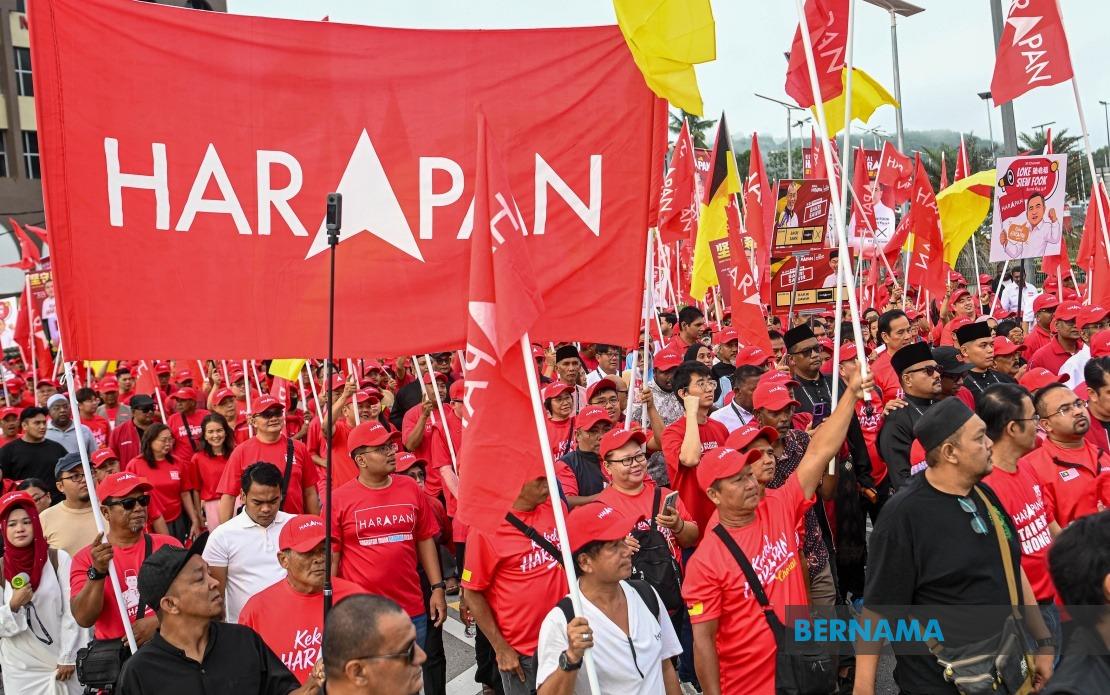
The 16th Negeri Sembilan State Election is shaping up to be fiercely contested, with three major state seats set for three-way battles that will complicate voter calculations across the key swing state. The nomination process concluded on July 18, confirming the participation of contenders from Barisan Nasional, Pakatan Harapan, and Bersatu across multiple constituencies, signalling the continued fragmentation of Malaysia's political landscape at the state level.
In the Pertang state seat, the incumbent Datuk Seri Jalaluddin Alias representing Barisan Nasional will defend his position against challengers Mohd Umry Abdul Khois of Pakatan Harapan and Mohd Faizal Fadli Mohd Idrus from Bersatu. Jalaluddin's track record at the previous state election demonstrated considerable electoral strength, securing 5,634 votes and defeating his Perikatan Nasional opponent by a comfortable margin of 2,844 votes. This substantial victory provides the incumbent with a substantial foundation, though the introduction of a second challenger through Bersatu could potentially split anti-BN votes and affect the dynamics of what was previously a two-cornered affair.
The Sungai Lui constituency has drawn particular attention due to the unexpected convergence of three former schoolmates contesting the seat. Datuk Mohd Razi Mohd Ali representing Barisan Nasional, Zainal Fikri Abd Kadir standing for Pakatan Harapan, and Mazrulhisham Abd Mansor fielding the Bersatu ticket will face off in what promises to be a politically intriguing encounter. The personal connections between candidates, combined with their respective party affiliations, may introduce distinctive campaign dynamics based on established relationships within the local community rather than purely national political messaging.
Klawang completes the trio of three-cornered contests, with incumbent Datuk Bakri Sawir of Pakatan Harapan facing competition from Muhammad Adib Musa representing Bersatu and Danni Rais standing for Perikatan Nasional. As the sitting representative, Bakri will need to consolidate his base while countering the challenge posed by two competing opposition figures, each bringing their respective party machinery and resources to the contest.
Negeri Sembilan occupies a strategically significant position in Malaysian electoral politics, functioning as a competitive state where no single political bloc has achieved consistent dominance. The presence of three-cornered contests across multiple seats reflects the current complexity of coalition politics, where traditional BN versus opposition binaries have given way to more intricate multi-party competition. This fragmentation can produce unpredictable outcomes, as vote distribution becomes less straightforward and tactical voting by electors becomes more pronounced.
The proliferation of three-way fights carries implications for voter strategy and campaign positioning. In such contests, plurality victories become possible with substantially lower vote shares than would be required in two-cornered races, potentially allowing candidates to win despite lacking majority support. This dynamic may encourage campaigners to focus on consolidating core support bases rather than appealing to broader cross-ideological coalitions. Additionally, the possibility of winning with reduced margins may alter the intensity and nature of campaign engagement across these constituencies.
Bersatu's participation across multiple Negeri Sembilan seats underscores its continued assertion as an independent political force separate from both the traditional BN framework and the opposition Pakatan Harapan coalition. The party's decision to field candidates in competitive constituencies suggests strategic ambitions to establish ground presence and demonstrate electoral viability in a state where it has previously operated with limited representation. Such efforts carry broader implications for Malaysia's emerging multi-party system, where coalition flexibility and realignment possibilities continue to evolve.
The Election Commission has established a clear electoral timeline to facilitate voter participation and democratic engagement. Early voting will occur on July 28, providing flexibility for voters unable to participate on the main polling day. The election itself is scheduled for August 1, allowing adequate preparation time for electoral machinery and administration across constituencies. This schedule enables all registered voters to exercise their franchise while maintaining institutional capacity to manage polling operations effectively across the three state seats and broader constituency boundaries.
For Malaysian political observers, the Negeri Sembilan contest offers instructive insights into contemporary electoral competition patterns. The prevalence of three-cornered fights across multiple constituencies reflects broader national trends toward political pluralism, coalition instability, and the emergence of alternative political vehicles challenging traditional binary competition frameworks. The outcomes in Pertang, Klawang, and Sungai Lui will provide valuable data regarding voter preferences, coalition effectiveness, and the durability of emerging political formations in competitive state-level contests.

