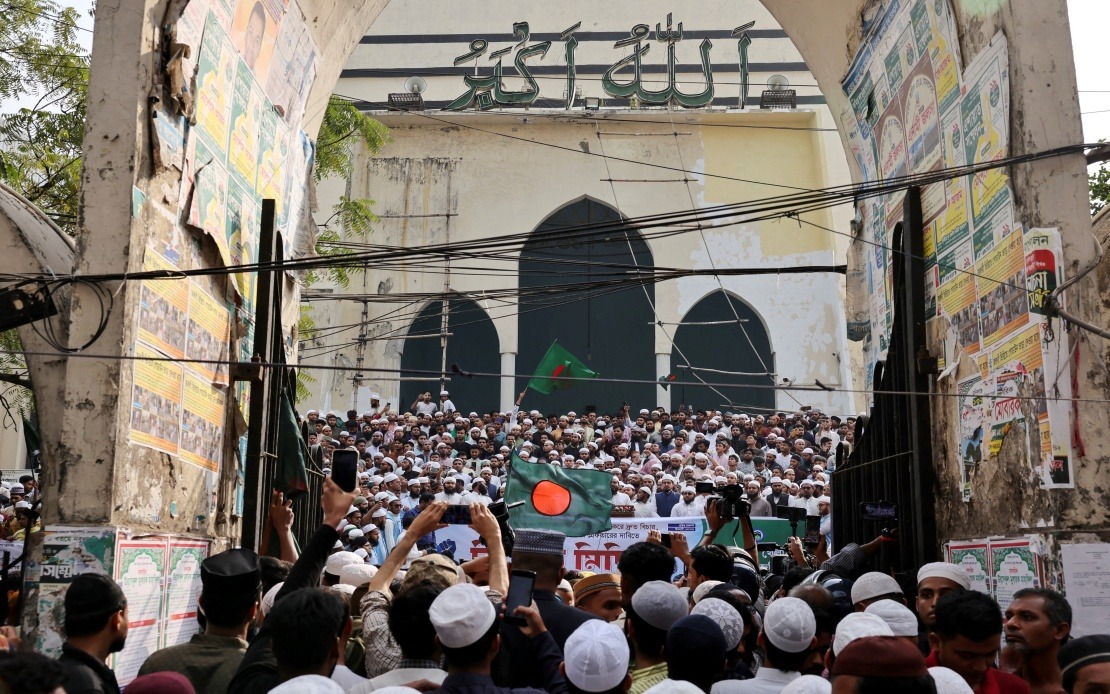
A specialized tribunal in Dhaka has delivered death sentences against three senior police officials for their involvement in the fatal shooting of civilians during Bangladesh's tumultuous 2024 uprising, marking a significant moment in the country's accountability process following the dramatic political upheaval that displaced the government. The International Crimes Tribunal, presided over by Justice Md Golam Mortuza Mozumder and comprising three judges, issued its verdict on Sunday in a case that centred on extrajudicial killings carried out by law enforcement personnel loyal to the administration of former Prime Minister Sheikh Hasina.
The three officers sentenced to capital punishment are former Dhaka Metropolitan Police Commissioner Habibur Rahman, former DMP Additional Deputy Commissioner Md Rashedul Islam, and former Rampura Police Chief Md Mashiur Rahman. All three remain at large as fugitives, making the death sentences effectively in absentia. Rahman already faces another death sentence in a separate case, underscoring the extent of alleged crimes attributed to senior police leadership during the period of unrest. The tribunal additionally sentenced two others to life imprisonment plus an additional 20 years, including former sub-inspector Tariqul Islam Bhuiyan from the same police station.
The specific incidents forming the basis of the convictions included the fatal shooting of a young man who was captured on video hanging from a building in Dhaka, along with the deaths of two other individuals in the capital during the July 2024 uprising. These killings were particularly consequential in terms of public impact, as graphic images and videos circulated widely across social media platforms, galvanizing public outrage and triggering nationwide demonstrations that fundamentally altered the political trajectory of the nation. The visual documentation of these deaths transformed them from isolated incidents into powerful symbols of state brutality, mobilizing previously dormant segments of society to demand accountability and systemic change.
The mass uprising during July 2024 ultimately precipitated the collapse of the government and the departure of Sheikh Hasina, who fled to India in August 2024 and remains in exile. According to United Nations assessments, approximately 1,400 individuals lost their lives during the course of the uprising, with the vast majority killed by police gunfire directed by officers aligned with Hasina's Awami League party. This staggering casualty figure underscores the intensity and brutality of the security response to the protests, which had initially emerged from student-led demonstrations but rapidly evolved into a broader movement encompassing diverse segments of Bangladeshi society.
The tribunal's actions represent part of a broader reckoning with the violence perpetrated during the period of Hasina's administration. In November of the previous year, the same court had already sentenced Hasina herself to death in absentia in a separate case related to crimes against humanity, signalling the judiciary's commitment to investigating allegations of state violence at the highest levels of government. These successive convictions suggest that the process of accountability extends beyond individual officers to encompass political leadership, though practical constraints regarding the apprehension and prosecution of fugitives remain substantial obstacles to implementation.
For Malaysia and other Southeast Asian nations, the Bangladesh tribunal proceedings offer instructive lessons regarding mechanisms for addressing mass casualties during political upheaval. The establishment of specialized tribunals focused on crimes against humanity represents one approach to handling allegations of widespread violence, though questions persist about their effectiveness when key defendants remain beyond the reach of law enforcement. The Bangladeshi case also highlights the role of social media documentation in mobilizing public response to state violence, a phenomenon increasingly relevant across the region as digital connectivity expands.
The prominence of video evidence in the Bangladesh cases, particularly the footage of the young man hanging from the building, demonstrates how technology has transformed the dynamics of accountability for police conduct. Unlike previous eras when security force actions might have been obscured from public scrutiny, contemporary digital platforms create permanent records that can sustain public pressure for justice and complicate attempts by officials to deny or minimize their involvement in controversial incidents. This shift has implications for policing practices across Southeast Asia, where several nations grapple with questions of security force accountability and oversight.
The fact that all three primary defendants remain fugitives presents ongoing challenges for the tribunal's enforcement capacity. Bangladesh authorities must navigate questions of international cooperation, extradition, and the practical mechanisms for apprehending senior officials who may have departed the country or gone into hiding. These complications mirror challenges faced by other nations in the region that have attempted to prosecute senior officials accused of serious crimes, illustrating the structural difficulties inherent in pursuing accountability against powerful individuals who possess resources to evade prosecution.
The tribunal's verdicts also carry broader implications for public confidence in Bangladesh's institutional capacity to address state violence. The swift convictions may bolster perceptions that accountability mechanisms are functioning, yet the continued absence of the defendants from custody undermines the practical impact of the sentences. For Malaysian observers, these proceedings underscore the importance of building legal frameworks capable of both investigating allegations thoroughly and ensuring that perpetrators can be brought before courts, whether through domestic prosecution or regional cooperation mechanisms.
The involvement of the United Nations in documenting casualty figures lends international credibility to assessments of the scale of violence during the 2024 uprising. This international dimension may facilitate future investigations and potentially support arguments for broader accountability mechanisms involving regional or international bodies. As Bangladesh moves forward, the tribunal's decisions will likely shape both domestic perceptions of justice and international assessments of the country's commitment to human rights and the rule of law.

