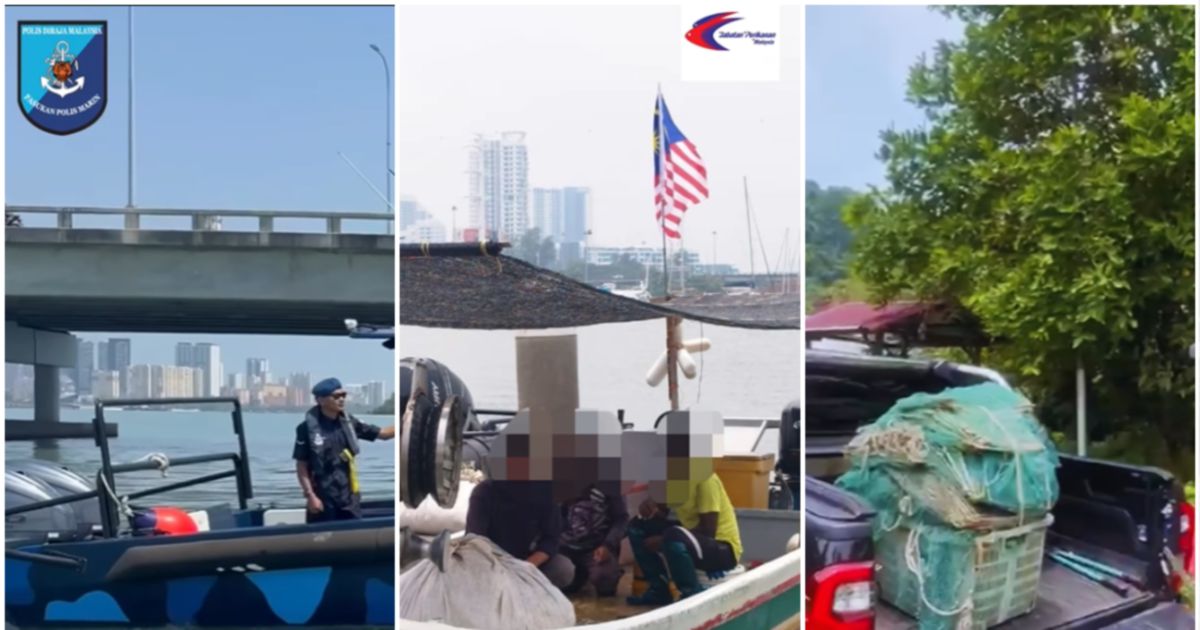
Malaysian enforcement agencies have intensified their crackdown on illegal fishing activities in Penang waters, with three men taken into custody and assets worth RM75,360 seized during a coordinated operation yesterday in George Town. The joint action represents ongoing efforts by federal and state authorities to police the region's increasingly pressured marine resources and curb unauthorised fishing practices that undermine both conservation goals and the livelihoods of licensed operators.
The enforcement sweep targeted illicit fishing operations operating in state jurisdiction, with officers apprehending three suspects and impounding a fishing vessel alongside an array of specialised equipment. The combined value of the confiscated assets—the vessel, nets, and other gear—was assessed at RM75,360, a substantial haul that reflects the scale of illegal operations still active despite previous regulatory efforts. Such seizures provide insight into the equipment investment criminals make when operating outside legal frameworks, often deploying the same professional-grade technology as legitimate commercial fishers.
The operation underscores the resource management challenges facing Penang, where maritime boundaries overlap with federal jurisdiction and competing fishing interests create persistent enforcement difficulties. Illegal fishing has long posed challenges to Southeast Asian coastal states, with organised networks exploiting regulatory gaps and limited patrol capacity to extract valuable marine stocks. For Malaysia, the issue carries particular weight given the commercial importance of fisheries and the vulnerability of localised fish populations to unregulated harvesting pressures.
Penang waters, situated along major shipping lanes and adjacent to some of the region's richest fishing grounds, remain attractive to unlicensed operators seeking to profit from marine resources without compliance costs. The state's geography—with numerous islands, inlets, and offshore areas—complicates surveillance and interception efforts, allowing some vessels to operate with relative impunity for extended periods. Yesterday's arrests suggest enforcement agencies are increasing operational tempo in response, deploying joint task forces that combine maritime patrol, intelligence gathering, and rapid interdiction capabilities.
The identity and backgrounds of the three detainees remain under investigation, though authorities typically pursue charges related to operating unregistered vessels, using prohibited fishing methods, or harvesting in protected areas. Penalties for such offences range from fines to imprisonment, with magistrate courts handling routine cases and maritime agencies pursuing asset forfeiture to reduce the financial incentive for future violations. The substantial value of yesterday's seizure suggests prosecutors may pursue enhanced charges that could result in custodial sentences.
Illegal fishing extracts an estimated economic toll across Southeast Asia, with some analyses suggesting annual losses exceeding hundreds of millions of dollars when accounting for lost resource value, foregone tax revenue, and enforcement costs. For Malaysia's fishing community—particularly small-scale operators in Penang and surrounding states—illegal competition directly impacts catch volumes and market prices, eroding profit margins and threatening the sustainability of traditional fishing communities. Enforcement actions therefore serve dual purposes: protecting marine ecosystems and protecting legitimate commercial interests.
The coordination between federal and state agencies reflects shifting approaches to maritime enforcement in Malaysian waters. Rather than conducting isolated patrols, authorities increasingly deploy integrated task forces combining resources from the Marine Department, Port Klang Authority, Royal Malaysia Police, and Malaysian Maritime Enforcement Agency. Such approaches improve detection and response times while creating deterrent effects through visible enforcement presence. Yesterday's operation likely involved multiple agencies, with vessel interception, suspect apprehension, and asset documentation requiring specialist capabilities across organisations.
Regional cooperation also shapes enforcement effectiveness, with Penang authorities increasingly working alongside Indonesian and Thai counterparts to address transboundary fishing networks. Criminal organisations operating in Southeast Asian waters often maintain flexible operations across multiple jurisdictions, shifting focus areas when enforcement pressure increases. International coordination helps prevent simple displacement rather than elimination of illegal activity. Penang's position as a major maritime hub makes regional collaboration particularly important for effective control.
The confiscated equipment provides intelligence for ongoing investigations, with authorities likely tracing ownership networks, supplier relationships, and operational patterns. Modern fishing vessels carry electronic systems—GPS, sonar, communication equipment—that forensic analysis can link to other illegal operations. Such investigations often reveal broader criminal enterprises encompassing multiple vessels, shared supply chains, and organised distribution networks. The three arrests may therefore represent entry points into larger criminal structures rather than isolated offenders.
Moving forward, the seizure contributes to cumulative deterrent effects that authorities seek through consistent enforcement. While individual operations cannot eliminate illegal fishing entirely, repeated losses of expensive equipment and personnel create ongoing costs for criminal operators, gradually shifting economic calculations toward compliance. For Malaysian policy-makers, such operations demonstrate commitment to marine resource management while highlighting the need for complementary measures including licensing modernisation, community engagement with fishing communities, and investment in surveillance technology.
The incident also reflects broader regional maritime governance challenges, where rapid economic development, declining fish stocks, and limited enforcement resources create persistent implementation gaps. Penang's experience mirrors conditions across Southeast Asia, where effective marine resource management requires sustained investment in enforcement capacity alongside regulatory clarity and stakeholder cooperation. Yesterday's arrests and seizures represent tactical success but underscore the strategic challenges authorities face in comprehensively addressing illegal maritime activities.

