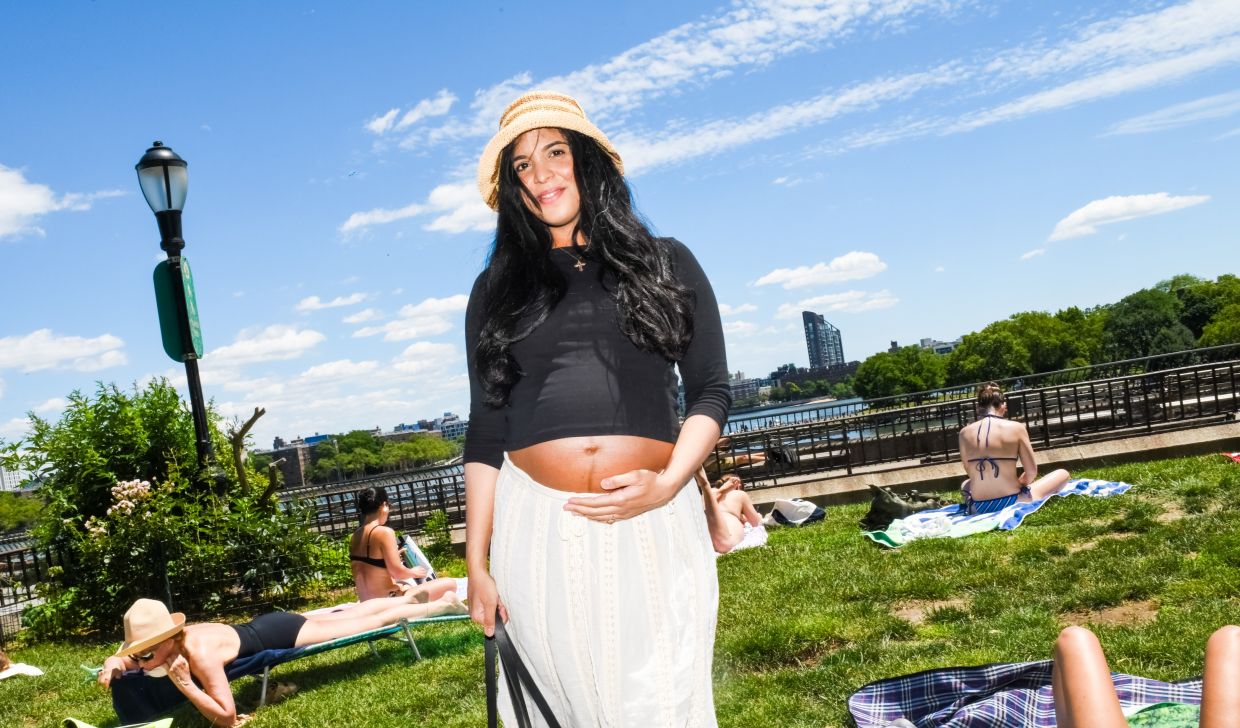
The modern pregnant woman is increasingly comfortable displaying her belly rather than concealing it beneath loose, shapeless garments—a stark departure from decades of maternity fashion convention. This transformation reflects broader changes in how younger women view their bodies, influenced by celebrity visibility, body positivity messaging, and a willingness to challenge historical attitudes toward pregnancy. What was once considered immodest or inappropriate is now celebrated as a natural stage of life worthy of fashionable expression.
Sarah Brown, a 36-year-old handbag designer and stylist, embodies this new approach. When she was 22 weeks pregnant, she began deliberately styling her outfits to reveal and accentuate her expanding midriff. In her social media posts, she paired cropped grey T-shirts with beige blazers and low-slung denim, creating deliberately curated looks that highlighted her changing silhouette rather than obscuring it. Her mother's well-intentioned suggestion to purchase a maternity jumpsuit inadvertently captured the generational divide—the older generation still viewing pregnancy as something requiring specialized concealment, while Brown saw styling around her belly as an aesthetic statement.
The cultural watershed moment came through celebrity influence, particularly when Rihanna announced her first pregnancy in 2022 wearing an unbuttoned bright pink Chanel puffer jacket, leaving her bare belly fully exposed. This high-profile endorsement of visible pregnancy echoed earlier iconic moments, from Beyoncé's unabashedly pregnant appearance at her second baby shower in 2017 to Anne Hathaway's recent pregnancy announcement in a white crop top. These images circulated widely across social media, reshaping expectations and normalization around how pregnant bodies should be presented publicly. For many younger women, these celebrity moments provided permission and inspiration to reject traditional maternity wear entirely.
Musician and author Michelle Zauner articulates the appeal of this approach. During a June performance at the Governors Ball music festival in New York, she wore an unbuttoned cardigan revealing a lacy black bra and her pregnant belly—a choice she credits directly to Rihanna's influence. Zauner had never felt enthusiasm for the physical demands of pregnancy, yet found herself experiencing unexpected pride and awe in her body's capabilities. She was simultaneously rejecting the aesthetic she associated with traditional maternity clothing: oversized, shapeless garments she describes dismissively as "giant muumuu sacks." For her generation, pregnancy fashion could be bold, intentional, and celebratory rather than apologetic.
Laura McAndrews, an associate professor in Kent State University's fashion school specializing in Gen Z attitudes toward maternity wear, attributes this shift to generational messaging around body positivity. Unlike women in the 1990s and earlier, who received cultural signals to hide their pregnant forms beneath intentionally voluminous clothing, Gen Z and millennial women have been exposed to decades of body-positive messaging emphasizing acceptance of diverse body types across all life stages. This philosophical foundation makes rejecting specialized maternity wear feel natural and aligned with broader values about body acceptance and self-determination.
Historically, the concealment of pregnancy served cultural and moral purposes. Isabel Davis, author of works examining fashion history, notes that pregnancy was historically regarded as "kind of rude—it is evidence of having had sex." For much of the past century, expectant mothers were expected to obscure their changing bodies, partly because pregnancy itself remained a taboo subject in polite society. This cultural messaging was internalized by maternity clothing manufacturers, who designed garments explicitly to hide the pregnant form rather than enhance or celebrate it.
Ariane Goldman, chief creative officer of Hatch, the maternity clothing company she founded in 2011, has witnessed this cultural transformation firsthand. When she started her company, discussing pregnancy in professional contexts remained taboo, with many women hiding their pregnancies from employers out of fear of job loss or discrimination. Over the past decade, she has observed a dramatic shift toward what she describes as celebration and empowerment—women now openly owning and acknowledging the physical reality of carrying a child. Yet this cultural shift paradoxically threatens the traditional maternity clothing market, as many pregnant women now bypass specialized garments entirely, opting instead to style existing wardrobes or borrow from partners and spouses.
The implications for the maternity fashion industry remain complex. Even as women increasingly reject dedicated maternity lines, practical considerations remain. Goldman acknowledges that many pregnant women eventually require at least some specialized pieces that accommodate their changing bodies while serving functional purposes. Brown herself, despite her fashion-forward approach, ultimately relied on a small selection of basics: elastic-waist pants from Los Angeles Apparel and unbuttoned side-zip tops from Paloma Wool. These pieces provided the flexibility her body required without sacrificing her desire to style intentionally around her belly.
This emerging pattern suggests a reconfiguration of the maternity wear industry rather than its decline. As women become more selective and purposeful about their pregnancy wardrobes, manufacturers must adapt by emphasizing versatility, function, and quality over quantity. The days of purchasing entire specialized collections of maternity clothing appear to be ending, replaced by a hybrid approach where women strategically supplement their existing wardrobes with a few key pieces that serve both functional and aesthetic purposes. The industry increasingly recognizes that modern pregnant women view their bodies as worthy of celebration, demanding garments that facilitate rather than hide this celebration.
For Southeast Asian markets, this trend carries particular significance. In many parts of the region, traditional attitudes toward pregnancy and modesty remain stronger than in Western contexts, meaning the transition toward visible, celebrated pregnancy fashion represents a more dramatic cultural shift. Malaysian women engaging with global social media platforms see these images of confident pregnant celebrities and fashion-forward expectant mothers, potentially influencing their own approach to maternity dressing. As younger Southeast Asian women increasingly adopt body-positive values and global fashion standards, they may begin rejecting locally-available traditional maternity wear in favor of more revealing, intentional styling—a shift that could reshape regional fashion manufacturing and retail.
The broader narrative reflects how generational values intersect with fashion choices. Rather than seeing pregnancy as a temporary condition requiring specialized camouflage, younger women now view it as a distinct and celebrated phase of embodied existence. This perspective aligns with contemporary values emphasizing self-determination, body acceptance, and authentic self-expression. Whether women ultimately purchase from maternity-specific retailers or create hybrid wardrobes from mixed sources, the underlying message remains consistent: pregnancy deserves to be styled, celebrated, and shown rather than hidden away beneath oversized tents.

