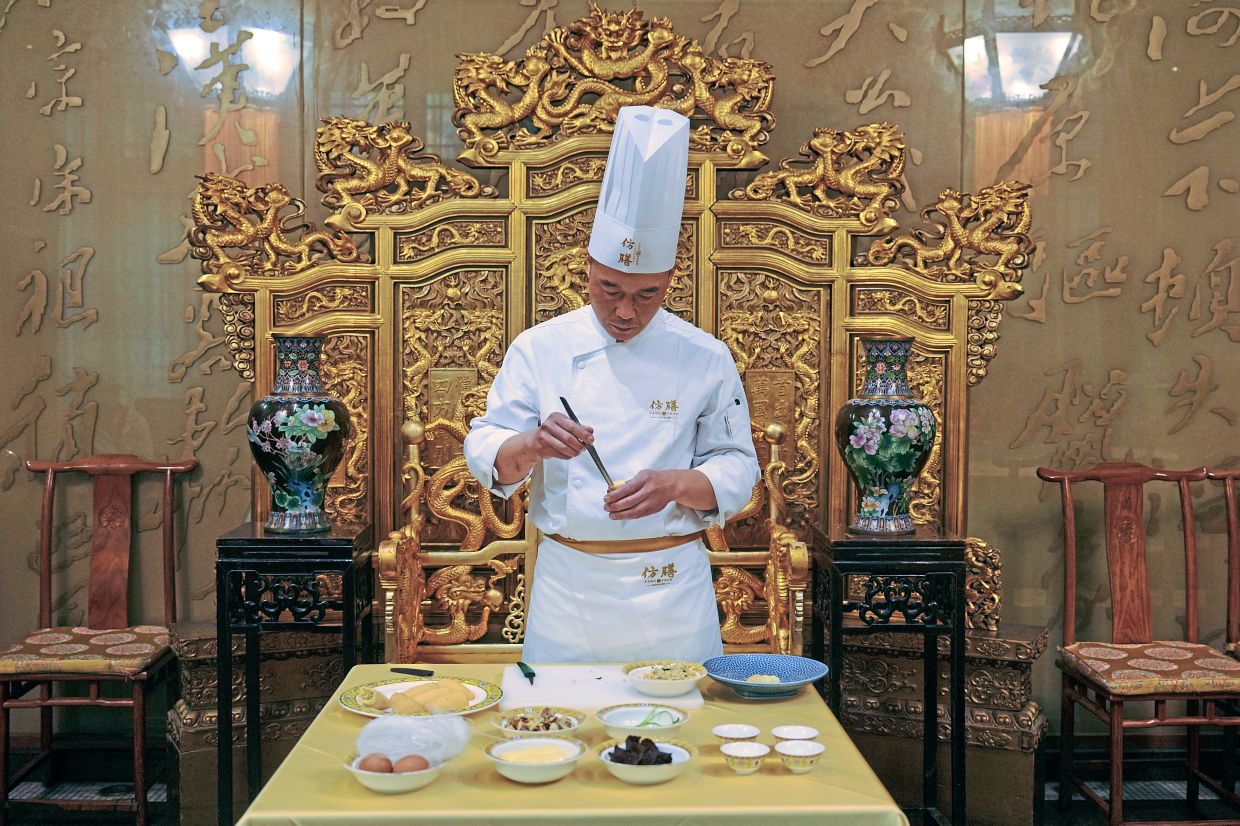
More than a century after the collapse of imperial China, the refined gastronomic traditions of emperors and their courts continue to flourish in Beijing's restaurants, where chefs meticulously recreate dishes that once graced the tables of the Qing Dynasty. Fangshan Restaurant, established in 1925 by former imperial chefs and located at Beihai Park—a garden sanctuary where successive generations of Chinese rulers conducted state business and performed sacred rituals—stands as the most prominent guardian of this culinary heritage. The restaurant's very name encapsulates its mission: Fangshan translates as "imitating the imperial cuisine," a humble acknowledgement that its mission is to faithfully reconstruct the elaborate dining practices that defined one of history's most sophisticated food cultures.
Among the celebrated dishes at Fangshan is the "dream pastry," a delicacy with a touching origin story rooted in the twilight years of imperial rule. According to Zhou Tong, the restaurant's pastry chef, Empress Dowager Cixi once dreamed of a particular treat during her final years in power. When the same pastry appeared on her breakfast table the next morning—a feat of culinary prescience or perhaps sympathetic interpretation by her kitchen staff—she was so delighted that she rewarded the chef responsible with a silver ingot. The pastry, originally called simply a "minced pork pancake," was thereafter renamed to commemorate this auspicious moment, becoming known as the dream pastry. Such stories illustrate how imperial cuisine transcended mere sustenance; each dish carried symbolic weight, historical memory, and the personal preferences of rulers whose whims could elevate a simple preparation into legend.
The structure and ritual surrounding imperial dining extended far beyond the food itself. Researchers at China's Palace Museum have documented how meals at court followed elaborate ceremonial protocols that reinforced the emperor's authority and the hierarchical nature of society. Drinking milk tea, for instance, inaugurated Qing Dynasty banquets, and the very act of the sovereign distributing wine or food to princes and officials became a performance of power. Recipients were obligated to perform elaborate rituals and pay formal respects to the emperor before they could consume what he had blessed. These weren't simply dinners; they were state occasions where political relationships were enacted through the medium of food and ceremony, turning every bite into an affirmation of cosmic and social order.
Sacrificial rituals formed another crucial dimension of imperial culinary practice, operating according to distinct rules that differed markedly from everyday consumption or even ceremonial feasting. At the Palace of Earthly Tranquillity, one of the most solemn observances involved the eating of sacrificial pork, prepared without salt in boiling water—an austere preparation that transformed the meat into a spiritual offering. Once the ceremonial portion was completed, the remaining meat was distributed among court members, and receiving such sanctified food was considered an extraordinary honor, a tangible blessing from the emperor. The deliberate absence of seasoning carried profound meaning; as scholars have noted, unseasoned dishes appeared in much earlier Chinese ritual traditions and symbolically connected participants to antiquity, evoking simpler ways of cooking and thus honoring cultural origins. The classical "Book of Rites" describes a similar tradition in which meat broths called "grand stew" were served without flavoring during sacrificial ceremonies, suggesting that the restraint in seasoning itself constituted an essential element of ritual correctness rather than a mere practical limitation.
Pastries occupied a position of special prominence in imperial cuisine, so valued that the court maintained dedicated institutions staffed entirely with artisans devoted to their creation. The techniques for producing these delicacies have been preserved through an unbroken chain of mentorship spanning multiple generations, with master chefs training apprentices through hands-on demonstration rather than written instruction. Zhou Tong learned his craft from a teacher who had similarly learned from their predecessor, ensuring that the subtle methods required to achieve authentic results remain alive rather than merely documented in cookbooks. The most critical aspect of traditional imperial pastry-making is the absolute prohibition against modern mechanical devices; no blenders, food processors, or electric equipment are permitted. Instead, ingredients like beans must be painstakingly pulverized using hand-operated sieves, and specific flours are worked in custom-made copper pots, producing a texture and "mouthfeel"—particularly the characteristic delicate graininess—that machines cannot replicate. Zhou emphasizes that convenience obtained through mechanization inevitably comes at the cost of the sandy, refined texture that distinguishes imperial pastries, a loss that no time-saving benefit could possibly justify.
During peak business hours, Fangshan's kitchens produce extraordinary volumes of their bestselling items, with customers ordering more than 200 pea flour cakes daily during busy seasons. These astronomical numbers might suggest industrial mass production, yet each cake emerges from the same painstaking handcrafted processes that would have been familiar to chefs working centuries ago. This tension between preserving authenticity and serving contemporary commercial demand creates constant pressure, yet the restaurant maintains its commitment to historical fidelity. Fan Liangliang, now the executive chef at Fangshan, discovered upon joining the restaurant as an apprentice that his culinary training had to be entirely unlearned and reconstructed. The efficient techniques he had acquired at professional culinary school became hindrances rather than assets, and he had to embrace slower, more deliberate methods that emphasized patience and precision over speed.
Among the hallmark techniques of imperial cuisine is "Nizihuo," a labor-intensive process in which ingredients such as fish, shrimp, or chicken are minced into an exceptionally smooth paste and then carefully reshaped into elaborate decorative forms—frogs, birds, blossoms, and other fanciful creatures. Every dish that reached the imperial table had to satisfy multiple demanding criteria simultaneously: it needed to be original in conception, visually striking, nutritionally balanced, and worthy of presentation before the sovereign. This multifaceted standard pushed chefs toward innovation while constraining them within established aesthetic and cultural frameworks. Though some traditional ingredients—notably bear paws—can no longer be served due to conservation concerns, contemporary chefs adapt recipes while preserving their essential character, maintaining fidelity to the spirit of historical dishes even when specific components must be modified.
The cultural significance of imperial cuisine extends beyond gastronomic appreciation into deeper realms of politics, aesthetics, and philosophy. A celebrated classical Chinese poet once composed verses about cold noodles prepared with pagoda-tree leaves, a seemingly modest dish that the poet transformed into an expression of political loyalty and his frustrated ambitions to serve the emperor. As scholars have noted, such culinary references in classical literature functioned as sophisticated metaphorical vehicles for conveying complex ideas about statecraft, virtue, and cultural identity. Chinese cuisine has historically operated as a sophisticated language through which broader cultural meanings could be expressed and transmitted, meanings that evolved and shifted as political circumstances changed. This layering of significance suggests that preserving culinary traditions requires more than simply perfecting recipes; it demands serious engagement with history, with the recognition that how we eat connects inextricably to how we understand ourselves and our place within society.
The imperial cuisine preserved at Fangshan represents a synthesis of Manchu and Han culinary traditions, a fusion that reflects the complexity of the Qing Dynasty itself, during which Manchu rulers governed a predominantly Han Chinese population. This blending of two distinct cultural heritages created a unique culinary vocabulary that can be fully understood only within its historical context. Today's diners at Fangshan experience not merely sophisticated food, but an edible history lesson in which each carefully crafted dish carries encoded within it centuries of cultural exchange, political negotiation, and artistic refinement. The servers at the restaurant enhance this experience by narrating the stories embedded in each preparation, transforming solitary meals into collective acts of remembrance. When customers understand that they are consuming a dish once beloved by an empress, or participating in a ritual whose roots extend back through multiple dynasties, the food acquires dimensions that transcend nutrition and taste, becoming instead a tangible connection to a vanished world whose aesthetic and philosophical values remain surprisingly relevant to contemporary sensibilities.

