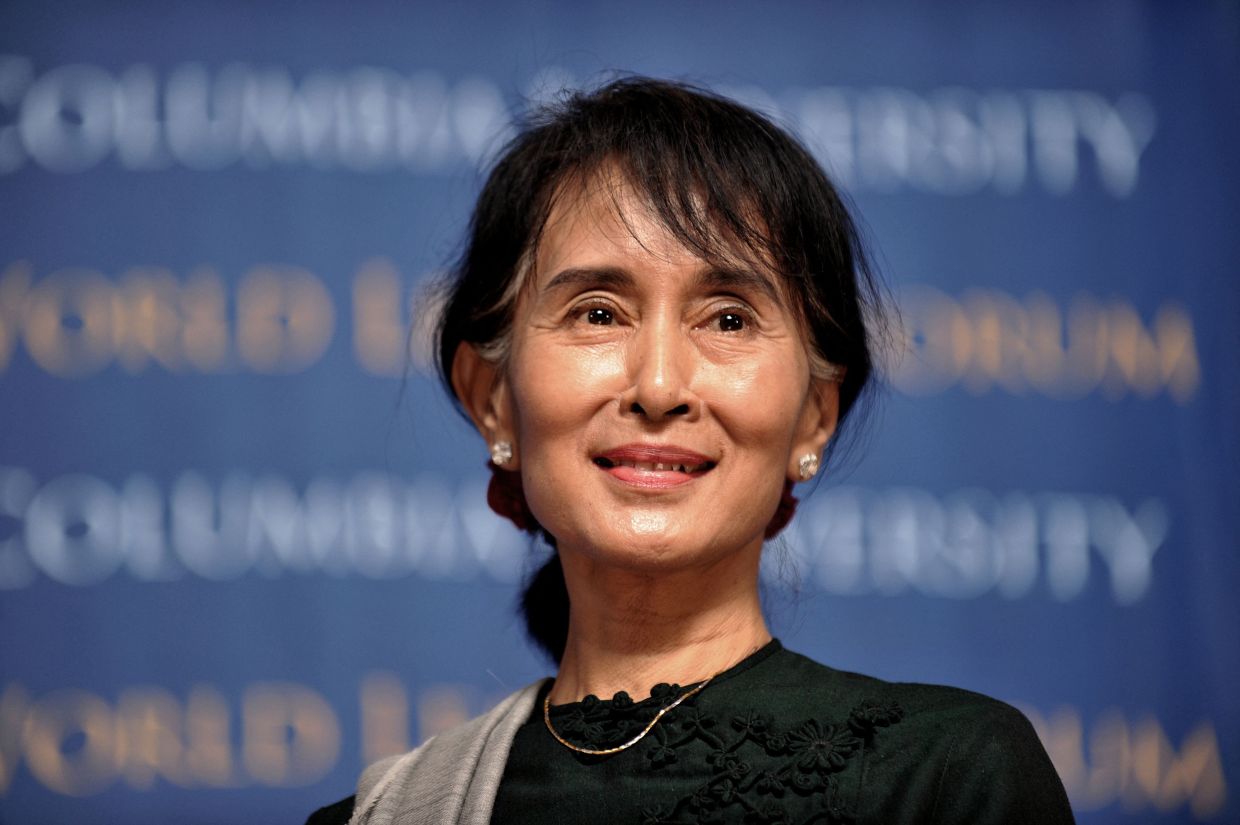
The fundamental question troubling observers of Myanmar's political crisis remains deceptively simple: nobody appears to know where deposed leader Aung San Suu Kyi actually is. According to military authorities, the 81-year-old Nobel laureate is under house arrest somewhere in Naypyidaw, Myanmar's carefully engineered capital city, but the precise location has been withheld even from elected parliamentarians and police officials. This veil of secrecy extends so thoroughly that establishing her address has become nearly impossible for international monitors, journalists, and her own family, who question whether the April announcement of her transfer from prison to house arrest represented genuine clemency or merely a sophisticated public relations manoeuvre by military leader Min Aung Hlaing.
Naypyidaw itself stands as a testament to authoritarian urban design, a city conceived and executed specifically to enable governmental control and secrecy. Built in the early 2000s under the supervision of previous military ruler Than Shwe, the capital was relocated from the historically significant port city of Yangon in 2005, ostensibly to position the seat of power in a more central location. However, urban theorists and architects recognise the city's true purpose as far more sinister. With a population of merely one million inhabitants spread across a landmass equivalent to nine times the size of New York, Naypyidaw functions as an elaborate maze of anonymous compounds separated by eerily empty highways stretching through jungle and agricultural land. The deliberate spatial separation and vastness create genuine disorientation even among residents who have lived there for years.
The physical layout itself reinforces governmental opacity and control. Monumental infrastructure projects dominate the landscape, most notably an 800-acre parliamentary campus that ranks among the world's largest governmental complexes despite Myanmar's minimal experience with democratic governance. The architecture embodies contradiction: gilded buildings and manicured lawns maintained by more gardeners than one typically encounters motorists or pedestrians, combined with security checkpoints, mobile internet jammers that render navigation applications unreliable, and roads that appear identical across vast stretches. This deliberate confusion transforms the city into what architect Galen Pardee of Columbia University describes as "its own kind of house arrest," a place fundamentally at odds with sound urban planning principles precisely because such contradictions serve political objectives. The design prevents residents from easily navigating their own surroundings, let alone outsiders from locating specific individuals.
The mystery surrounding Suu Kyi's location reflects broader opacity within Myanmar's power structure. When Min Aung Hlaing announced in April that he had moved Suu Kyi from Naypyidaw prison to house arrest, he framed the decision as a humanitarian gesture demonstrating his transition from military dictator to civilian president following January's tightly controlled elections. Yet critics view this announcement as part of a broader image-laundering campaign, noting that Suu Kyi remains fundamentally confined with no genuine freedom of movement. A Union Solidarity and Development Party spokesman, Thein Tun Oo, candidly admitted to journalists that he possessed no knowledge of her current address, acknowledging that ordinary party members lack access to such information. More strikingly, police special branch officials from two separate jurisdictions reported that Suu Kyi had been moved to locations described as out-of-bounds even to security personnel operating in those areas. One source claimed that even Myanmar's military generals do not possess information regarding her exact whereabouts, suggesting that knowledge of her location remains restricted to an extraordinarily small circle.
Suu Kyi's current circumstances stand in jarring contrast to her previous prominence within Myanmar's political landscape and her family's own reflections on her situation. She is the daughter of Aung San, Myanmar's independence hero, and spent decades living abroad before returning in 1988 to champion democratic reform. During her first extended period of house arrest from 1989 to 2004, she was confined to her family residence in Yangon, a location that became symbolic among pro-democracy activists who treated it as a pilgrimage site. That form of confinement, whilst severe, at least maintained a tangible connection between Suu Kyi and Myanmar's population through a recognised address. Her son Kim Aris, speaking from London, argued that her current situation differs little from previous imprisonment, suggesting that the specific location matters less than the fundamental reality of confinement. He contended that whatever residential compound holds his mother remains essentially a private prison rather than a genuine home with domestic comforts and freedom, rendering the distinction between prison and house arrest largely semantic.
The geopolitical significance of Suu Kyi's confinement extends beyond individual suffering to encompass broader questions about Myanmar's trajectory and regional stability. Min Aung Hlaing conducted January's elections after ruling by decree for five years, effectively ensuring victory for the pro-military Union Solidarity and Development Party by excluding Suu Kyi's National League for Democracy from participation. This electoral exercise, viewed by international observers as lacking legitimacy, sought to legitimise military authority through democratic veneer. Suu Kyi's continued absence from public view, combined with uncertainty about her specific location, reinforces perceptions that Myanmar remains firmly under military control regardless of civilian institutional structures. Parliamentary members loyal to the regime have begun declaring her political era concluded, yet the government's refusal to disclose her location suggests deeper insecurity about her symbolic importance to Myanmar's pro-democracy movement.
The practical impossibility of locating Suu Kyi even within a defined capital city illustrates how authoritarian systems weaponise urban geography against transparency. One 25-year-old Naypyidaw resident, speaking anonymously due to security concerns, articulated the profound disorientation that residents experience daily, describing streets and districts that appear indistinguishable despite supposedly different locations. She acknowledged neither knowing Suu Kyi's location nor possessing reliable knowledge of her own city's geography. This generalised confusion, whilst potentially frustrating for ordinary residents navigating daily life, serves governmental interests by preventing any systematic location or gathering around politically sensitive sites. The integration of such confusion into the city's fundamental design means that searching for Suu Kyi in Naypyidaw is not merely difficult but structurally impossible for those without authorised information.
At least one physical trace of Suu Kyi's previous life in the capital has been erased. A villa where she resided before assuming the presidency has been demolished, eliminating what might have otherwise served as a potential rallying point for supporters or a symbolic reminder of her leadership tenure. Her previous residence as elected leader would have been a government compound with security checkpoints accessible only to properly cleared personnel, yet that location appears either no longer available or deliberately abandoned in favour of an even more secretive arrangement. This destruction suggests deliberate effort to remove tangible connection between Suu Kyi and Naypyidaw's physical landscape, further abstracting her confinement and rendering it metaphorically as well as literally invisible.
The implications of Suu Kyi's hidden confinement extend significantly for Southeast Asian observers monitoring democratic backsliding and military reassertion across the region. Her situation exemplifies how even internationally prominent figures with Nobel Peace Prize recognition can be rendered invisible and effectively silenced through administrative mechanisms that operate beyond the reach of international pressure or domestic accountability. The fact that Myanmar's own government officials cannot access basic information about her whereabouts suggests a compartmentalisation of power that extends beyond normal security protocols into deliberate obfuscation. For regional democracies concerned with preventing similar outcomes, Suu Kyi's case demonstrates the risks posed by centralised military authority and the capacity of authoritarian systems to evolve tactics of suppression that incorporate sophisticated spatial and informational control mechanisms.
Moving forward, the mystery surrounding Suu Kyi's location may endure for as long as Myanmar remains under military dominance, serving as both a practical security measure and a powerful symbolic reminder of the regime's rejection of transparency and democratic accountability. Whether her confinement eventually ends through political transformation or continues indefinitely under successive military leaderships remains uncertain, but what appears clear is that Naypyidaw's deliberate design ensures that her imprisonment, whatever its specific location, remains fundamentally hidden from public view and official knowledge alike. This invisibility, perhaps more than any prison walls, represents the thorough erasure of dissent that Myanmar's military authorities seek to achieve through control of both physical space and informational access.

