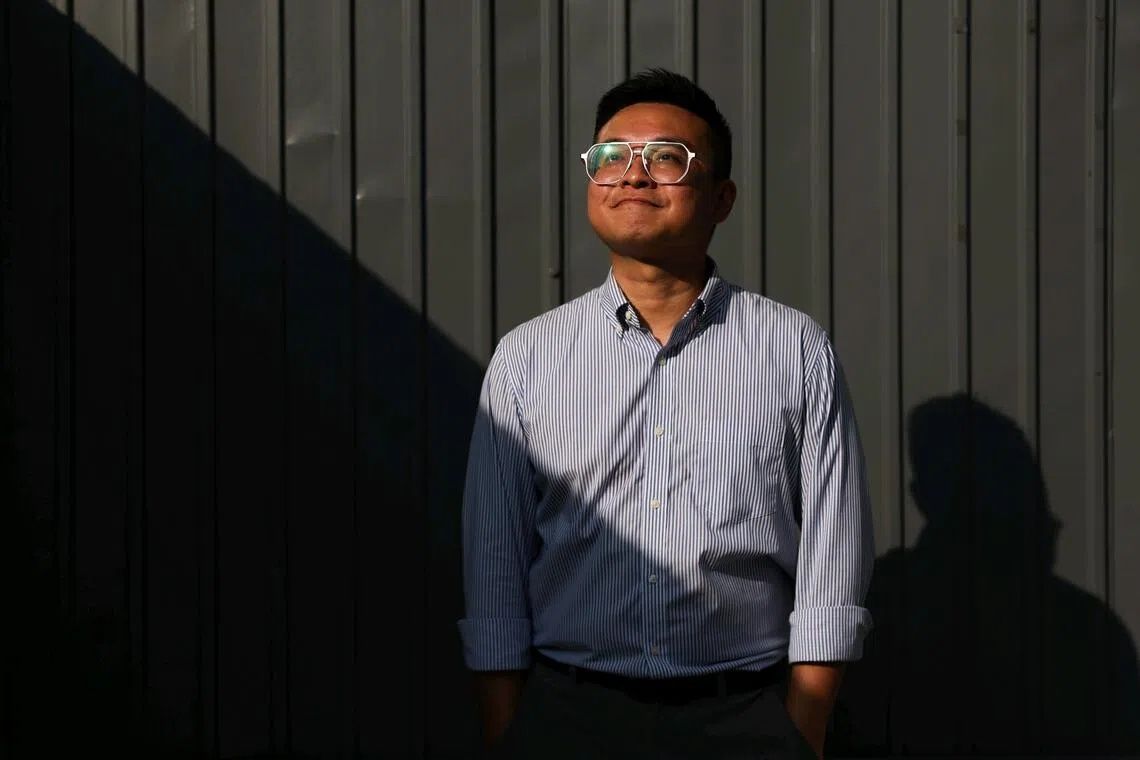
The façade of professional success can mask profound personal struggle. Cornelyus Tan, 37, maintained what appeared to be a thriving marketing career while secretly battling methamphetamine addiction—a contradiction that defines an emerging problem in Singapore's drug landscape. His arrest and six-month detention at Changi Prison's Drug Rehabilitation Centre in 2022 marked the end of his double life, but it was also the beginning of a reckoning that revealed he was far from alone in this experience.
Inside the rehabilitation facility, Tan encountered an unexpected cohort: teachers, lawyers, bankers and other white-collar professionals grappling with the same demons. Their collective realisation was sobering. "On paper, we look well. We are all very successful. But at the core of it, we had a common problem – the heart," Tan reflected, speaking publicly about his struggle for the first time. This observation captures a critical blind spot in how society understands addiction—the assumption that education, income and professional achievement insulate individuals against substance abuse.
Statistics from the Singapore Prison Service paint a striking picture of this trend. In 2025, 293 inmates in the Drug Rehabilitation Centre possessed tertiary education or higher qualifications, a significant jump from 204 in 2021. These numbers represent roughly one in ten newly admitted inmates, escalating from 8.8 per cent in 2021. The range of qualifications is remarkably broad, spanning from polytechnic diplomas to doctoral degrees, suggesting that the problem penetrates across multiple tiers of educational achievement.
While authorities note this increase should be contextualised within Singapore's broader educational advancement—the share of residents aged 25 and above with tertiary qualifications has grown from 42.9 per cent to 54.5 per cent over the past decade—the Central Narcotics Bureau acknowledges a meaningful shift in the demographic profile of drug offenders. Those with tertiary education remain technically under-represented relative to the general population, yet the trajectory is unmistakable. The recent conviction of a medical doctor for drug use exemplifies how these cases continue to provoke public surprise and scrutiny.
Counsellors and addiction specialists working across Singapore increasingly emphasise that substance abuse transcends socioeconomic and educational boundaries. Gopal Mahey, a senior counsellor at the Centre for Psychotherapy, underscores this reality: addiction cuts across all backgrounds, and there is growing professional recognition that drug use is not confined to the poorly educated, unemployed or socially marginalised. This paradigm shift has profound implications for prevention and treatment strategies that have historically focused on vulnerable populations.
Multiple factors explain why educated professionals are entering the drug-using population at rising rates. The global drug market has expanded dramatically, with synthetic drugs becoming increasingly potent and accessible. Technology has fundamentally altered the distribution landscape. Tham Yuen Han, executive director of We Care Community Services, highlights a critical change: where drug users once depended on personal networks—family members, friends with addiction histories, or street-level dealers—modern platforms now bring drugs directly to consumers. Telegram channels dedicated to drug sales represent a new distribution infrastructure that requires no traditional intermediaries, making illicit substances available to anyone with internet access and a social media account.
Beyond supply-side factors, demand-side drivers peculiar to educated, high-earning professionals shape their vulnerability. Peer influence operates differently in professional circles; social media glamorises drug use; entertainment figures downplay harmful consequences; and exposure to more permissive drug cultures abroad normalises experimentation. For many who eventually develop dependencies, drugs initially function as solutions rather than problems. They promise enhanced productivity, stress relief, social connection and creative breakthrough—benefits that resonate particularly strongly with ambitious professionals navigating high-pressure careers.
Tan's journey illustrates this seductive trajectory. Introduced to methamphetamine at a house party in 2014 while working as an aspiring fashion photographer and arts college undergraduate, he discovered what he calls the "Superman effect"—an adrenaline rush producing constant efficiency and happiness. "I was able to think creatively. There were many good comments about my work," he recalled. A 2015 news profile celebrated him as a promising young photographer, validating the drug-enabled productivity he was experiencing. After quitting for several years when physical effects became apparent, relapse struck in 2020 under the crushing stress of managing regional marketing operations for an e-commerce firm. The internal voice proved irresistible: "Why not use (drugs)? You know how it might help you."
Educated addicts develop sophisticated maintenance strategies. Tan established a formula: use methamphetamine intensively, ride the euphoria, then stop for weeks during the inevitable mood crashes, creating the illusion of controlled use. This approach exploits precisely the confidence that education and professional accomplishment foster. Samuel Chua, principal counsellor at the Institute of Mental Health's National Addictions Management Service, observes that well-educated professionals struggle no differently from other addicts in seeking escape from pain and distress, yet their self-assurance about personal control capacity makes denial particularly powerful. They believe they possess the discipline and intelligence to manage their consumption, a conviction that delays intervention and prolongs addiction.
A former junior college teacher, identified only as John, demonstrates this pattern. After being introduced to methamphetamine at a gathering in 2015, he hid his growing dependency for approximately six months while continuing classroom instruction. His motivation for initial use mirrors Tan's social drive: "I was just trying to connect with some people around me." As drug use intensified and he became entangled in an abusive relationship, his professional function deteriorated. He began missing classes, resorting to fabricated excuses when his reporting officer noticed irregularities. His case encapsulates how educated professionals' fall from functional addiction to visible dysfunction can be swift and catastrophic, yet initially concealed behind institutional position and social credibility.
The implications of this trend extend beyond individual tragedies. Singapore's criminal justice and rehabilitation systems must now address addiction among populations accustomed to agency and self-determination, who may resist treatment framing and struggle with the identity displacement that recovery demands. Prevention messaging must evolve beyond warnings pitched at disadvantaged communities, explicitly engaging educated audiences about their specific vulnerabilities. Most fundamentally, the rise of drug abuse among high-achieving professionals dismantles the comfortable fiction that addiction is a problem residing elsewhere—among others less fortunate, intelligent or disciplined. It demands that society reckon with drug addiction as a universal human vulnerability, equally capable of penetrating the corner office as the street corner.

