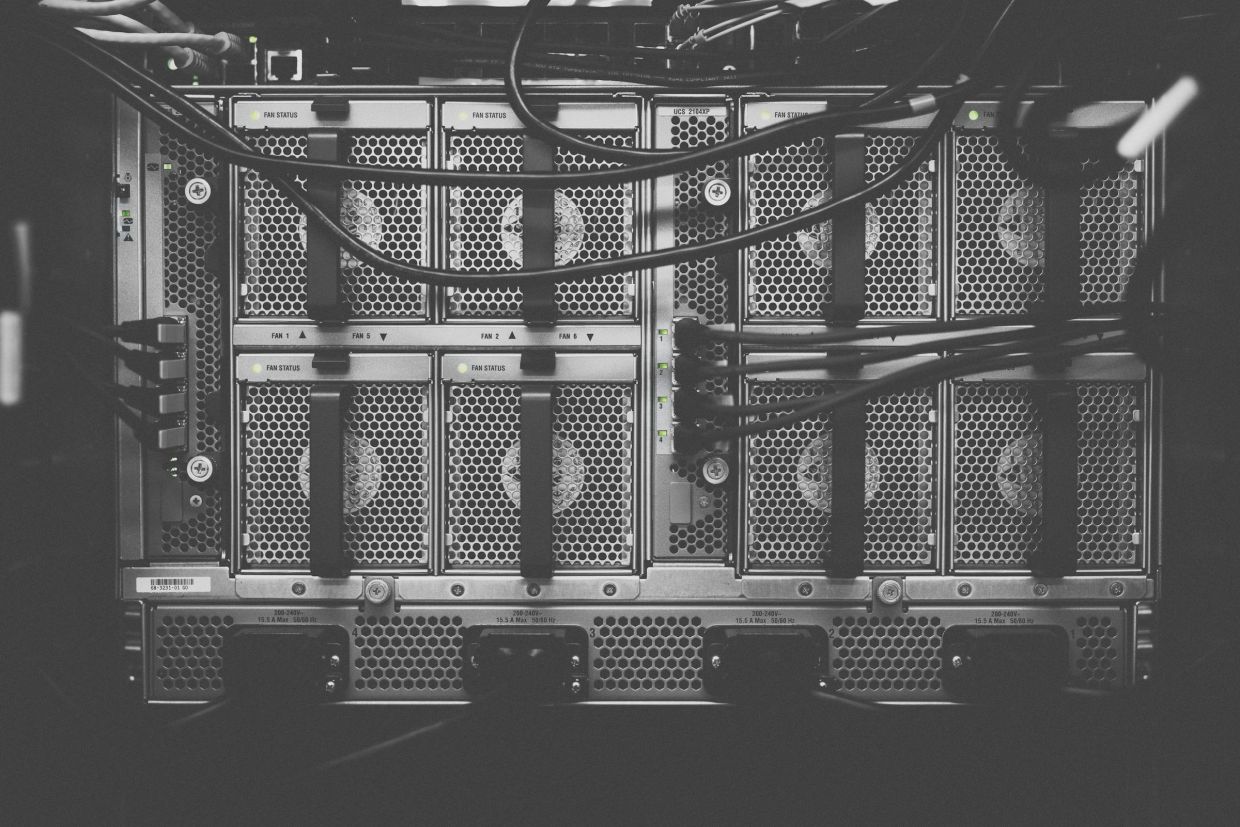
The expansion of artificial intelligence infrastructure is bringing an unexpected burden to residential neighbourhoods across North America and beyond: a relentless, low-frequency hum that residents describe as sounding like an idling truck engine or an overhead aircraft that never leaves. This acoustic footprint of the digital economy represents one of the least discussed consequences of the AI boom, as data centre operators race to build facilities large enough to support the staggering computational demands of modern machine learning systems.
The scale of this infrastructure expansion is extraordinary. The United States alone operates more than 3,000 data centres, with another 1,500 currently under development according to research from the Pew Research Center. These facilities, which house thousands of servers and processing chips working continuously to execute billions of operations daily, have traditionally operated with minimal public attention or scrutiny. Yet the nature of AI computing—requiring vastly greater processing power and cooling capacity than previous generations of data centres—is fundamentally changing the relationship between these industrial installations and the communities around them.
At the heart of the problem lies the basic physics of data centre operation. The memory chips and processors generate enormous amounts of heat, necessitating massive industrial cooling systems that run twenty-four hours daily. Many facilities also rely on diesel-powered backup generators, since local electrical grids frequently cannot supply the enormous power demands of modern installations. Together, these systems produce noise across a broad acoustic spectrum, with vibrations that can be detected hundreds of feet away and sometimes up to a mile distant, according to industry consultants. The problem has become severe enough that nearly 40 per cent of American homes now sit within five miles of at least one operational data centre, and that proportion is climbing as new facilities are sited ever closer to population centres.
What distinguishes data centre noise from typical industrial sound is its composition and the inadequacy of existing regulations to address it. A significant portion of the acoustic output falls into the infrasound range—frequencies so low that human ears cannot consciously detect them. Rather than hearing these vibrations, residents physically experience them as pressure fluctuations similar to the deep bass rumble at a concert, according to Scott Hamilton, a member of the Acoustical Society of America and consultant on data centre acoustics. This physiological response means that the traditional measurements and mitigation strategies designed for conventional noise prove largely useless for addressing the real problem facing affected communities.
The health consequences reported by residents living near these facilities reveal a troubling pattern. Chronic sleep deprivation and insomnia have become commonplace, alongside reports of persistent headaches, internal ear pressure, and heightened anxiety. These are not minor quality-of-life issues but genuine health impacts that accumulate over months and years of continuous exposure. Yet the regulatory framework designed to protect public health has significant gaps. Noise pollution is addressed primarily through local zoning ordinances crafted decades ago to handle neighbourhood block parties, barking dogs, or temporary construction noise—not the round-the-clock industrial drone of a modern data centre. At the federal level, the situation is bleaker still: the Environmental Protection Agency's Office of Noise Abatement and Control was defunded during the Reagan administration in the early 1980s, leaving no federal enforcement mechanism for even those noise standards that do exist on the books.
This regulatory vacuum has prompted residents in three separate jurisdictions to pursue legal action against data centre operators, seeking to establish accountability through the courts where legislative bodies have failed. In Vineland, New Jersey, homeowners have filed suit against DataOne USA, a company expanding its server operations significantly. According to court filings, residents describe the existing noise as resembling a stationary helicopter or a perpetually running heavy-duty truck engine, particularly noticeable during nighttime hours when seeking sleep. Upon completion, DataOne's facility will occupy 2.6 million square feet and demand 300 megawatts of electrical power—equivalent to supplying a medium-sized city. The plaintiffs argue that while the data centres may technically comply with basic zoning codes, the constant vibrations and noise constitute a form of environmental injustice, causing measurable depreciation in property values and stripping residents of their fundamental right to peaceful enjoyment of their homes.
Similar lawsuits have been filed in Dowagiac, Michigan, and Lowell, Massachusetts, where data centre operators have repurposed former industrial buildings. The pattern is telling: companies identify economically distressed communities where land is cheap and industrial buildings sit vacant, establish data centre operations that technically fit zoning classifications, and then watch as property owners and residents bear the cumulative health and financial costs. In Dowagiac, a 30-megawatt data centre converted a structure previously used for storing boats and recreational vehicles, transforming a quiet neighbourhood into an industrial acoustic zone. The affected residents have legitimate grievances, yet they discover too late that existing regulations provide minimal protection and remedies.
Data centre operators defend their expansion by emphasizing economic contributions: job creation, tax revenue, and community investment. DataOne stated it remains committed to constructive dialogue and responsible community participation. The company notes it has already implemented noise reduction measures and will continue improvements as its expansion proceeds. These are not frivolous claims—data centre development does bring genuine economic benefits that cannot be dismissed entirely. However, they do not address the fundamental equity problem: the benefits accrue to data centre owners, technology companies, and to some degree broader consumers who enjoy AI services, while the costs—health impacts, property devaluation, sleep disruption, chronic anxiety—concentrate entirely on nearby residents who had no choice in whether the facility would locate in their neighbourhood.
For Malaysian and Southeast Asian readers, this situation carries particular relevance and warning. The region is rapidly attracting major data centre investment from global technology companies seeking to establish presence in Asia. Singapore, Malaysia, and other nations are actively promoting data centre development as part of digital economy strategies. Yet the experiences unfolding in New Jersey, Michigan, and Massachusetts demonstrate that without proactive, comprehensive regulatory frameworks established before widespread deployment, communities will bear significant hidden costs that only become apparent after facilities are operational and impossible to relocate. The approach of addressing problems through litigation after damage is done proves far more costly and divisive than establishing clear standards upfront.
Les Blomberg, executive director of the Noise Pollution Clearinghouse, has noted that the acoustic footprint of modern data centres operates on an entirely different scale than traditional noise sources, yet regulatory thinking has not evolved accordingly. Richard Neitzel, a professor of environmental health sciences at the University of Michigan, emphasizes that the defunding of federal oversight created a situation where "there's nobody at home at the EPA to actually enforce" existing noise regulations, leaving regulation entirely to localities that often lack technical expertise or political will to challenge major employers.
The broader implication is that the infrastructure enabling artificial intelligence advancement carries genuine environmental and health costs that remain largely invisible and unaccounted for in public discussions about AI progress. These costs are not technical problems awaiting engineering solutions but fundamentally problems of governance and equity. Building the global AI economy while protecting community health and property values requires establishing regulatory frameworks that anticipate these challenges rather than responding to them through lawsuits and property damage. The data centre noise problem represents an early warning signal of larger questions about how societies will distribute the benefits and burdens of the AI age, and whether technological advancement will proceed in ways that respect the interests of those closest to the physical infrastructure making it possible.

