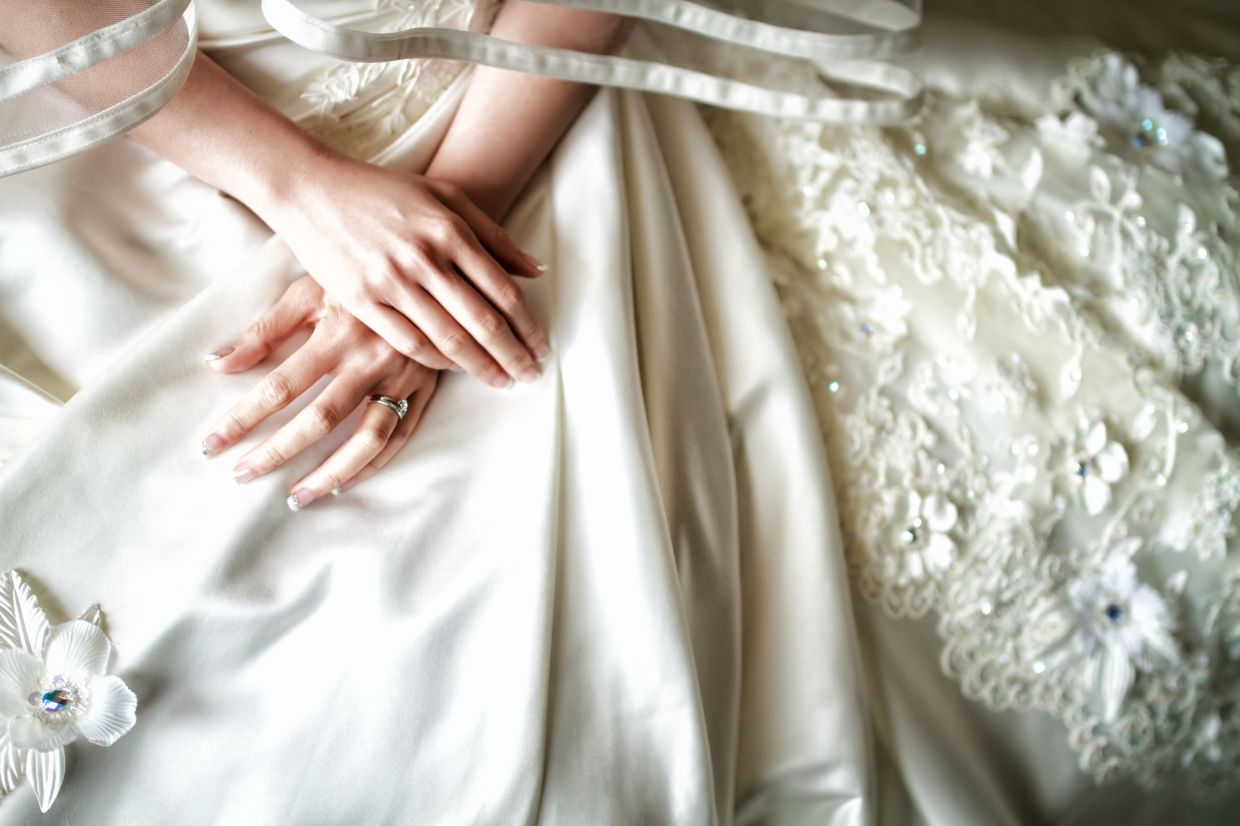
The decision to part with a wedding dress—especially one inherited from a mother or grandmother—ranks among fashion's most agonising choices. Unlike ordinary clothing that fades from memory once worn, a wedding gown carries the accumulated weight of life's most significant moment, layered with decades of family narrative. For many people, particularly those without daughters or children to pass it on to, the dress becomes a tangible link to a past self and to the women who came before them. This emotional entanglement makes the simple act of discarding fabric feel like erasing history itself.
Clothes function as far more than material objects. They are vessels of joy, sorrow, experience and memory—powerful conduits back to our own personal histories. Psychologists and fashion historians have long recognised this phenomenon, understanding that certain garments transcend their functional purpose to become almost sacred artefacts. A mother's wedding dress is simultaneously a symbol of her own life story and a window into the broader historical context of her era. When you wear that dress, you are not simply putting on fabric; you are stepping into a continuum of womanhood and family tradition that stretches backward and forward across generations. This fusion of personal and collective memory—what might be called fashionthromorphism—explains why discarding such an item can feel almost sacrilegious.
The difficulty intensifies when the garment has already been passed down through multiple generations. Each handoff adds another layer of significance, transforming the dress from a personal possession into a family heirloom. Parents often experience acute emotional distress when encountering their grown children's childhood clothes, recognising them as the last physical remnants of periods that have otherwise vanished into time. A wedding dress carries this sentiment to its extreme, representing not just one person's milestone but potentially decades of family history compressed into silk and lace. Yet simultaneously, practical realities constrain our ability to preserve everything. The tension between honouring heritage and acknowledging the finite space in our homes and lives creates a genuine dilemma with no perfect solution.
Cameron Silver, a luxury brand consultant and founder of Decades, one of North America's pioneering high-end vintage retailers, brings a nuanced perspective to this struggle. He counsels clients on closet management and has observed that his role often resembles therapy more than fashion consultation. Silver emphasises that his work involves helping people reflect deeply on why they maintain particular possessions rather than pressuring them to abandon items prematurely. He recommends beginning with three straightforward but revealing questions: Does the dress fit your current body and lifestyle? Would you realistically wear it again? And most tellingly of all, how would you genuinely feel if the item were lost or stolen? These questions cut through sentiment to reveal whether an object truly serves a meaningful purpose or has become a source of guilt and burden.
For those ready to consider alternatives, several thoughtful options exist beyond the conventional donation bin. The first involves transformation—reimagining the wedding dress as another garment entirely. Wearing its history in a new form creates a poetic bridge to the past, preserving the material while acknowledging changed circumstances. However, this approach carries risk. Converting a dress into something else removes it from its original sacred context, and something essential may be lost in the translation. The gown's meaning is inextricably tied to its function as a wedding dress, and altering that purpose, however creatively, fundamentally changes its nature.
A second pathway involves gifting the dress to someone who will wear it for its intended purpose. While mainstream charities like the Salvation Army may seem impersonal, organisations such as Brides Across America specifically donate wedding gowns to engaged military couples and emergency medical workers who otherwise lack financial resources for such garments. This option transforms the dress from a museum piece into an active participant in another woman's life milestone. Documenting expert Emily Spivack advocates writing a brief note about the dress's history and attaching it to the garment, ensuring the next wearer inherits not just fabric but family narrative. This approach creates continuity across generations of strangers, extending the dress's social and emotional significance.
A third creative solution involves creating what might be termed a memory archive. Spivack facilitates workshops where participants bring personally significant garments, photograph them, document their histories, and write narratives about their importance. Through this process of intentional documentation and storytelling, attendees often feel they have genuinely processed their emotional attachment and can subsequently release the physical object without guilt. The story itself becomes the heirloom, passed among family members in written or recorded form—a more portable and shareable legacy than the dress itself. This approach acknowledges that memory and meaning need not be confined to the original object.
Another increasingly viable option involves donating wedding dresses to academic institutions. Universities including Smith College, Drexel University, Ohio State University and Cornell University now actively collect wedding gowns and related garments specifically because of their quotidian value—their ability to illuminate ordinary women's lives rather than for their artistic or design significance. These institutional collections differ fundamentally from traditional costume museums, which typically prioritise unique textiles or garments historically significant in design. Instead, they function as teaching resources that use clothes to elucidate women's experiences across different eras. Denise Green, director of the Fashion + Textile Collection at Cornell University, notes that the institution holds nearly 350 wedding gowns and wedding accessories among more than 11,000 objects in its collection.
These academic collections reveal how even seemingly ordinary wedding dresses contain profound historical significance. Among Cornell's holdings is a 1942 British wedding gown created by dressmaker Cylka Berke for her own wartime London ceremony, designed to maximise yardage while minimising cut waste—an approach mandated by wartime rationing and material scarcity. Though Berke remains relatively unknown to contemporary audiences, the dress itself becomes a historical document, telling stories of rationing constraints, design innovation under pressure, and the persistence of ritual and celebration amid global conflict. Remarkably, because the gown was fashioned from rayon rather than silk—which the military requisitioned for parachutes, escape maps and blood chits—the fabric has retained an unusually vibrant white colour across eight decades. A simple wedding dress thus transforms into material evidence of historical experience, its preservation serving educational purposes far beyond sentimental attachment.
Navigating the decision to release a wedding dress ultimately requires both practical and emotional clarity. Experts suggest moving beyond guilt to recognise that letting go of physical objects need not mean abandoning their meaning or significance. Whether through transformation, gifting to someone who will wear it, creating documentary archives, or donating to institutions where the dress continues contributing to society, multiple pathways honour both the garment's history and one's own need for closure. The dress's power derives not from its permanence but from what it represents—and that representation can be preserved, transformed and shared in ways that feel authentic to individual circumstances and values. For Malaysian families with similar heirloom traditions, these approaches offer frameworks for navigating the tension between respecting heritage and acknowledging contemporary realities.

