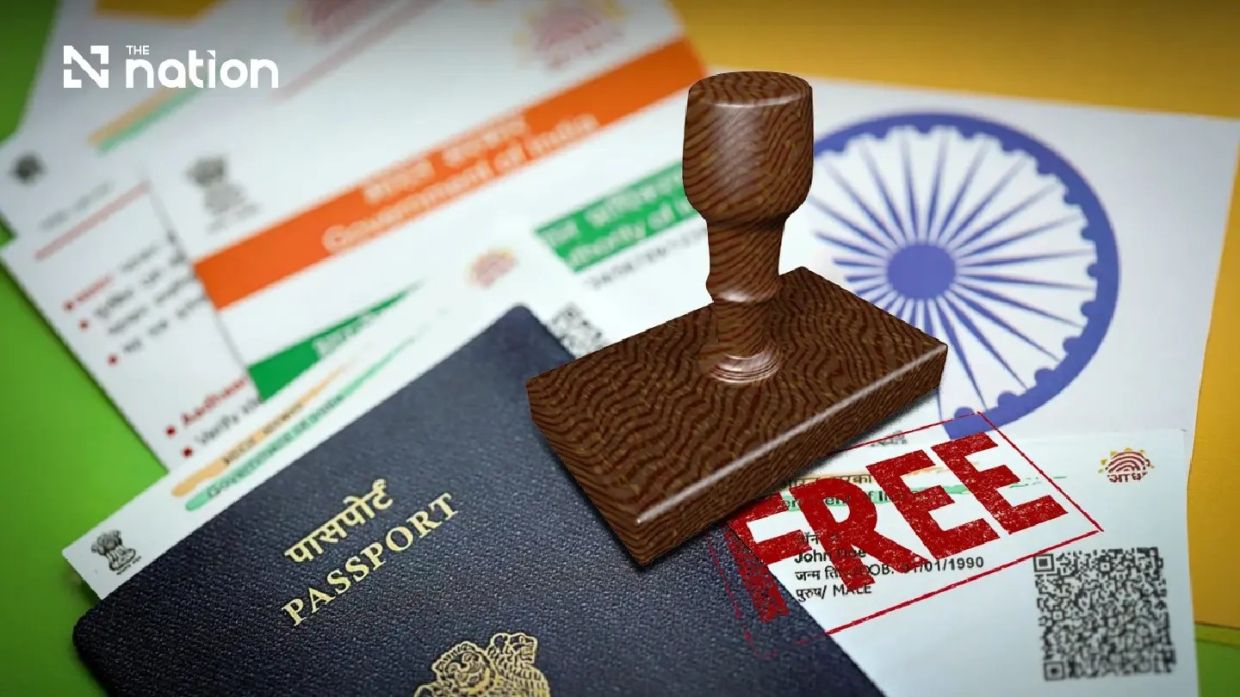
Thailand's Tourism and Sports Minister Surasak Phancharoenworakul has championed a 30-day visa-free entry arrangement for Indian nationals, marking a significant expansion of the country's tourism accessibility strategy. The extended visa window replaces an earlier proposal that would have capped Indian visitors at 15 days, a restriction the ministry deemed insufficient to capitalise on one of Southeast Asia's most lucrative emerging markets. Thailand is now betting that this more generous framework will help drive arrivals from India to 2.7 million in 2027, making it central to the nation's broader ambitions of shifting towards premium, experience-driven tourism.
The rationale behind the extended visa window reveals much about how Thailand views its Indian market segment. Surasak's decision to push for 30 days rather than accept the initial 15-day proposal reflected a nuanced understanding of Indian travel patterns, particularly the growing phenomenon of destination weddings and extended celebration events. These gatherings, which can span several weeks and involve hundreds of guests, have become a hallmark of affluent Indian tourism. A fortnight would have forced organisers to choose alternative destinations or fragment their celebrations across multiple trips, neither outcome acceptable to Thailand's hospitality sector, which has invested heavily in developing premium wedding and event infrastructure.
Equating Indian visitors to travellers from other established markets within the visa-exemption category carries strategic weight beyond simple bureaucratic consistency. The decision projects confidence in India as a tier-one tourism destination for Thailand and eliminates a psychological barrier that shorter stays might have created. For travel agents, wedding planners and tour operators in India, the extended entitlement signals Thailand's commitment to the market and justifies deeper commercial investments in Thailand-focused tourism products. This confidence-building exercise becomes particularly important as Indian travellers increasingly compare Thailand against competing Southeast Asian destinations offering varying degrees of visa convenience.
The Tourism Authority of Thailand forecasts a marked trajectory of growth that hinges partly on visa accessibility. The agency expects 2.55 million Indian arrivals in 2026, followed by a 5.8 per cent increase to 2.7 million in 2027. These projections build on solid recent performance: 2.48 million Indian visitors arrived in 2025, representing a robust 16.82 per cent year-on-year increase. By mid-2026, India had already contributed approximately 1.3 million tourists, securing the country's position as Thailand's third-largest source market. This trajectory, underpinned by accessibility reforms, positions India among Thailand's most dynamic growth markets as traditional Northeast Asian source countries face economic headwinds and shifting travel preferences.
The visa policy shift gained urgency after the Thai cabinet initially approved withdrawing a temporary 60-day visa exemption covering 93 countries and territories. Tourism operators across Thailand feared this move would relegates Indian passport holders to the Visa on Arrival category, introducing an extra procedural step that would disadvantage Thailand relative to competitors. The cabinet's revised decision on July 14 placed India within a cohort of 59 countries receiving standard 30-day visa-free treatment, resolving the industry's anxieties while maintaining the government's streamlined immigration framework. The recalibration reflects growing recognition that visa accessibility and tourism revenue operate in tandem, particularly for markets like India where regional alternatives have proliferated and travellers can exercise meaningful choice.
India's position within Thailand's tourism hierarchy reflects both existing strength and future potential. As the world's third-most popular overseas destination for Indian travellers behind the United Arab Emirates and Saudi Arabia, Thailand has captured a significant share of Indian leisure spending. Yet intensifying competition from Vietnam, Malaysia and Singapore demands Thailand remain strategically ahead in accessibility and market development. Vietnam has leveraged competitive pricing and creative incentives, Malaysia has promoted visa-free arrangements, and Singapore has solidified dominance in the family segment. Thailand's 30-day exemption represents a calculated counter-move, emphasising accessibility while the TAT simultaneously pursues higher-value visitor segments.
The spending profile of Indian visitors underscores their importance to Thailand's tourism evolution. Average daily expenditure reaches 6,203 baht per person, translating to approximately 36,354 baht per trip, with many visitors staying seven to fifteen days. These figures position India favourably within Thailand's shift towards premium tourism that generates greater revenue density than conventional volume-based strategies. Indian travellers demonstrate strong appetite for Thai cuisine, beach experiences, spa and wellness facilities, demographics that align well with Thailand's developmental priorities. The predominance of first-time visitors, representing 59.68 per cent of arrivals, combined with an average stay approaching 7.17 days, suggests substantial room for itinerary expansion and experiential deepening as repeat visitors mature and word-of-mouth recommendations amplify.
Air connectivity infrastructure anchors Thailand's capacity to realise these ambitious targets. The TAT's New Delhi office oversees routes connecting nine Indian cities to Bangkok, Krabi and Phuket, providing 144 weekly flights and approximately 32,000 seats. The Mumbai-based office manages markets with roughly 160 weekly flights offering 33,000 seats, bringing combined weekly capacity across Thailand-India routes to approximately 66,000 seats. Though some airlines temporarily suspended services due to Middle East instability and elevated fuel costs, capacity recovery is anticipated during high-season periods. This infrastructural foundation provides Thailand with competitive advantages that air connectivity gaps, should they emerge, could quickly undermine.
Geographic expansion of market development represents another strategic dimension of Thailand's Indian tourism strategy. While major metropolitan centres including New Delhi, Kolkata and Mumbai remain focal points for TAT promotion, the agency is deliberately penetrating Tier 2 and Tier 3 cities where rapid economic growth creates emerging affluent consumer cohorts less accustomed to international travel. Lucknow, Chandigarh, Guwahati, Ahmedabad, Surat and Pune represent markets with distinct demographic and economic characteristics. Surat's diamond industry creates concentrated wealth among a relatively small, high-spending population, while Pune's automotive and industrial sectors provide access to professional and entrepreneurial segments with disposable income and international travel aspirations. This granular geographic segmentation demonstrates sophisticated understanding of how Indian wealth distribution and consumer behaviour varies across regional economies.
Thailand's marketing approach increasingly reflects evolving preferences among Indian travellers, particularly younger demographics gravitating towards immersive, experience-centred tourism rather than conventional sightseeing. Food culture, local lifestyles, community engagement and wellness experiences now feature prominently in TAT promotional campaigns, acknowledging a generational shift from photography-centric tourism towards authentic cultural immersion. This repositioning also addresses competition implicitly; while Singapore emphasises family amenities and Vietnam offers budget accessibility, Thailand positions itself as a venue for deeper, more meaningful travel experiences. The strategy encompasses neighbouring markets including Bhutan, Nepal and Bangladesh, widening Thailand's regional tourism catchment and creating economies of scale for promotional activities.
Implementation logistics underpin the accessibility framework's effectiveness. All non-Thai nationals, including Indian visitors, must complete a Thailand Digital Arrival Card submittable within three days before arrival. This digitalised process reduces friction compared to traditional paper-based procedures while maintaining immigration oversight capacity. The requirement balances tourism openness with border security imperatives, allowing authorities to screen arrivals systematically without reverting to manual processing bottlenecks. For Indian travellers accustomed to digital government platforms and visa portals, this approach presents minimal friction, particularly when contrasted against Visa on Arrival procedures that require in-person processing upon arrival.
Thailand's Indian tourism strategy ultimately reflects recognition that destination competitiveness increasingly hinges on accessibility, market segmentation and authentic value proposition rather than generic brand promotion. The 30-day visa exemption removes a competitive disadvantage that could have been exploited by regional rivals. Simultaneously, targeted geographic expansion and experience-focused marketing position Thailand as a destination evolving beyond mass tourism towards premium, sustainable visitor segments generating substantial economic value. As Indian outbound tourism continues expanding, Thailand's strategic investments in visa accessibility, air connectivity and differentiated market positioning will likely determine whether it consolidates or loses ground relative to increasingly assertive Southeast Asian competitors.

