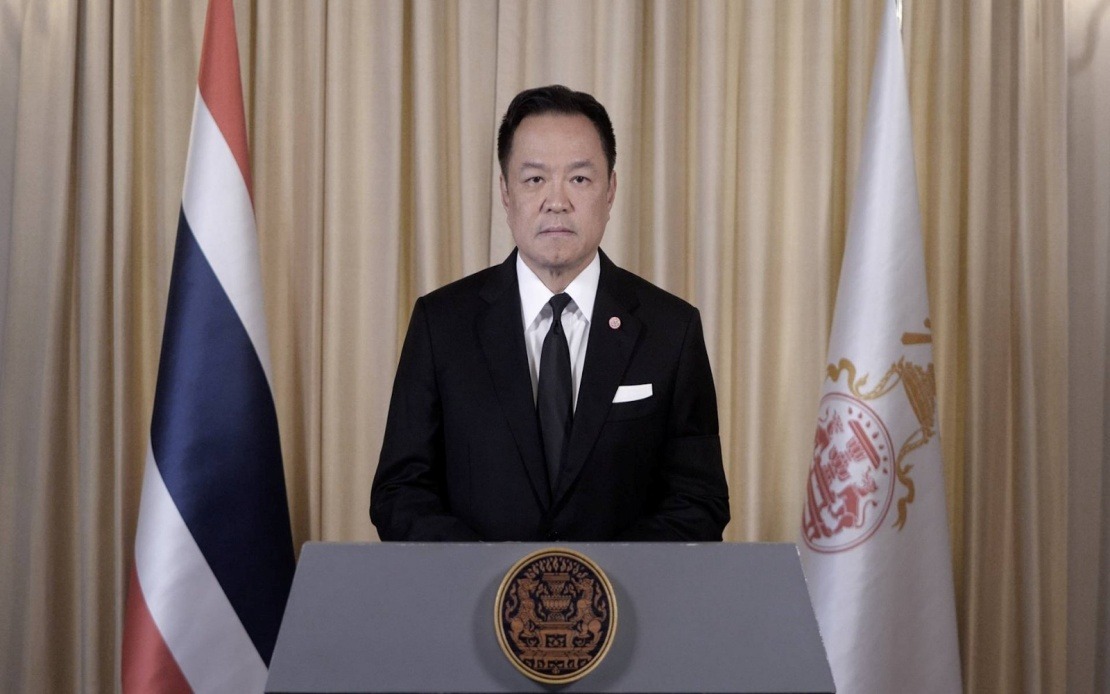
Thailand's leadership has responded positively to reports of a ceasefire agreement between the United States and Iran, signalling hope that resolution of West Asian tensions could provide relief to the region's economic outlook. Prime Minister Anutin Charnvirakul made these remarks on Monday at Government House, emphasising that any breakthrough in the Middle East would constitute a welcome development for addressing global economic pressures and supporting stability across multiple sectors.
The timing of these comments follows US President Donald Trump's announcement on Sunday that an agreement with Iran had been finalised. Trump indicated his authorisation for the reopening of the Strait of Hormuz and the removal of a US naval blockade, moves with significant implications for global energy markets and maritime commerce. These developments have drawn attention from policymakers across Southeast Asia, who have grown increasingly concerned about the region's vulnerability to disruptions in critical shipping routes and energy supply networks.
Anutin's remarks reflect Thailand's broader vulnerability to external economic shocks, particularly those stemming from geopolitical conflicts that disrupt energy supplies. The kingdom remains heavily dependent on imported oil and natural gas, making it directly susceptible to price volatility triggered by tensions in the Middle East. A prolonged conflict in West Asia would likely translate into higher fuel costs and transportation expenses, ultimately feeding into inflation across Thai manufacturing, agriculture, and service sectors.
The Prime Minister highlighted that Thailand has demonstrated resilience in adapting to previous disruptions in global supply chains, a capacity the government intends to leverage should new challenges emerge. Rather than adopting a reactive posture to daily geopolitical developments, Thai policymakers emphasise reliance on long-term strategic planning frameworks designed to buffer the economy against foreseeable shocks. This approach suggests confidence in institutional preparedness, though it also acknowledges the reality of Thailand's structural dependence on smooth global trade flows.
Deputy Prime Minister and Finance Minister Ekniti Nitithanprapas expanded on these themes, directly linking a resolution of West Asian conflict to tangible benefits for both global and Thai economies. He particularly emphasised the potential for energy price moderation, which would ease pressures on household budgets and reduce operational costs for small and medium-sized enterprises struggling with elevated input expenses. For Thailand's export-oriented manufacturing base, lower energy costs could improve competitiveness at a time when regional producers face intensifying competition from multiple directions.
Ekniti signalled the government's commitment to monitoring inflationary pressures with particular attention to their impact on vulnerable populations. Thailand's household debt levels remain elevated by regional standards, leaving many families dependent on stable energy costs and moderate inflation to manage household budgets. Small businesses, which employ millions of Thais and form the backbone of rural economies, would benefit substantially from energy cost relief that reduces production expenses and enables modest price relief to consumers.
Despite expectations of lower oil prices should the ceasefire hold, the Deputy Prime Minister confirmed Thailand's determination to proceed with a 200-billion-baht energy transition programme. This commitment underscores recognition that Thailand's long-term economic security depends on diversification away from fossil fuel reliance, regardless of near-term price movements. The programme addresses not only energy affordability but also environmental sustainability and Thailand's international climate commitments.
The government's cautious optimism extends to prospects for stronger economic growth than currently projected. International forecasting organisations have revised growth expectations downward for Thailand and regional peers, reflecting slowed demand in major markets and elevated uncertainty. A genuine resolution of West Asian tensions would remove one significant downside risk from these projections, potentially enabling faster expansion in tourism, trade, and investment-dependent sectors that have underperformed in recent quarters.
For Malaysia and other Southeast Asian economies, the implications run parallel to Thailand's situation. The region collectively imports substantial quantities of crude oil and refined products, with energy costs cascading through manufacturing supply chains and consumer prices. A more stable Middle East energy market would benefit ASEAN producers and consumers alike, though benefits would vary by country depending on individual energy import profiles and industrial composition.
The remarks from Bangkok policymakers reflect a broader regional calculus that views Middle East stability as prerequisite for sustainable growth in Southeast Asia. While Thailand and its neighbours have limited direct influence over US-Iran negotiations, they have substantial interest in outcomes that restore predictability to global energy markets. The government's framing of the ceasefire as economically positive suggests preparedness to pivot focus toward domestic growth strategies should international conditions stabilise.