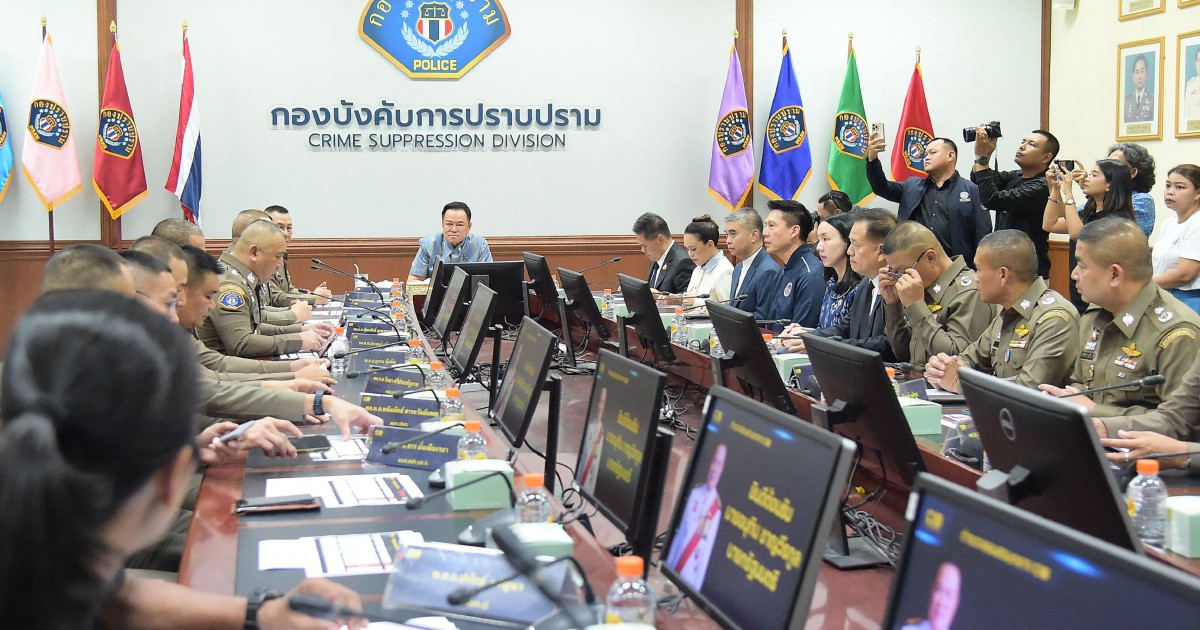
Thailand's government has initiated sweeping disciplinary action against nearly 6,000 civil servants following discovery of widespread cheating during recruitment examinations, authorities confirmed on Thursday as investigators continue expanding their inquiry into what has become one of the nation's most significant public sector integrity crises in recent years.
The scale of the suspected misconduct—involving thousands of candidates across multiple examination sessions—signals systemic vulnerabilities in how Thailand's civil service recruitment process operates. Rather than targeting a handful of isolated offenders, the probe has exposed what appears to be coordinated fraud potentially involving networks of participants spanning numerous agencies and government departments throughout the kingdom.
Three individuals have already been arrested in connection with the cheating scheme, providing investigators with leads into the mechanics of how the fraudulent activity was orchestrated. Authorities have not yet disclosed the specific roles these detainees played, but their apprehension suggests law enforcement has identified key coordinators rather than merely peripheral participants in the broader conspiracy.
The suspension of approximately 6,000 officials represents an unprecedented disciplinary undertaking for Thailand's civil service apparatus. This administrative action effectively removes the individuals from their posts pending investigation outcomes while allowing authorities time to determine appropriate long-term consequences. For those suspended, the implications are substantial—lost income, professional reputation damage, and uncertain career prospects even if eventual investigations clear some of involvement.
For Malaysia and the broader Southeast Asian region, Thailand's unfolding scandal carries important lessons about civil service accountability. Countries across ASEAN maintain comparable recruitment systems where examination integrity remains foundational to merit-based hiring principles. The discovery that Thailand's examination framework proved vulnerable to systematic manipulation highlights how quickly institutional safeguards can erode when oversight mechanisms weaken or become compromised.
The investigation's expansion indicates that initial discoveries prompted authorities to widen their search beyond preliminary findings. This iterative approach—progressively uncovering larger networks of suspected involvement as initial suspects provide information—typically characterizes organized fraud cases where multiple participants possess complementary knowledge of the scheme's operational details. Each new revelation likely leads investigators toward previously unknown cells or accomplices within the wider network.
Thailand's approach to the crisis demonstrates the government's commitment to confronting the scandal through administrative suspension rather than pursuing criminal charges against all 6,000 implicated officials simultaneously. This strategy appears designed to remove compromised individuals quickly while preserving investigative capacity to pursue criminal prosecution against those most culpable for orchestrating or profiting substantially from the cheating arrangement.
The institutional consequences extend beyond individual suspensions. Revelations about examination cheating inevitably undermine public confidence in civil service competence and suitability. Citizens encountering officials recruited through a compromised selection process may reasonably question whether these individuals possess qualifications matching their positions. This erosion of institutional legitimacy proves particularly damaging in governance contexts where bureaucratic effectiveness depends on public perception that officials earned positions through genuine merit.
For prospective civil servants in Thailand and throughout Southeast Asia, examination fraud scandals create perverse dynamics. Candidates who refuse to participate in cheating schemes face competitive disadvantage against those willing to exploit fraudulent shortcuts. This competitive distortion incentivizes misconduct precisely when institutions most need to attract ethically-grounded applicants committed to serving public interests rather than exploiting bureaucratic positions for personal enrichment.
The investigation's trajectory will likely influence how other Southeast Asian governments calibrate their own civil service recruitment safeguards. Thailand's experience suggests that even established examination systems require continuous monitoring and authentication measures to prevent determined fraud networks from successfully operating undetected across multiple examination cycles or locations. Regional peer learning about vulnerability discovery and prevention represents one positive externality potentially emerging from Thailand's negative experience.
Investigators face significant analytical challenges as the probe expands. Determining which suspended officials possessed genuine culpability versus those tangentially implicated, identifying whether external actors profited substantially from the scheme, and establishing whether examination administrators themselves participated in facilitating fraud all demand careful investigative work extending beyond the initial three arrests.
The suspension decisions occurring at substantial scale suggest Thai authorities prioritize rapid removal of potentially compromised officials over individualised adjudication of each case. While this approach demonstrates urgent institutional response, it also carries risks—some suspended individuals may ultimately prove innocent of involvement, facing career disruption despite lacking culpability. Establishing fair administrative review mechanisms will become crucial as the investigation progresses and individual circumstances warrant closer scrutiny.
Thailand's civil service commission now confronts the longer-term challenge of rebuilding examination integrity and restoring public confidence in recruitment processes. Implementing enhanced authentication systems, independent proctoring oversight, and transparent verification procedures will prove essential for preventing similar episodes. How comprehensively the government addresses these systemic gaps will substantially influence whether this scandal catalyzes lasting institutional reform or merely represents a temporary scandal eventually overshadowed by subsequent events.

