Thailand is preparing to host a pair of informal meetings involving ASEAN Foreign Ministers and Myanmar's diplomatic delegation in Bangkok on Sunday, signalling the regional grouping's determination to maintain constructive engagement with the military-governed nation despite persistent tensions. The sessions reflect ASEAN's ongoing struggle to balance its principle of non-interference with mounting international pressure to take a firmer stance on the humanitarian crisis unfolding in Myanmar since the 2021 coup.
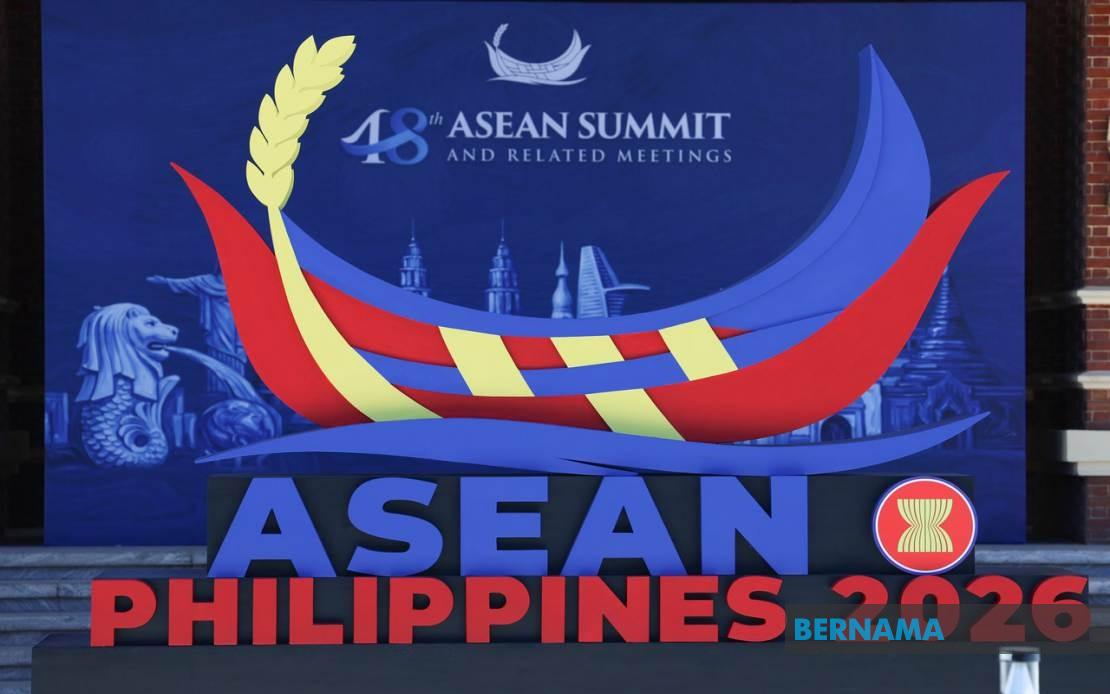
The two separate consultations—an Informal Meeting of ASEAN Foreign Ministers with Myanmar's Foreign Minister and an Extended Informal Consultation on Myanmar—represent a carefully calibrated diplomatic approach designed to keep channels of communication open. According to Maratee Nalita Andamo, deputy spokesperson for Thailand's Foreign Ministry, the Philippines will officially chair these proceedings in its capacity as ASEAN Chair, while Bangkok assumes the practical role of host nation. This arrangement underscores the regional institution's consensus-based decision-making structure, where multiple member states often share responsibility for sensitive diplomatic initiatives.
The central objective of these discussions centres on examining concrete pathways to operationalise ASEAN's Five-Point Consensus, the roadmap agreed upon in April 2021 that outlined steps toward Myanmar's political resolution. The consensus has become the touchstone of ASEAN's Myanmar policy, yet implementation has proven frustratingly sluggish amid the junta's resistance to dialogue and the opposition's refusal to negotiate under military occupation. By bringing foreign ministers together for frank, behind-closed-doors conversations, ASEAN hopes to identify practical mechanisms to translate this agreement into measurable progress on the ground.
Thailand's role as host carries particular significance given its geographic proximity to Myanmar and its substantial influence within ASEAN as a fellow Southeast Asian power with deep historical ties to Naypyidaw. Bangkok itself has faced considerable international criticism for its relatively accommodating stance toward Myanmar's military leadership, making this hosting responsibility a delicate balance between appearing engaged while avoiding the appearance of endorsing the junta's rule. Thai officials have emphasised that these informal sessions provide an essential venue for candid exchange without the formality that sometimes constrains official ASEAN meetings, potentially allowing ministers to explore innovative approaches to an intractable problem.
Expected attendees include Philippine Secretary for Foreign Affairs Maria Theresa Lazaro, Thailand's Foreign Minister Sihasak Phuangketkeow, and Myanmar's Foreign Minister U Tin Maung Swe, alongside diplomatic representatives from other member nations. The presence of Myanmar's foreign minister himself signals that the junta, while internationally isolated, remains willing to engage with ASEAN on its own terms. This attendance carries weight for Malaysian policymakers and the broader region, as ASEAN's collective response to Myanmar will shape its credibility and cohesion in addressing future crises affecting member states.
Crucially, the Thai Foreign Ministry has clarified that no official outcome document will be released following these consultations. This deliberate decision to avoid a joint statement reflects ASEAN's difficulty in achieving consensus language on Myanmar that satisfies all member states—particularly Indonesia and Malaysia, which have pushed for stronger accountability measures, alongside countries like Thailand, Laos, and Cambodia that favour gradual re-engagement. By eliminating the expectation of a formal communiqué, ASEAN sidesteps the potential embarrassment of either producing toothless statements or failing to agree on text altogether.
The informality of these meetings also serves an important political function for ASEAN domestically. By characterising these sessions as consultations rather than official decision-making forums, member states can argue they are maintaining ASEAN's established positions and prior decisions on Myanmar without appearing to shift strategy or abandon earlier stances. This language matters enormously in a region where pride and face-saving considerations profoundly influence diplomatic manoeuvring. For Myanmar's junta, the invitation to participate offers a degree of international legitimacy that its government desperately craves, while for more critical ASEAN members, the informal nature allows them to participate without seeming to capitulate to junta demands.
The broader context of these meetings reflects ASEAN's fundamental strategic dilemma: how to maintain unity and centrality in regional affairs while responding to a member state's internal crisis that violates the bloc's democratic aspirations. Since the 2021 coup, ASEAN has struggled to enforce consequences against Myanmar while preserving the principle of non-interference that underpins the association's founding charter. This tension has grown more acute as the humanitarian situation deteriorates, with armed resistance to military rule intensifying and civilian casualties mounting. Regional powers, particularly Indonesia and Malaysia, face domestic pressure from their own populations to take stronger action, yet they remain bound by ASEAN's consensus rule requiring unanimity on contentious matters.
For Malaysia specifically, these consultations carry particular weight given Kuala Lumpur's historical advocacy for stronger regional responses to internal crises and its significant ethnic Rohingya refugee population, whose plight is inextricably linked to Myanmar's instability. Malaysian officials have consistently urged ASEAN to adopt more assertive positions, though always within the framework of regional consensus. The Bangkok meetings provide an opportunity for Malaysian diplomats to press these points in informal settings where creative compromises might emerge more readily than in formal ASEAN forums.
The timing of these meetings also reflects shifts in international attention to Myanmar. As the initial shock of the 2021 coup has faded from global headlines, ASEAN has sought to reposition itself as the indispensable channel for engaging with Myanmar and facilitating eventual political transition. Thailand's hosting role underscores this bid to position Southeast Asia as capable of managing its own affairs without external pressure, a consideration that resonates across the region given broader anxieties about great power competition and the need to protect regional autonomy.
Moving forward, the success of these informal consultations will hinge not on public pronouncements but on whether participants identify substantive approaches to advance the Five-Point Consensus that might actually influence Myanmar's trajectory. This could range from expanded humanitarian assistance mechanisms to structured dialogue frameworks that might eventually draw Myanmar's armed forces toward negotiations. The challenge remains formidable: the junta shows little inclination to compromise, the opposition refuses to legitimise military rule through dialogue, and ASEAN remains divided on how far it should go in pressuring its member. Yet these meetings represent ASEAN's continued commitment to gradualism and engagement as the path toward resolution, a strategy that will be tested repeatedly in the months ahead.

