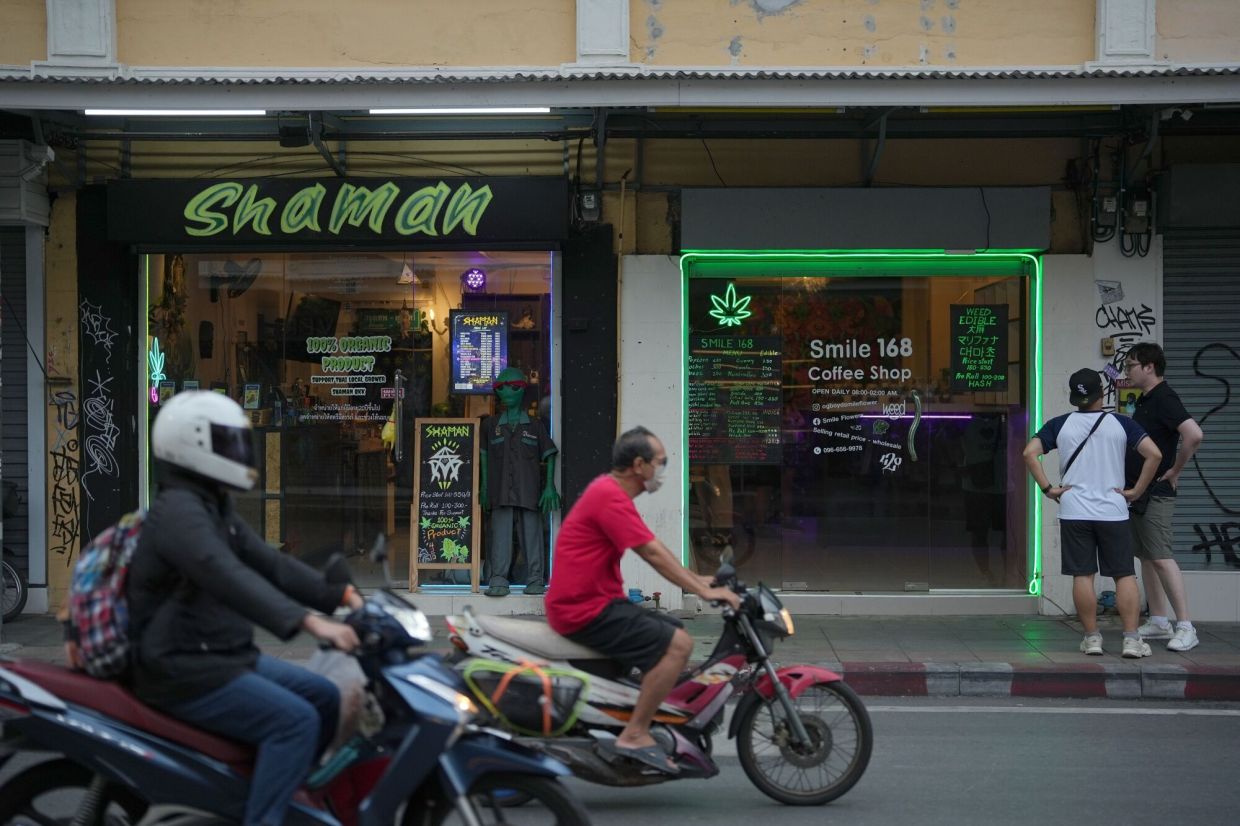
Thailand's Public Health Minister Pattana Promphat is accelerating work on a comprehensive Cannabis and Hemp Act designed to restrict the country's burgeoning cannabis industry strictly to medical applications, signalling a significant regulatory shift for a nation that decriminalised the plant just three years ago. The draft legislation, which advanced in the parliamentary process this week, represents an attempt to rein in what has become a largely uncontrolled market and prevent Thailand from becoming a gateway for illicit cannabis exports to neighbouring countries where the substance remains heavily prohibited.
The proposed law marks a departure from the looser framework currently governing cannabis in Thailand. Present regulations rely on the Act on the protection and promotion of herbs alongside various ministerial directives, which manage the sales, distribution, and processing of cannabis products but conspicuously omit any provisions for controlling cultivation itself. This regulatory gap has allowed cannabis farming to proliferate without systematic oversight, creating a situation where tracking the source and movement of raw materials has become increasingly difficult. The new bill would close this gap by establishing direct governmental supervision from the moment seeds are planted through to the finished product reaching consumers.
A critical enforcement challenge confronting Thai authorities is the estimated 6,000 cannabis retail outlets operating with expired licences or lacking proper authorisation entirely. When Thailand first permitted cannabis retail licensing in 2023, approximately 18,000 outlets received initial authorisation. However, since these licences operate on three-calendar-year cycles, roughly one-third of original licensees saw their permits expire at the close of 2023, with only about 1,500 choosing to renew. This structural problem means roughly 6,000 shops expire annually in the 2026 and 2027 period alone, creating a vacuum that unlicensed operators have rushed to fill. Many of these clandestine shops operate under the guise of medical dispensaries whilst openly selling cannabis for recreational consumption, fundamentally undermining the government's stated policy objective.
The enforcement strategy outlined by Minister Pattana involves substantially expanding inspection capacity by mobilising tens of thousands of authorised officials from police forces and local administrative organisations nationwide. The Department of Thai Traditional and Alternative Medicine has established a GPS-based registry of legitimately licensed outlets, complete with expiration dates visible to enforcement personnel and the public. Crucially, any cannabis shop not appearing on this publicly available database is automatically considered unlicensed and subject to immediate arrest of operators. This transparency mechanism represents an innovative approach to distinguishing legitimate from illegal operations in real time, significantly reducing the investigative burden on authorities.
Illegal cannabis exports have emerged as a pressing concern for Thai officials, who recognise that whilst cannabis carries no narcotic classification domestically, it remains a controlled substance in virtually all neighbouring countries and beyond. The Customs Department and Airports of Thailand have stepped up coordination with the Department of Thai Traditional and Alternative Medicine to intercept large shipments destined for export markets. Pattana acknowledged that some significant quantities have previously escaped detection despite these measures, particularly when smugglers employed forged export licences. However, the transition to electronic-only licensing has introduced an additional verification layer that complicates fraudulent documentation schemes, though vigilance remains essential given the substantial profit incentives driving illicit trade.
The structural redesign of licensed cannabis retail operations under amended regulations will transform shops into de facto medical facilities requiring on-site doctors to oversee all patient consultations and product dispensing. This modification aims to prevent the kind of casual, repetitive purchasing patterns that characterise recreational use and would indicate circumvention of medical restrictions. Where transaction histories reveal suspicious purchasing behaviour, such as the same individual repeatedly obtaining large quantities, regulatory authorities are obligated to investigate thoroughly and initiate legal proceedings if irregularities are confirmed. Such measures fundamentally alter the business model of cannabis retail in Thailand, shifting it away from the high-volume, low-oversight convenience store approach that has characterised recent operations.
The penalties framework embedded in the draft Cannabis and Hemp Act is deliberately calibrated to deter violations through unusually severe sanction levels. By establishing comparatively high and serious consequences for breaching cultivation controls, unlicensed retail operations, and unlawful exports, Thai policymakers aim to create sufficient legal risk to discourage would-be violators. This approach reflects frustration with the comparative leniency of existing regulatory instruments, which have proven inadequate in preventing the explosive proliferation of cannabis commerce across Thailand's landscape. The new legislation essentially represents regulatory enforcement with teeth, backed by criminal consequences rather than merely administrative penalties.
The political context surrounding this legislative push stems partly from the Bhumjaithai Party's prominent role in Thailand's cannabis liberalisation, which the party championed as a public health and agricultural initiative. However, that party's current position—and the government's broader stance—has shifted decisively toward restricting applications to strictly medical contexts. Minister Pattana repeatedly emphasised that Bhumjaithai's cannabis policy targets medical use exclusively, seeking to distance the party from associations with recreational cannabis culture that has flourished in Bangkok and tourist areas. This recalibration reflects both domestic political pressures and potential regional diplomatic concerns about Thailand's image as cannabis tourism expands.
The broader Southeast Asian implications of Thailand's regulatory tightening deserve careful consideration. Should Thailand successfully restrict its cannabis market to verified medical use, the country could serve as a regional model for balancing therapeutic access against recreational proliferation. Conversely, if enforcement proves inadequate and illicit exports continue expanding, Thailand risks becoming institutionally compromised by cannabis trafficking networks, damaging its standing amongst neighbouring governments attempting to maintain strict prohibitionist policies. Malaysia and other countries in the region watching this regulatory experiment will likely draw conclusions about whether gradual liberalisation can be effectively managed without losing control to commercial interests.
The legislative timetable remains uncertain, as the draft Cannabis and Hemp Act, though having completed public consultation in June 2026, did not advance to parliamentary deliberation during the recent legislative session. Pattana indicated the bill must first be finalised before separate discussions about potentially reclassifying cannabis as a narcotic substance can proceed, a move that would fall under the jurisdiction of the Ministry of Justice rather than the Public Health Ministry. This sequencing suggests Thai authorities recognise the importance of establishing a robust regulatory framework before reversing the 2018 decriminalisation entirely, a reversal that would generate substantial controversy and require careful legislative crafting. The coming months will prove critical in determining whether Thailand can implement meaningful cannabis controls or whether the market's commercial momentum will overwhelm governmental intentions.

