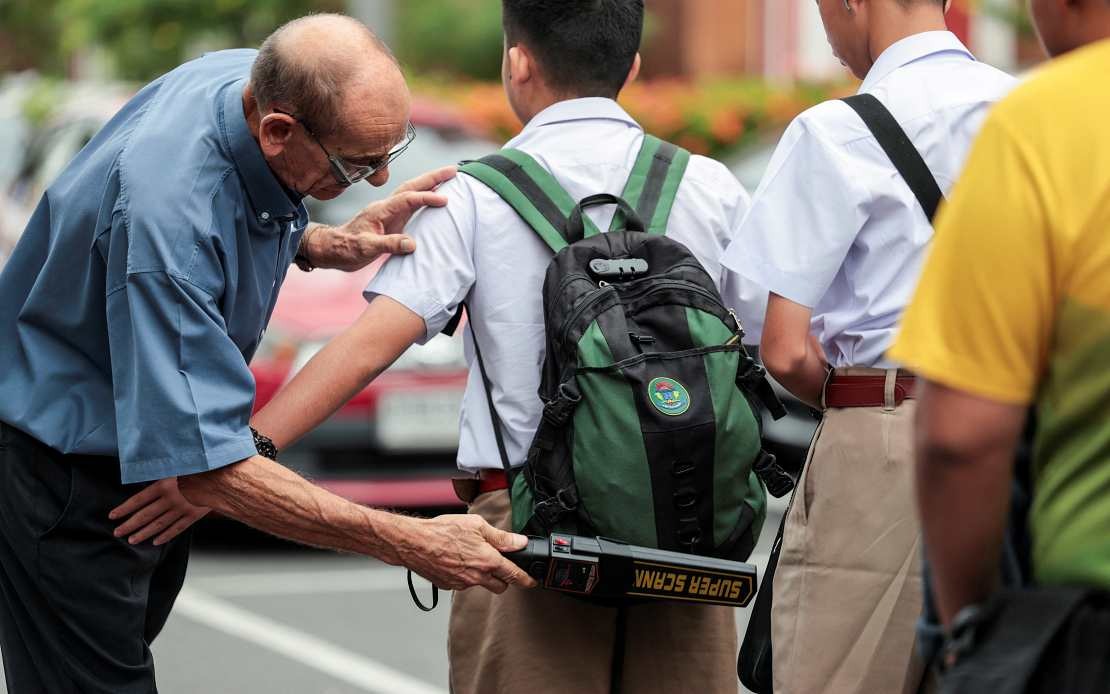
Thailand has implemented sweeping restrictions on civilian gun ownership in response to a catastrophic school shooting that claimed nine lives, including the grandparents of the teenage gunman who subsequently took his own life. Prime Minister Anutin Charnvirakul announced a one-year moratorium on issuing new firearm carry permits, characterising the suspension as essential to maintaining public order, minimising the potential for further violence, and rebuilding community trust in state security measures.
The decision, delivered on Tuesday, represents the most significant firearms policy intervention in recent Thai history and signals the government's resolve to address gun-related incidents at the national level. The suspension affects not only new permits but also impacts the entire administrative framework governing civilian firearm possession, demonstrating a comprehensive reassessment of how Thailand manages access to weapons.
Beyond the carry permit freeze, the Ministry of Interior has mandated enhanced vetting procedures for those seeking to purchase firearms. Working through the Department of Provincial Administration, regional authorities must now implement rigorous background investigation protocols under the existing Firearms Act, ensuring that scrutiny of applicants meets heightened standards. This bureaucratic restructuring aims to catch individuals who may pose public safety risks before weapons reach their hands.
Authorities will simultaneously intensify monitoring of citizens already holding valid firearm possession permits. The enhanced supervision regime seeks to verify that licensed gun owners maintain compliance with all legal obligations and safety protocols, creating a more robust oversight system. This represents a shift toward active management of existing permit holders rather than passive registration.
The legal framework surrounding firearm use in Thailand already carries severe penalties for misuse. Citizens caught carrying firearms in public without authorised justification face imprisonment terms reaching five years, monetary fines up to 10,000 baht (approximately $301 USD), or combined sanctions. All firearms must be stored at residential addresses when not in authorised use, a requirement enforced through criminal law.
The school shooting that precipitated this policy shift occurred on Friday and devastated the local community. The incident resulted in the deaths of nine individuals, encompassing not only schoolchildren but also family members of the perpetrator. The gunman's subsequent suicide deepened the tragedy and underscored the severity of mental health and domestic stability factors contributing to mass violence in Thailand.
Education Minister Prasert Jantararuangthong has complemented the firearms restrictions with a comprehensive six-point safety initiative now under Cabinet consideration. The proposed national package extends beyond weapons regulation to address root causes of school violence, incorporating mandatory mental health evaluations for students, regular emergency preparedness drills, and uncompromising positions on bullying behaviour and weapon introduction within educational environments. This multi-dimensional approach recognises that gun policy alone cannot prevent motivated attackers and that psychological support, institutional preparedness, and cultural change around violence must proceed in parallel.
The Thai government's response reflects broader regional concerns about urban violence and firearm proliferation across Southeast Asia. Malaysia and neighbouring countries have watched developments in Thailand closely, as gun-related incidents carry significant implications for regional stability and public safety strategies. Thailand's decision to prioritise restrictions over liberalisation may influence policy discussions elsewhere in the region, particularly in nations considering how to balance individual freedoms with collective security needs.
For Malaysian observers, the Thai measures warrant attention because they illustrate how quickly firearms policy can shift following high-profile tragedies and demonstrate the political feasibility of implementing restrictions that would have faced resistance in ordinary times. The one-year suspension functions partly as a cooling-off period allowing policymakers to gather data and design more permanent legislative frameworks addressing identified vulnerabilities.
Thailand's approach diverges from patterns seen in some Western democracies where gun advocacy maintains powerful constituencies resistant to restrictions. The relative ease with which the Thai Cabinet endorsed this moratorium suggests different political dynamics around firearms ownership in Southeast Asia, where public health and security considerations often take precedence over individual ownership claims. However, the temporary nature of the suspension indicates awareness that longer-term solutions require legislative processes and broader consensus rather than executive decree alone.
Separately, a former Thai legislator faced arrest in connection with the killing of a Nonthaburi Provincial Administrative Organisation president, illustrating that political violence remains a parallel security concern in Thailand alongside mass casualty incidents. This development suggests that firearms-related dangers pervade Thai society across multiple contexts and stakeholder groups, reinforcing the government's determination to restrict access.
The implementation of Thailand's suspension will require coordination across provincial administrations and local police forces, presenting practical challenges around enforcement consistency. Rural areas, where firearms have traditionally served agricultural and security purposes, may require specific exemptions or alternative permitting pathways if the policy threatens livelihoods. The Ministry of Interior will face pressure to clarify operational procedures and timeline expectations as the suspension takes effect.

