Thailand is preparing to deliver a pointed message to the Trump administration: if the United States imposes steep tariffs that cripple Thai exports, Bangkok may have little choice but to rethink its military partnership with Washington. According to officials involved in the negotiations, this warning will be embedded in a counterproposal that the Thai government plans to table as reciprocal trade talks resume later this month, marking an unusually direct attempt to link security cooperation with commercial advantage.
The strategy reflects Bangkok's growing frustration with the tariff regime now facing Thai manufacturers and exporters. Thailand recorded a trade surplus of US$51.4 billion with the United States last year, yet finds itself caught in the crosshairs of the Trump administration's protectionist agenda. Under Section 301 trade measures, Washington has already slapped a 12.5 per cent tariff on most Thai exports, a move that officials in Bangkok argue threatens the economic foundations of the country's stability and, by extension, its ability to maintain the kind of robust military relationship Washington has long cherished in Southeast Asia.
What makes Thailand's approach particularly notable is its invocation of the decades-old security alliance that has anchored American strategic interests in mainland Southeast Asia. Thailand and the Philippines remain Washington's only formal treaty allies in the region, a status that has given the United States critical military access and forward-deployment options in one of the world's most strategically important areas. The Thai government is betting that this historical relationship—reinforced by shared interests and institutional ties—carries enough weight to influence tariff negotiations that are otherwise dominated by economics and industrial policy.
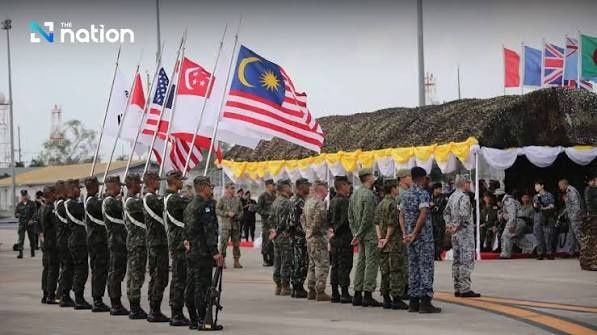
At the heart of Thailand's leverage sits Cobra Gold, the annual multinational military exercise that the United States describes as the largest of its kind across mainland Asia. The exercise, which last year drew approximately 8,000 personnel from 30 countries, has become a cornerstone of American military engagement in the region and a powerful symbol of the US commitment to Southeast Asian stability. By implicitly threatening to reduce Thai participation or scale back the exercise itself, Bangkok is signalling that the costs of aggressive tariffs extend well beyond trade balances and into the strategic security architecture that Washington has invested decades building.
Thai officials have been careful to couch this threat in diplomatic language. Defence Ministry spokesman Surasant Kongsiri initially declined to confirm the proposal, instead suggesting that negotiations would likely focus on deepening rather than limiting cooperation. Commerce Minister Suphajee Suthumpun has made public appeals based on the broader bilateral relationship, arguing that Thailand merits favourable trade treatment because of the countries' strategic alliance, the Treaty of Amity, and Thai investment in the United States. These statements illustrate the delicate balance Bangkok is attempting to strike: making its position clear without appearing to hold security cooperation hostage or damaging the relationship that still benefits Thai interests significantly.
Thailand's negotiating team is not relying solely on military brinkmanship. The country has offered concrete concessions on multiple fronts, including promises to eliminate tariffs on selected American products and to adopt US standards for imports of beef, lamb, and alcoholic beverages. Bangkok is also accelerating legislation to ban the importation of goods made with forced labour, addressing a longstanding US concern. These moves demonstrate that Thailand understands it must present a package of incentives alongside its warnings, acknowledging that tariff negotiations ultimately turn on questions of market access and manufacturing competitiveness rather than defence partnerships alone.
The Thai government is targeting a maximum tariff rate of 19 per cent, a figure discussed in an earlier framework, and appears to be framing the entire negotiation as a whole-of-government effort involving the foreign and defence ministries as well as domestic business groups. This coordination signals institutional seriousness but also reveals the interconnected nature of Thailand's concerns. For a nation whose export-dependent economy has faced persistent challenges in recent years, the tariff increases represent not merely a commercial irritant but a potential threat to growth, employment, and fiscal stability. In that context, invoking security cooperation becomes a rational—if high-stakes—negotiating tactic.
The Thai-US military relationship has proven resilient in the past, even when political tensions threatened to rupture it. Following Thailand's 2014 military coup, the United States scaled back Cobra Gold and suspended several defence engagements, yet gradually rebuilt ties once political circumstances shifted. This history suggests that even if tariff negotiations become heated, both sides have strong incentives to prevent any collapse in security cooperation. The Pentagon has recently reaffirmed this commitment; during a visit to Bangkok last week, Undersecretary of Defense Elbridge Colby publicly stated that he and Thai Permanent Secretary for Defense General Tharapong Malakam had reaffirmed the renewed strength of the US-Thai alliance.
For Malaysia and other Southeast Asian nations observing from the sidelines, Thailand's negotiating approach carries important implications. It demonstrates that even close security partners with long-standing relationships with Washington are willing to use those relationships as leverage in trade disputes, suggesting that no alliance is immune from economic pressures. It also highlights how tariff policies, seemingly distant from regional security concerns, can ripple across the strategic landscape and potentially alter the terms of engagement between Washington and its partners throughout Asia.
The coming weeks will reveal whether Thailand's implicit threat carries sufficient weight to shift American tariff calculations. What seems clear is that Bangkok recognises the moment as critical: the institution-building and alliance-deepening that have characterised US-Thai relations for decades now face a test from forces that transcend the security realm. For Thailand, the gamble is that demonstrating the costs of estrangement—measured not in lost trade alone but in weakened military cooperation and reduced American influence in a region increasingly contested by other powers—might concentrate minds in Washington in ways that economic arguments alone cannot.

