Police in Thailand are intensifying their investigation into a fatal school shooting at Debsirin Nonthaburi School by scrutinising the digital footprint of the 14-year-old suspect, having discovered that he conducted internet searches related to school shootings in the United States in the weeks preceding the attack. The enquiry has expanded significantly as detectives work to reconstruct the events of August 7 and identify what triggered the violence, with preliminary findings revealing a troubling pattern of online behaviour that authorities are treating as a potential factor in understanding the teenager's actions.
Investigators believe the boy first killed his grandparents at their residence in Bang Khu Rat subdistrict, Bang Bua Thong district, before proceeding to the school where the shooting subsequently took place. Officers and forensic teams discovered the bodies after entering the locked property, with the front door secured from the outside, suggesting the teenager departed the house following the deaths. Wattana Yichin, commissioner of Provincial Police Region 1, personally inspected the scene as part of the broader investigative effort to establish the sequence of events and potential motivations behind the attacks.
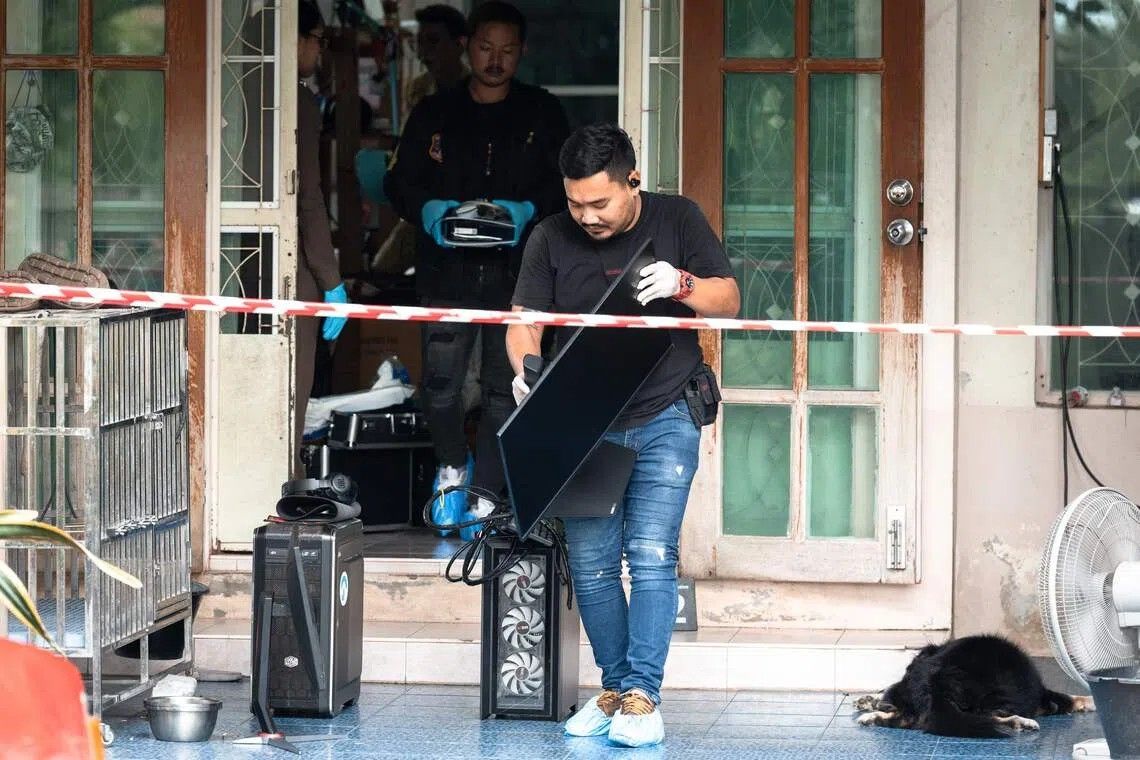
Central to the police inquiry is an examination of the suspect's computer and browsing history, which has yielded concerning discoveries about his online activities in recent weeks. Forensic analysis indicates that beginning around July 30, the teenager had engaged in searches specifically targeting information about school shootings that occurred in the United States. Alongside these searches, preliminary investigations found evidence that he regularly played computer games featuring violent content and themes. However, Thai police have deliberately avoided drawing direct causal links between these digital activities and the actual attacks, recognising the complexity of establishing motivational factors in such cases.
The investigation remains deliberately open-ended as authorities examine multiple potential contributing elements. Officers are exploring whether difficulties at school, personal conflicts, or other stressors may have played a role in the teenager's actions. Information provided to police by the boy's uncle paints a picture of a socially isolated adolescent who had lived with his grandparents throughout his childhood, spending considerable time absorbed in video gaming and maintaining a largely withdrawn lifestyle. The relative reported observing no obvious warning signs, family disputes, or visible indicators of psychological distress in the period leading up to the incident, complicating efforts to identify clear precipitating factors.
The firearm used in the shooting was legally registered to the teenager's grandfather, establishing that the weapon was not obtained illegally or through unauthorised channels. This detail raises important questions about firearms security within households and supervision of access to registered weapons, particularly where adolescents are present. The discovery that the gun belonged to the grandfather adds another layer of complexity to understanding how the attack was executed and what access the boy had to the weapon prior to the incident.
Family members have provided authorities with additional context about the boy's living situation and relationships. Thananyaporn, 60, the younger sister of the deceased grandfather and grandmother of the student involved, revealed that the teenager had been raised by his grandparents following his parents' separation. She characterised the household as deeply affectionate, with the grandparents providing devoted care and showing considerable love for their grandson. The grandfather, a retired bank manager known for his gentle demeanour, would personally transport the boy to and from school each day, suggesting a hands-on and engaged approach to parenting that contrasts sharply with narratives of family dysfunction or neglect.
According to Thananyaporn, the boy's social world was significantly circumscribed compared to other children his age. He did not maintain a peer group of friends, rarely ventured outside the home, and spent the majority of his free time engaged in gaming activities. The grandmother, who worked as a teacher, was the primary adult influence alongside her husband, creating a household environment that appeared to prioritise education and family cohesion. The uncle's account and the sister's corroboration paint a portrait of a quiet, polite teenager whose withdrawn nature was perhaps assumed to be simply part of his personality rather than a sign of deeper psychological distress or concerning ideation.
Thananyaporn emphatically rejected suggestions that family problems contributed to the violence, emphasising the genuine closeness shared by all three household members. She expressed shock and bewilderment that such an incident could have occurred within a family unit that she characterised as harmonious and loving. Her testimony highlights the difficulty family members and investigators face in retrospectively identifying risk factors when a teenager's outward behaviour appears unremarkable and relationships seem genuinely affectionate. The case underscores how social isolation, combined with access to violent media content and concerning online research, may represent a dangerous constellation of factors that are not necessarily visible to those in closest proximity to a young person.
For Malaysian and broader Southeast Asian observers, the Debsirin Nonthaburi School shooting raises critical questions about adolescent mental health, digital safety, and the warning signs that might precede violent behaviour in young people. The case demonstrates that perpetrators of school violence are not always visibly troubled or openly struggling; they may appear quiet and well-behaved to those around them while harbouring darker thoughts online. Thailand's investigative approach, emphasising comprehensive examination of digital evidence, computer gaming habits, and online research patterns, may offer insights relevant to schools and law enforcement agencies across the region grappling with similar threats. The incident also underscores the importance of understanding the intersection between social isolation, unsupervised internet access, and exposure to violent content as potential risk factors worthy of serious attention and intervention.
As Thai police continue their investigation, the focus remains on establishing definitive connections—or the absence thereof—between the teenager's online activities and his violent actions. While authorities have not concluded that violent video games or US school shooting searches directly caused the attacks, the decision to examine these factors reflects evolving investigative methodologies that recognise the potential role of digital behaviour in understanding youth violence. The case will likely influence discussions across Thailand and the region about digital literacy, parental supervision of online activity, and the responsibilities of platforms and content providers in moderating access to potentially harmful material for young users. For families struggling with socially withdrawn teenagers or those displaying concerning online interests, the investigation serves as a sobering reminder that professional guidance and proactive engagement may be essential, even when outward behaviour appears benign.

