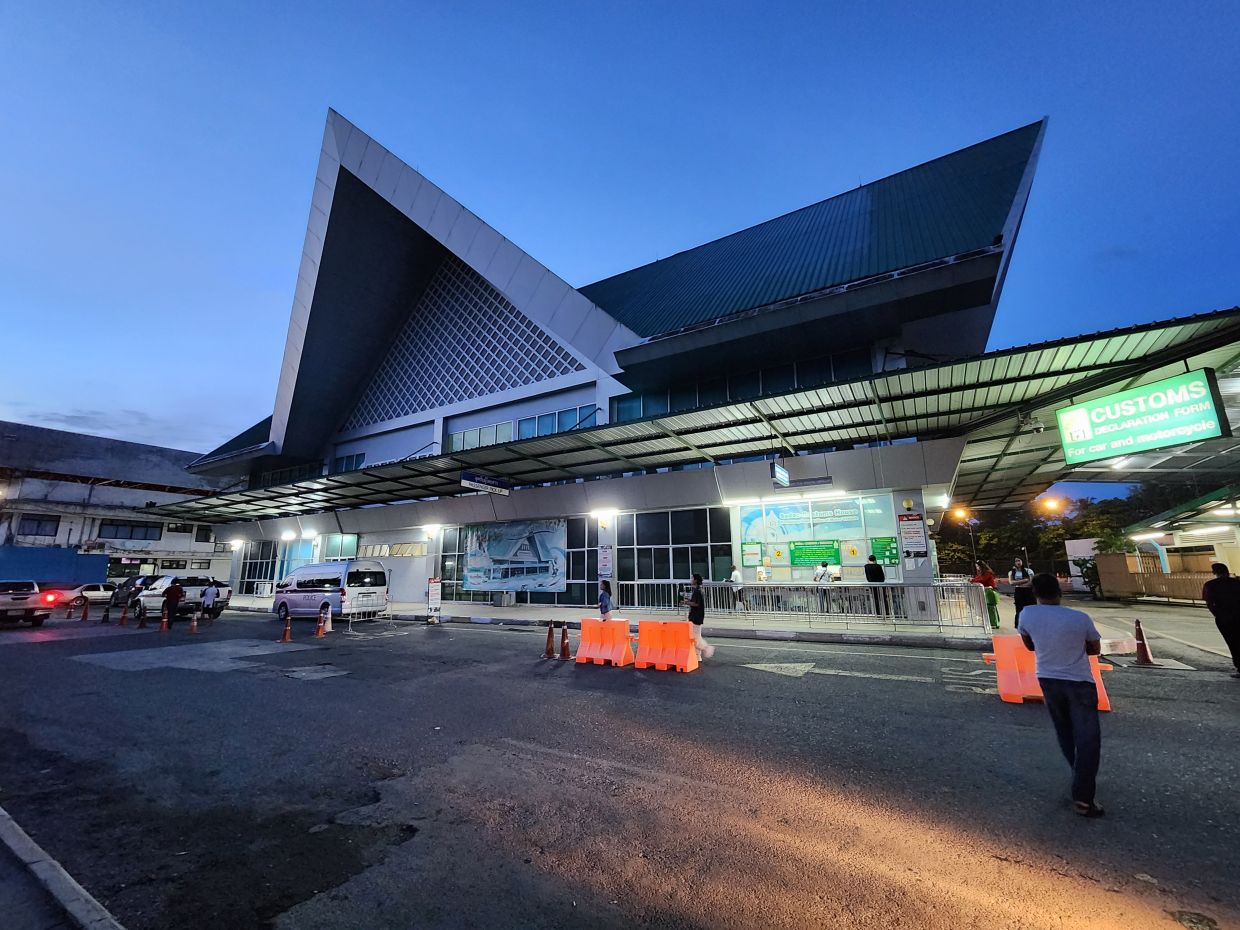
Thailand has taken a significant step toward deepening its economic integration with Malaysia by approving the establishment of a new permanent border crossing at Sadao. The Thai cabinet's decision, announced on Tuesday, marks a strategic shift in the countries' approach to regional commerce and people-to-people movement, with the checkpoint set to commence operations on July 11. This development arrives at a critical juncture for Southeast Asian logistics, as supply chain pressures and shifting trade patterns have prompted governments across the region to modernize their infrastructure and streamline border procedures.
The relocation of the checkpoint from its current position between boundary markers 22-23 to a new site between markers 23/9 and 23/10 reflects careful planning informed by years of operational experience at the existing crossing. Rather than simply maintaining status quo, Thai authorities have engineered this transition to address historical inefficiencies that have constrained bilateral commerce and tourism flows. The new facility will operate within structured daily hours—05:00 to 23:00—providing predictable access windows for traders, logistics operators, and travellers who have often faced unpredictable delays at informal or less organized crossing points.
Government spokesperson Ratchada Thanadirek emphasized that the infrastructure overhaul extends beyond the checkpoint itself. Thai agencies have received explicit directives to accelerate the construction of connecting road networks and eliminate traffic congestion on the Thai side of the border. This comprehensive approach acknowledges that a modern checkpoint remains ineffective if vehicles cannot move smoothly toward and away from it. Songkhla province, which administers the region, will assume responsibility for monitoring implementation progress, ensuring that bureaucratic commitments translate into tangible infrastructure improvements. Additionally, authorities plan to establish shuttle services that may facilitate smoother movement for high-volume commercial traffic.
Recognizing that successful border operations depend on stakeholder buy-in, the Thai government has instructed relevant agencies to conduct extensive public engagement initiatives. These campaigns will target the private sector, business operators, and local communities adjacent to the checkpoint, equipping them with detailed information about revised traffic routes, updated customs procedures, and immigration protocols. In Southeast Asia's interconnected economy, such transparency proves essential; misunderstandings or misinformation about border procedures can discourage legitimate cross-border activity and inadvertently push traders toward informal channels. By proactively communicating government measures designed to facilitate commerce and tourism, Bangkok signals commitment to a border that serves rather than impedes regional integration.
The timing of this infrastructure initiative intersects strategically with high-level diplomatic engagement between Thailand and Malaysia. Thai Prime Minister Anutin Charnvirakul is scheduled to make an official visit to Malaysia on July 9-10, arriving just before the new checkpoint becomes operational. This sequencing is not coincidental; the joint statement that Thailand's cabinet approved during the same Tuesday session will establish a comprehensive framework for bilateral cooperation spanning multiple policy domains. Border development and enhanced connectivity feature prominently alongside security cooperation against transnational organized crime—an increasingly pressing concern throughout the region—and broader economic partnership initiatives.
The draft joint statement reflects contemporary priorities for both nations. Food security and energy security emerge as particular emphases, indicating that the governments view the border opening as enabling closer coordination on these strategic commodities. For Malaysia, enhanced logistics and trade connectivity can improve access to Thai agricultural products and energy resources, while Thailand benefits from Malaysian markets and complementary resource endowments. This framing transforms what might otherwise appear as a purely commercial or administrative measure into a plank of national-level resource strategy—a perspective that carries weight in Cabinet deliberations and reflects the political economy of modern Southeast Asia.
From a Malaysian perspective, the new checkpoint carries multiple implications. The region encompassing the southern Thai provinces and Malaysia's northern states has historically served as a natural economic zone, with significant population movement, family ties, and informal commerce binding communities across the border. Formalizing and modernizing the crossing infrastructure benefits Malaysian traders accessing Thai markets, particularly those engaged in agricultural exports, processed foods, and light manufacturing. For Malaysian tourists and business travellers, the improved procedures and expanded operating hours reduce transaction costs and friction, making cross-border journeys more feasible and frequent.
The opening also reflects broader trends in ASEAN regionalism and the mechanics of how member states pursue integration. Rather than negotiating sweeping multilateral frameworks, Thailand and Malaysia are advancing concrete, localized improvements to cross-border infrastructure and procedures. This pragmatic approach has proven effective because it concentrates resources on genuine bottlenecks and demonstrates tangible results that benefit specific constituencies. When residents of Songkhla and adjacent Malaysian districts experience faster, more predictable border crossings, support for deeper bilateral cooperation strengthens organically.
Logistically, the new checkpoint arrives at an opportune moment. Regional supply chains have diversified and reorganized following pandemic-related disruptions, with companies reassessing their sourcing and distribution networks. Efficient land borders between Thailand and Malaysia become more valuable in this context, potentially attracting companies seeking to optimize transportation costs and delivery times within Southeast Asia. The checkpoint thus represents not merely symbolic commitment to bilateral friendship but a calculated investment in the region's competitive positioning within global trade networks.
The security dimensions warrant note as well. By establishing formal, monitored crossing points with transparent procedures, both governments enhance their capacity to intercept contraband and regulate the movement of persons and goods. This institutional formalization of border control, while facilitating legitimate commerce, simultaneously strengthens security protocols—a balance that many regional governments have struggled to achieve. The explicit mention of transnational crime cooperation in the draft joint statement suggests awareness that border openness must coexist with robust security mechanisms.
Implementation challenges will inevitably emerge. Coordinating construction timelines between two governments, training personnel across customs and immigration agencies, and managing traffic flow during transition periods require sustained administrative coordination. The Thai government's appointment of Songkhla province as the monitoring authority provides a clear accountability structure, though success will depend on adequate resource allocation and political will. Malaysian authorities must undertake parallel preparations on their side of the border to ensure the opening achieves its full potential.
The broader significance extends beyond bilateral relations to Southeast Asia's infrastructure development trajectory. As the region competes for investment and talent, efficient border crossing points become amenities that enhance competitiveness. Thailand's initiative signals that modernizing cross-border infrastructure can unlock economic opportunities without compromising security or sovereignty. For other ASEAN member states contemplating similar upgrades, the Thai-Malaysian example provides both template and encouragement, potentially catalyzing comparable improvements across the region and contributing to the gradual emergence of a more seamlessly integrated Southeast Asian economic space.

