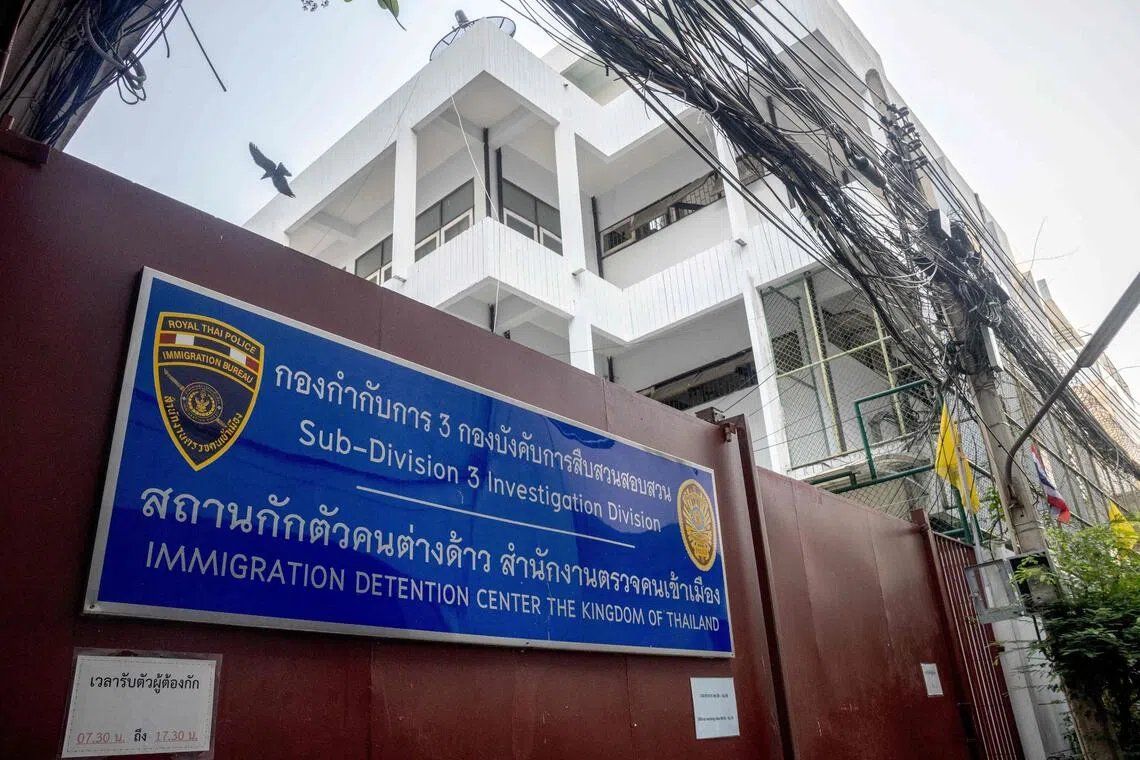
Thai Prime Minister Anutin Charnvirakul has signed new deportation regulations designed to establish standardised procedures for removing foreign nationals who breach Thai law or pose threats to public safety and social stability. The Prime Minister's Office Regulation on Deportation B.E. 2569, published in the Royal Gazette on August 27 and taking effect on August 28, represents Bangkok's latest effort to strengthen immigration enforcement mechanisms and protect domestic interests.
The regulation reflects Thailand's assertion that whilst the country maintains an open posture toward international visitors and residents entering through legitimate channels, it cannot tolerate misconduct by foreign nationals that jeopardises public order or national welfare. Rather than relying on ad-hoc administrative decisions, the framework codifies deportation authority and procedures under the Interior Ministry, centralising decision-making to ensure consistency and reduce bureaucratic delays that historically plagued such cases. This formalisation carries implications for the estimated millions of foreign residents and tourists who transit Thailand annually, as well as Southeast Asian nationals who constitute a significant portion of Thailand's migrant workforce.
The regulation authorises the Interior Minister to order deportation for foreigners convicted under final court judgment in six broad categories of offences. These include unlawful entry or overstaying under immigration statutes, unauthorised employment that contravenes foreign worker regulations, illegal business operations under the Foreign Business Act, document forgery involving official credentials, and crimes carrying sentences exceeding five years imprisonment. Additionally, individuals who act as principals, instigators or supporters in any of these categories face deportation. This expansive framework essentially enables removal not only of direct offenders but also those facilitating or encouraging violations, potentially capturing individuals in tangential roles.
A critical procedural innovation involves mandatory inter-agency communication before deportation orders take effect. The Department of Corrections must notify the Interior Ministry's permanent secretary at least fifteen days before releasing foreign prisoners covered by the regulation, providing detailed case information to enable timely ministerial review. For suspended sentences or situations where courts impose fines rather than custodial punishment, the Office of the Judiciary must immediately alert the permanent secretary. This coordination mechanism aims to prevent gaps where offenders might evade deportation by being released without departmental awareness, though its effectiveness depends on consistent implementation across government agencies.
Deportation determinations must account for Thailand's international legal obligations, Cabinet resolutions, and applicable domestic statutes, suggesting that human rights considerations enter the assessment framework. The regulation explicitly permits receiving countries or international organisations to request alternatives to standard deportation to Thailand's national borders within seven days of an order. Such requests may cite protection concerns, including risks of torture, cruel treatment, inhumane or degrading conditions, violations of human dignity, or enforced disappearance. However, the requesting entity must assume full financial responsibility and obtain written consent from the deportee, effectively placing significant practical barriers to alternative placements that could otherwise circumvent the regulation's intent.
The repatriation process itself establishes clear geographic criteria: deportees normally return to their country of nationality, or if nationality cannot be determined, to the country where they last resided before entering Thailand. This approach generally aligns with international norms and addresses a persistent administrative challenge in Thailand, where some foreign detainees have remained in limbo due to nationality disputes or lack of diplomatic relations with their home countries. By specifying fallback criteria, the regulation attempts to resolve such deadlocks, though stateless individuals or those from diplomatically isolated nations may still face prolonged detention.
The regulation grants the Interior Minister substantial discretionary power to approve up to two extensions of thirty days each for alternative placements negotiated through diplomatic channels, potentially extending the deportation process to ninety days. If third-country transfers cannot be completed within this window, standard repatriation procedures take effect. This flexibility acknowledges practical realities—coordinating international transfers, securing travel documents, and arranging receiving country acceptance require time—whilst ensuring that alternative arrangements do not indefinitely delay deportations. For Malaysia and other Southeast Asian nations with significant populations in Thailand, such timeframes may facilitate coordination with Thai authorities if citizens require consular assistance during deportation proceedings.
Financial responsibility for deportations falls on the Interior Ministry under regulations approved by the Finance Ministry, establishing a centralised cost-allocation mechanism rather than dispersing expenses across multiple agencies. This approach provides budgetary predictability and prevents agencies from delaying deportations due to funding constraints. However, the regulation remains silent on whether costs might be recovered from deportees or their employers, a detail that could significantly affect outcomes for vulnerable migrant workers who lack financial resources.
Dispute resolution under the regulation rests entirely with the Interior Minister, whose decisions are declared final without appeal to judicial review or other oversight mechanisms. This consolidation of authority streamlines implementation but concentrates power in a single ministry without checks, raising potential concerns regarding procedural fairness or proportionality assessments. For foreign nationals or advocacy groups contesting deportation orders, the absence of independent review channels represents a significant constraint.
The timing of this regulation reflects broader Southeast Asian trends toward stricter immigration controls and enhanced domestic security frameworks. Countries across the region have implemented similar measures in response to irregular migration, security concerns, and public pressure to enforce law and order. Thailand's formalisation of deportation procedures aligns with regional developments whilst addressing domestic priorities under Prime Minister Anutin's administration. For Malaysian stakeholders with business or employment interests in Thailand, the regulation underscores the importance of strict legal compliance and understanding Thailand's immigration requirements, as consequences for violations have become more systematised and difficult to navigate through informal channels.
Implementation effectiveness will ultimately depend on consistency across government agencies, adequate training for Interior Ministry personnel, and genuine commitment to following established procedures rather than reverting to discretionary decisions. The regulation's success in reducing deportation timelines and preventing administrative arbitrariness remains to be demonstrated in practice. For Southeast Asian nationals and foreign residents in Thailand, the framework represents a significant shift toward formal, legalistic approaches to immigration enforcement, replacing historical patterns of selective enforcement with more standardised procedures that offer both greater clarity and reduced opportunities for informal resolution.

