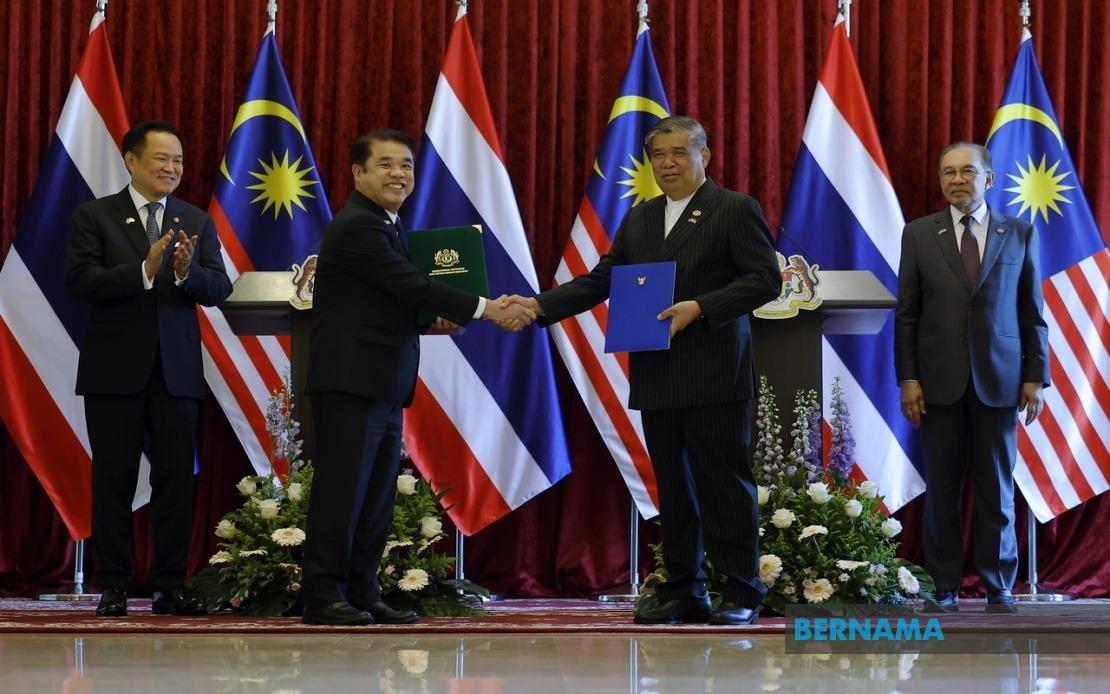
Thailand and Malaysia have moved decisively to deepen their agricultural and economic partnership, with Thai Prime Minister Anutin Charnvirakul and Malaysian Prime Minister Datuk Seri Anwar Ibrahim formalizing a suite of agreements during bilateral talks in Putrajaya this week. The centrepiece of their discussions was a memorandum of understanding addressing food security, technology transfer, and human resource development—issues of increasing urgency across Southeast Asia as regional economies grapple with climate pressures and evolving trade dynamics.
The resolution of market access disputes over shrimp and barramundi represents a tangible breakthrough for both nations' fishing industries. These products have long been sources of friction in bilateral commerce, with regulatory and health certification requirements creating barriers for producers on both sides of the border. By tasking their respective agriculture ministers with expediting implementation of agreed measures, the two governments have signalled a determination to move beyond bureaucratic gridlock and unlock commercial opportunities for their fishing communities. For Malaysian producers particularly, access to Thailand's vast regional distribution networks could prove transformative, given Thailand's established position as a major aquaculture exporter throughout Asia.
The memorandum itself casts a wide net across agricultural cooperation, encompassing crops, livestock, fisheries, and research initiatives alongside the technology and skills development components. This broad framework reflects both nations' recognition that agricultural modernisation cannot be pursued in isolation—successful farming enterprises now depend on access to improved seed varieties, pest management techniques, and production methodologies developed through collaborative research. The inclusion of human resource development acknowledges another critical gap: many Southeast Asian farmers lack formal training in contemporary sustainable practices, and knowledge-sharing between Thai and Malaysian agricultural institutions could help bridge this divide.
Beyond the agricultural accord, the two leaders renewed their commitment to pursuing a US$30 billion bilateral trade target, a figure that underscores their ambitions for transformed economic relations. This target suggests substantial room for growth; current trade volumes, while substantial, have not reached the scale that geographic proximity and complementary economies might suggest. Achieving this figure will require not merely resolution of agricultural trade barriers but also progress in other sectors identified during the talks: investment frameworks, tourism facilitation, infrastructure development, and technology industries. Each of these areas presents distinct challenges and opportunities for Malaysian and Thai businesses alike.
The agreement to strengthen supply chain cooperation in food security, energy, and high-technology manufacturing holds particular relevance for Malaysia. As a nation vulnerable to global food price volatility and dependent on energy imports, deepening integration with Thailand's agricultural and energy sectors offers genuine strategic value. Thailand's substantial rice and rubber production, combined with its emerging capabilities in renewable energy and electronics manufacturing, aligns with Malaysian economic interests and could support more resilient regional supply networks less exposed to distant shocks.
Anutin's visit marks his first bilateral trip to Malaysia since his reappointment to office in March 2026, and the timing appears deliberate. By investing in high-level diplomacy and concrete agreements now, both governments are positioning themselves to mark the 70th anniversary of diplomatic relations in 2027 with substantive accomplishments. The directive to complete pending memoranda of understanding before that milestone suggests a structured roadmap for further cooperation, whether in areas already discussed or emerging priority sectors.
The planned joint visit by Anwar and Anutin to Bukit Kayu Hitam in Kedah on Friday carries symbolic weight beyond mere ribbon-cutting. The opening of the road linking Malaysia's Immigration, Customs, Quarantine and Security Complex with Thailand's corresponding facility in Sadao represents tangible infrastructure progress that will reduce friction for cross-border trade and travel. For the thousands of workers, traders, and tourists who traverse this frontier daily, improved connectivity translates into time savings and reduced transaction costs. The completion of this link also demonstrates that bilateral infrastructure projects, despite their complexity, remain achievable when both governments prioritise implementation.
For Malaysian policymakers, the outcomes of these talks address several longstanding concerns. Agricultural exports have been a consistent pressure point in bilateral relations, with Malaysian producers frequently citing regulatory barriers and market access restrictions. The commitment to resolve these issues sends a signal that Malaysia's concerns are being heard at the highest levels in Bangkok. Moreover, the emphasis on technology transfer and research cooperation acknowledges Malaysia's position as a relatively technology-advanced economy with capacity to contribute expertise to regional agricultural development.
The broader context matters too. As geopolitical tensions simmer elsewhere in Asia and global supply chains remain fragile, deepening Malaysia-Thailand cooperation serves both nations' resilience interests. The two countries share not only land and maritime borders but also cultural and historical ties dating back centuries. Modern bilateral cooperation, grounded in economic complementarity and strategic alignment, builds on these foundations while addressing contemporary challenges. The food security emphasis particularly resonates given persistent concerns about pandemic-era disruptions and the need for regional self-sufficiency in essential commodities.
Implementation will ultimately determine the success of these agreements. Past memoranda between Southeast Asian nations have occasionally languished due to bureaucratic delays, shifting political priorities, or technical difficulties in aligning domestic regulations. The fact that both leaders have tasked specific ministers with expediting measures suggests serious intent, yet observers will watch closely for tangible progress in coming months. Early wins—such as the first shipments of barramundi reaching Thai markets under new protocols—would build momentum for broader cooperation.

