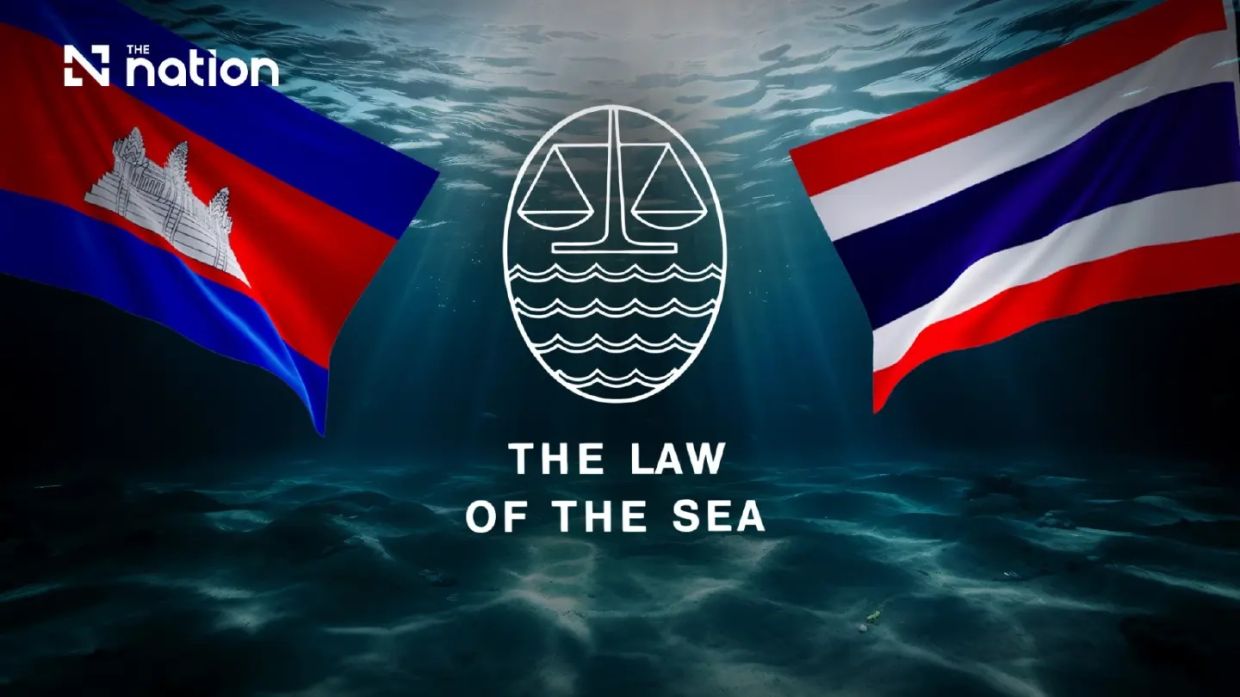
Thailand and Cambodia are progressing towards establishing a five-member conciliation body under the United Nations Convention on the Law of the Sea to address their competing maritime claims in the Gulf of Thailand, yet significant disagreement persists over the scope and ultimate objectives of the dispute resolution process. Both nations have already selected their representatives to the mechanism and are now focused on identifying a fifth member to chair the commission, though fundamental differences over whether the proceedings should encompass energy resource sharing have created friction between the two neighbours.
The framework being employed represents a non-binding conciliation process rather than litigation. The commission, once fully constituted, will examine the dispute, gather submissions from both countries, and ultimately furnish recommendations designed to guide bilateral negotiations towards a mutually agreeable resolution. Critically, any final settlement remains contingent upon direct agreement between Bangkok and Phnom Penh, meaning the commission cannot impose a mandatory outcome. This approach mirrors the successful Timor-Leste-Australia conciliation that concluded with a treaty establishing permanent maritime boundaries in the Timor Sea.
Thailand appointed two highly experienced international law specialists: Rüdiger Wolfrum, a German jurist who led the International Tribunal for the Law of the Sea from 2005 to 2008, and Albert J. Hoffmann, a South African legal expert who held the same tribunal presidency from 2020 to 2023. Cambodia selected Peter Taksøe-Jensen, a Danish diplomat with direct experience chairing the Timor-Leste-Australia conciliation, and Jean-Marc Thouvenin, a French academic specialising in international law. These choices reflect both nations' commitment to populating the body with genuinely credible expertise, though their divergent visions for the commission's mandate suggest deeper strategic interests at stake.
The appointment of the chairperson has encountered scheduling delays. The original deadline of July 19 proved insufficient, prompting Thailand and Cambodia to jointly extend the timeline to August 14 upon recommendation from the four conciliators already in place. This extension underscores the complexity of identifying a candidate acceptable to both parties, as Bangkok has specified that the chair must possess recognised expertise spanning international law, maritime law, and diplomacy whilst maintaining impeccable impartiality and genuine understanding of Thai-Cambodian bilateral relations. The search for such a figure highlights how even procedural matters can become contested when underlying geopolitical tensions exist.
Once the chair takes office, the completed commission is projected to commence substantive work by establishing operational procedures and delineating its working framework. The process typically requires approximately twelve months, though both nations may negotiate extensions if circumstances warrant. Thailand's Foreign Minister Sihasak Phuangketkeow will serve as Bangkok's official agent throughout the proceedings, with Thailand's ambassador to Kuwait, Songchai Chaipatiyut, appointed as deputy agent. This high-level assignment reflects the political importance Bangkok attaches to the exercise.
The fundamental disagreement centres on whether maritime delimitation should remain the sole focus or whether the commission should simultaneously develop frameworks for joint resource development and benefit-sharing. Thailand's position prioritises establishing precise maritime boundaries and defining continental shelf limits before entertaining broader questions about resource extraction. Bangkok contends that discussing joint development arrangements or revenue allocation would be premature until the legal boundary lines and the extent of any genuine overlapping claims have been rigorously established. Sihasak has explicitly stated that sovereignty and national interest considerations must guide the process from beginning to end.
Cambodia, by contrast, views the conciliation as an opportunity to achieve dual objectives simultaneously: settling the maritime boundary whilst creating mechanisms for cooperative resource exploitation. This reflects Phnom Penh's strategic calculation that global energy security concerns, particularly following regional disruptions associated with Iran and the Strait of Hormuz situation, create a narrow window for attracting private investment and financing for offshore petroleum development. Cambodian Minister of Mines and Energy Keo Rottanak has warned that delays pose genuine risks, arguing that major international energy companies require near-term certainty to justify exploration expenditure and that investment appetite could evaporate if decisions extend across decades.
The disputed maritime zone encompasses approximately 26,000 to 27,000 square kilometres and harbours substantial hydrocarbon reserves: geological assessments indicate between 11 trillion and 12 trillion cubic feet of natural gas plus considerable oil deposits, with aggregate valuations reaching approximately US$300 billion. For Cambodia, which currently depends heavily on hydropower and increasingly on solar generation, these offshore resources represent strategically important insurance for long-term industrial expansion and energy security. Exploration and commercial production would require years of development work even after boundary settlement, making Keo's argument about investment windows both economically rational and temporally urgent.
Cambodia formally notified the United Nations on June 2 of its intention to pursue conciliation, with Thailand following formal acceptance on June 19. The conciliation mechanism itself originated from Article 287 of Unclos and has proven effective elsewhere, as demonstrated by the Timor-Leste case, which culminated in a permanent maritime boundary treaty. However, that precedent did not involve comparable disputes over resource-sharing frameworks, suggesting the Thailand-Cambodia situation may encounter challenges absent from prior applications of the mechanism.
International energy companies, including the major operator TotalEnergies, have theoretically signalled interest in exploring the disputed waters, though no firm investment commitments have been announced pending boundary clarification. The commercial operators understand that resolving maritime claims is a necessary precondition for undertaking expensive exploration programmes, yet they remain cautious about timeline uncertainties and the durability of any bilateral arrangements. Their investment calculus depends partly on the clarity and permanence of the boundary settlement and partly on the availability of commercially viable resource-sharing terms.
Thailand's insistence on separating boundary delimitation from resource-sharing discussions reflects broader concerns about maintaining negotiating leverage and protecting national interests against potential disadvantageous arrangements. Bangkok likely fears that simultaneously entertaining resource-development frameworks could constrain its ability to press for favourable maritime demarcation or could lock Thailand into unfavourable sharing formulae. From a strategic perspective, Thailand prefers establishing undisputed sovereignty over maritime zones before considering cooperative arrangements that might require ongoing bilateral management.
The divergence between the two countries illuminates competing interpretations of what regional energy insecurity means for maritime dispute resolution. Cambodia emphasises urgency and the time-sensitive nature of investor confidence, viewing conciliation as an instrument for accelerating integrated settlement. Thailand emphasises prudence and sequential problem-solving, believing that establishing clear boundaries first provides a stable foundation for any subsequent resource-sharing arrangements. Neither position is unreasonable, but the gap between them suggests the commission's early work will involve careful diplomacy to establish whether compromise on procedural scope is achievable.
For Malaysia and other Southeast Asian nations observing the process, the Thailand-Cambodia case carries broader implications. The dispute demonstrates how overlapping maritime claims intersect with energy security concerns, investment flows, and the adequacy of existing dispute resolution mechanisms. Should the conciliation succeed despite the disagreement over scope, it could establish precedent for addressing comparable disputes elsewhere in the region. Conversely, if procedural disputes or fundamental disagreements prevent substantive progress, it may underscore the limitations of non-binding conciliation when resource-sharing stakes prove substantial.

