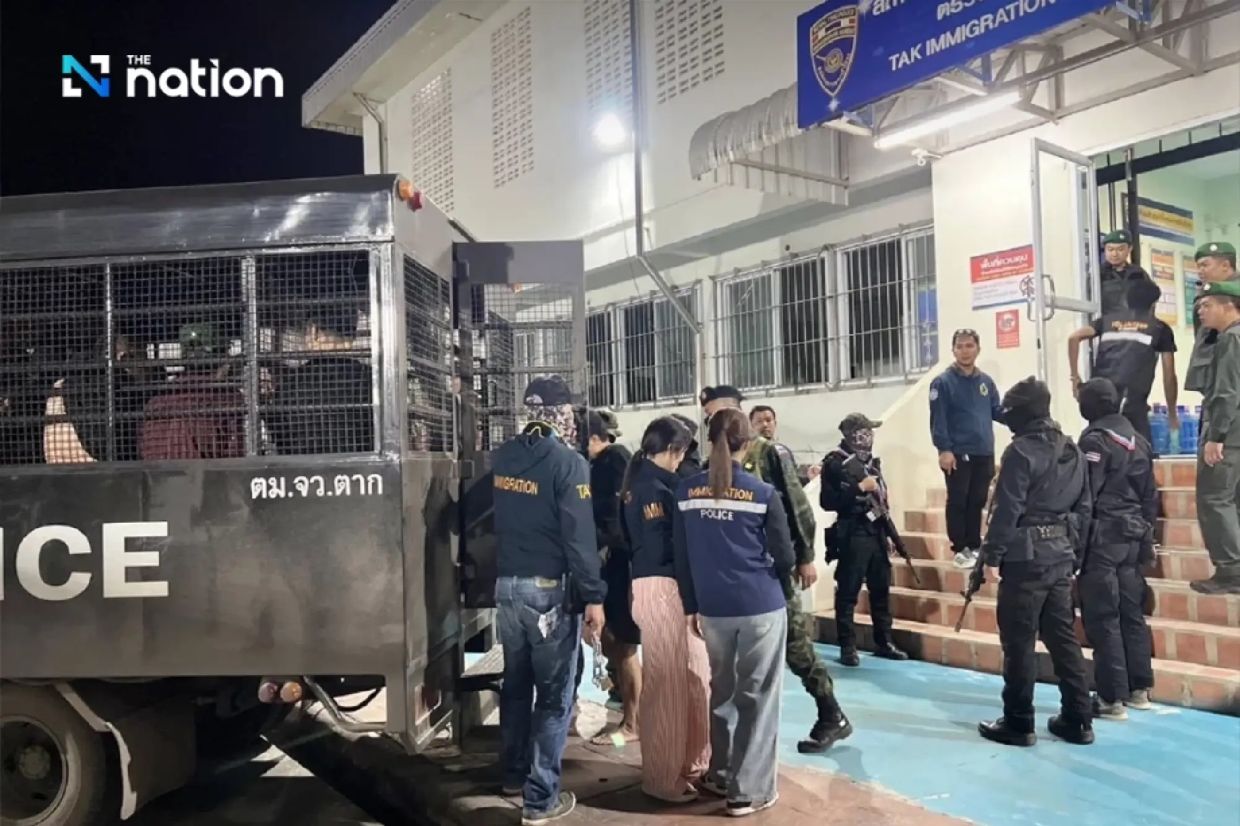
Thailand's government is moving to streamline its immigration legislation with the explicit goal of accelerating the removal of foreign nationals convicted of crimes, acknowledging that existing legal frameworks have created bottlenecks that leave detainees languishing in custody while their cases wind through appeals and diplomatic channels. The initiative represents a significant policy shift as Bangkok grapples with rising transnational criminal activity, particularly networks of foreign offenders exploiting loopholes to establish operations across the kingdom.
The impetus for reform stems from acknowledged weaknesses in the current system. Thai authorities have identified that the Immigration Act of 1979, which governs deportation procedures, contains provisions allowing foreign detainees multiple opportunities to challenge removal orders, delay proceedings, or request humanitarian postponements. These mechanisms, while designed to uphold due process and human rights standards, have inadvertently created lengthy processing periods during which some offenders remain in Thai custody at considerable public expense, or in worst cases, regain temporary freedom to resume illegal activities.
A critical trigger for this legislative overhaul was the government's decision to introduce a 60-day visa exemption scheme for nationals from 93 countries and territories in July 2024. This policy, implemented during the Srettha Thavisin administration, prioritized visitor volume and economic stimulus but eliminated the traditional pre-arrival vetting process that Thai embassies had previously conducted. Without mandatory visa applications, diplomatic missions could not screen foreign arrivals for criminal histories or financial red flags before they entered Thailand, creating a security gap that criminal networks exploited systematically.
Law enforcement agencies have documented how this visa exemption facilitated the settlement of foreign criminal elements throughout Thailand. Investigators report that offenders engaged repeated visa runs—crossing borders to reset their stay—rather than following normal departure procedures. Some have acquired property through nominee arrangements, established unlicensed businesses, or joined transnational operations in sectors ranging from hospitality to entertainment. The problem has become particularly acute in popular tourist destinations including Pai in Mae Hong Son province, Pattaya in Chonburi, Koh Phangan in Surat Thani, and Bangkok, where foreign criminal networks operate with relative impunity.
The Anutin government has elevated transnational crime to a national security priority, assigning the Immigration Bureau, Royal Thai Police, and allied agencies to strengthen enforcement protocols. Four preventive measures have been introduced: enhanced monitoring of travelers exhibiting unusual entry and exit patterns, heightened screening of high-risk jurisdictions, deeper integration of international criminal databases with Interpol and Thai security services, and elimination of visa system overlaps. The government has also reversed course on the visa exemption policy. On May 19, 2026, the Cabinet approved cancellation of the 60-day scheme, returning Thailand to bilateral arrangements where most visitors will be restricted to maximum stays of 30 days. Officials justify this reversion by arguing that the exemption failed to generate proportionate tourism revenue while exposing the country to unacceptable security risks.
Despite intensified arrest and prosecution operations, the government has discovered that the deportation machinery itself remains cumbersome. Prime Minister Anutin Charnvirakul has assigned Deputy Prime Minister Pakorn Nilprapunt, responsible for legal affairs, to coordinate with the Royal Thai Police, Immigration Bureau, and Interior Ministry on revising Sections 54 and 55 of the Immigration Act, which specifically address removal procedures for foreign nationals. The revision aims to compress timelines, reduce procedural complexity, and enhance enforcement flexibility without compromising legal protections or international human rights obligations.
Current impediments to swift deportation are multifaceted. Financial constraints prevent some detainees from purchasing return travel documents, requiring Thai authorities to negotiate with embassies for repatriation funds—a process consuming weeks or months. The Immigration Act permits foreign nationals to appeal deportation orders within 48 hours of notification, with evidence considered before removal is executed. While appeals are under review, deportations are typically suspended except in serious cases. Additionally, the Immigration Commission retains discretionary power to postpone removal or grant temporary stay extensions on humanitarian or legal grounds, creating further delay mechanisms that, while protective of vulnerable individuals, can shield criminals from accountability.
The extradition framework compounds delays. Thailand's extradition treaties with various countries establish distinct procedures: where treaties exist, the attorney-general must evaluate cases before court submission for orders; where none exist, the Foreign Ministry requests attorney-general intervention followed by court determination. Human rights petitions at any stage can extend timelines further. Pol Lt Gen Trairong Phiwpan, Royal Thai Police spokesman, has acknowledged that Thailand's commitments—membership in the United Nations Human Rights Council and party status to eight major international human rights conventions covering civil, political, social, economic, children's, women's, disability, and torture-prevention rights—necessarily embed procedural safeguards into deportation processes. These protections, while ethically essential, inherently slow removal procedures.
The police spokesman has indicated that streamlining should focus on reducing unnecessary procedural steps and compressing legitimate timelines rather than eliminating human rights considerations. Notably, repatriation can proceed more rapidly when detainees forgo appeals and human rights challenges; however, law enforcement cannot compel such waivers. Reform proposals under consideration include harmonizing differing extradition timelines, eliminating redundant administrative reviews, and creating expedited pathways for serious transnational offences while preserving judicial oversight for routine visa violations or minor infractions.
Deputy Prime Minister Pakorn is expected to conduct broad consultations with the Interior Ministry, police leadership, and other stakeholders to assess implementation impacts across security, legal, administrative, and diplomatic dimensions. The challenge facing Thai policymakers is formidable: accelerating criminal deportations while preserving the rule of law and international human rights credibility. Prime Minister Anutin has framed the objective clearly—Thailand welcomes legitimate foreign visitors and investors, but offenders undermining national security or economic integrity must face swift legal consequences and rapid removal. This balancing act will test Thailand's capacity to strengthen security apparatus without sacrificing the institutional checks that distinguish democratic governance from authoritarian expedience.
For Malaysia and Southeast Asia broadly, Thailand's experience illustrates how visa liberalization policies, while economically attractive, can create security vulnerabilities exploited by transnational criminal networks. The episode highlights the necessity for coordinated regional approaches to vetting, intelligence-sharing, and deportation procedures. As member states of ASEAN pursue freer movement agreements and visa facilitation schemes, Thailand's recalibration serves as a cautionary case study on the hidden costs of rapid liberalization without corresponding security infrastructure. The impending legislative reforms will provide a test case for other Southeast Asian nations navigating similar tensions between economic openness and law enforcement effectiveness.