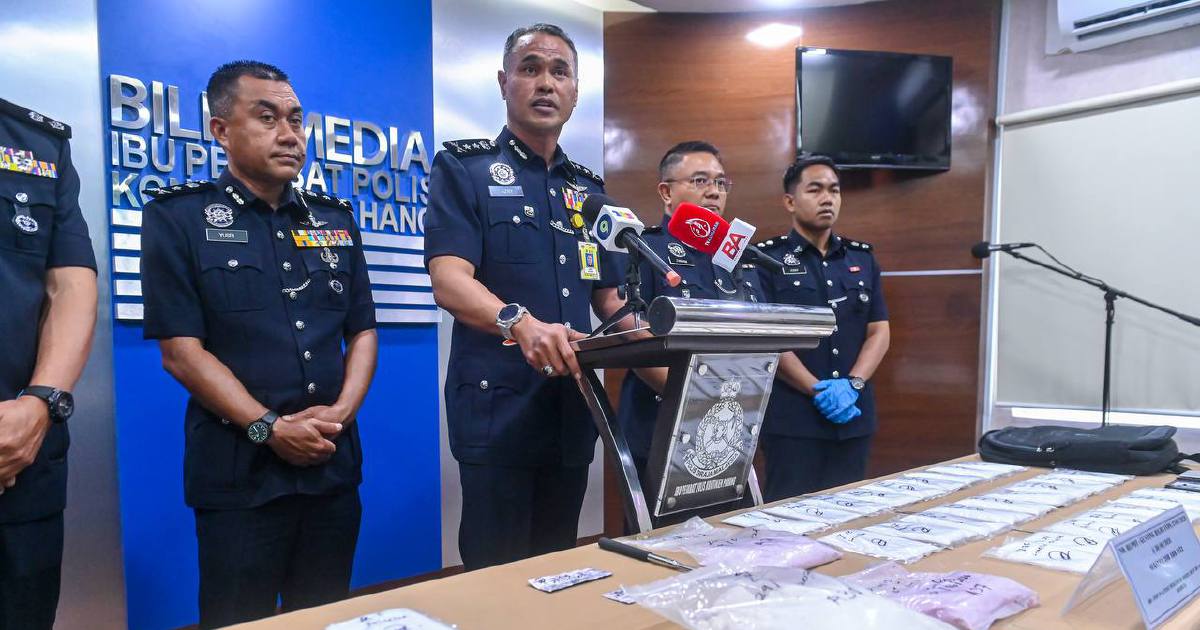
Authorities in Kuantan have apprehended a Thai woman and her Malaysian companion following a major drug seizure at a location in Genting Permai, Bentong, with the haul estimated at around RM728,000. The arrests represent another successful operation against trafficking networks that have been operating across the region, highlighting ongoing law enforcement efforts to disrupt supply chains.
The suspects, who are believed to have been involved in distributing narcotics on behalf of a larger criminal organisation, had allegedly been engaged in courier activities for approximately three months prior to their detention. This extended period of operation suggests the syndicate had established a relatively stable distribution network in the Bentong area, which sits strategically between Kuala Lumpur and the eastern coast of Peninsular Malaysia.
The discovery of such a substantial quantity of drugs underscores the continued challenge of narcotics trafficking in Pahang state. The Genting Permai area, being in proximity to major transportation routes and residential zones, appears to have become a focal point for distribution operations. The location's accessibility from both Klang Valley and eastern Malaysian routes makes it a practical staging point for trafficking organisations seeking to move contraband across state boundaries.
Investigations into the couple's operations are expected to yield significant intelligence about the broader syndicate structure they were serving. Law enforcement agencies have increasingly recognised that targeting low-level couriers often provides crucial leads to identifying higher-ranking members of trafficking organisations. The fact that both individuals were apprehended together suggests authorities may have been conducting surveillance on their activities for some time.
The involvement of a foreign national in the operation reflects a trend observed throughout Southeast Asia, where transnational organised crime groups often employ individuals from neighbouring countries in their supply chains. Thai nationals have featured prominently in regional drug trafficking cases, partly due to Thailand's geography and its position within the "Golden Triangle" production zone. However, law enforcement cooperation between Malaysia and Thailand has steadily improved, enabling more effective cross-border investigations.
The value of the seized narcotics illustrates the financial scale of operations targeting Malaysian markets. A haul exceeding RM700,000 represents a significant loss to trafficking organisations and demonstrates that Malaysian demand for illicit substances continues to sustain international supply networks. The economic incentive driving such operations remains substantial, despite escalating enforcement activities and potential legal consequences for those caught.
Bentong's emergence as a notable point in drug seizures reflects broader distribution patterns across the Klang Valley periphery. As authorities intensify enforcement in major urban centres, trafficking syndicates have increasingly shifted operations towards secondary locations and residential areas that offer slightly lower police presence while maintaining logistical convenience. This displacement effect has prompted law enforcement to expand surveillance beyond traditional hotspots.
The three-month operational window before arrest raises questions about earlier detection opportunities. It suggests either that the network was deliberately maintaining a low profile, or that the volume of trafficking in the region exceeds available enforcement capacity. Either scenario points to the ongoing resource challenges faced by narcotics units attempting to monitor expanding networks across multiple jurisdictions.
Proceedings against the detained couple will likely follow standard procedures under Malaysia's drug trafficking laws, which carry severe penalties including lengthy imprisonment and, in aggravated cases, capital punishment. The status of these individuals as couriers rather than organisers typically results in sentences reflecting their subordinate role, though cooperation with authorities can influence judicial outcomes.
For Malaysian readers, the arrest underscores the persistent threat posed by organised trafficking networks operating within the country. While individual busts generate headlines, the underlying demand for illicit substances remains robust, ensuring continued incentive for criminal organisations to supply Malaysian markets. The seizure in Bentong represents one operation among countless similar investigations occurring simultaneously across the country.
The case also highlights the importance of intelligence gathering and surveillance in disrupting trafficking operations before large quantities can be distributed to street-level consumers. The timing of the arrest suggests coordinated action, possibly involving multiple agencies or tip-offs from informants embedded within criminal networks. These human intelligence sources remain among law enforcement's most valuable tools in combating narcotics trafficking.
Looking forward, the investigation into the broader syndicate structure will likely extend beyond the detained couple, potentially leading to further arrests as authorities trace supply chains and identify other members of the distribution network. The synergies emerging from enhanced cooperation between Malaysian police and regional counterparts have proven effective in recent years, suggesting that information gathered from this operation may facilitate actions in neighbouring jurisdictions as well.

