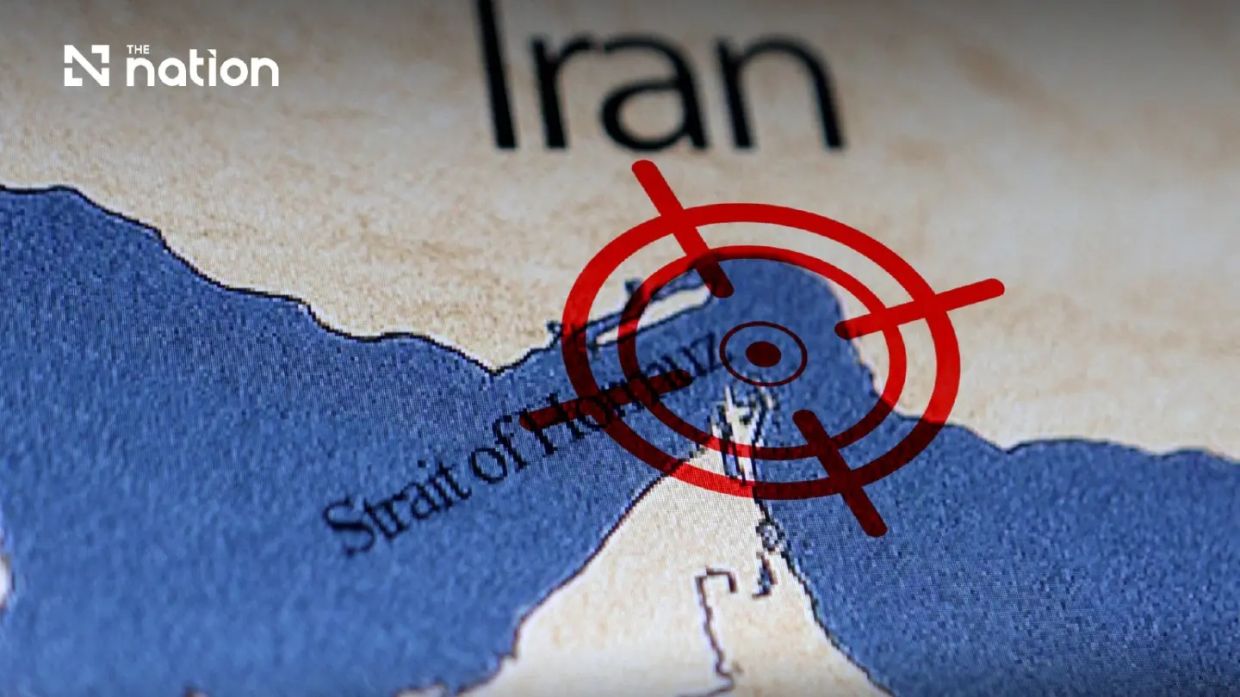
A merchant vessel flying the Thai flag has reportedly come under attack from Iranian military forces while transiting the Strait of Hormuz, marking another concerning incident in an increasingly volatile stretch of the Persian Gulf. The attack, reported by Iran's semi-official Tasnim news agency, adds to mounting security concerns for commercial shipping in this critical global trade route, where roughly one-third of the world's seaborne oil passes daily. The reported incident underscores how regional military escalation between Washington and Tehran is putting civilian and commercial interests at serious risk, with implications for energy prices, insurance costs, and supply chain reliability across Southeast Asia and beyond.
Details surrounding the Thai vessel remain murky, with Iranian state media providing no information about the ship's operator, cargo, destination, or the nationality of its crew. Thai authorities have not yet confirmed the attack, and neither independent maritime monitoring organisations nor the vessel's operator have made statements about the incident. Critically, it remains unclear whether the vessel sustained damage or whether any crew members were harmed in the alleged assault. This lack of transparency is itself concerning, as it reflects the broader difficulty in establishing facts in an environment where military claims and counterclaims dominate the information landscape.
The reported attack on the Thai-flagged vessel comes as part of a wider pattern of Iranian military assertions regarding the waterway. The Iranian Revolutionary Guard Corps Navy has claimed that the Strait of Hormuz has become "extremely unsafe" and is now completely closed due to what it characterises as American aggression. Simultaneously, Iranian authorities have warned international shipping companies to heed notices issued by their armed forces rather than seeking protection from US military assets operating in the region. The Islamic Revolutionary Guard Corps separately claimed it had intercepted four unnamed oil tankers attempting passage through the strait with alleged US military support, ordering the vessels to remain stationary during what it described as a coordinated missile-and-drone operation.
Complicating the maritime security picture further, Tasnim reported that two oil tankers caught fire after explosions occurred in an area described by Iranian media as a minefield in the southern portion of the strait. The tanker fires and the broader pattern of reported incidents highlight how the collision between military operations and commercial shipping creates genuine hazards for vessels of all flags attempting to navigate these waters. The lack of clarity about what constitutes a safe passage through contested areas creates real danger for merchant mariners who may face fire from one side or the other, or encounter undeclared hazards.
The maritime tensions are unfolding against a backdrop of intensifying military operations. The United States military, through its Central Command, announced that it launched its seventh consecutive night of strikes targeting Iranian military installations. The latest operation commenced at 7pm Greenwich Mean Time on Friday, or 3pm on the US East Coast, with CENTCOM stating the strikes were designed to "continue degrading Iran's military capabilities." The US military has not yet released detailed information about specific targets or the full scope of damage inflicted, maintaining operational security while pursuing its campaign.
Iranian authorities, however, have alleged that these US strikes have caused significant damage to civilian infrastructure across Iran's southern regions. Foreign Minister Abbas Araghchi stated that three people were killed in an attack on a bridge in Bandar Khamir, adding to a toll of eight deaths claimed by Iran from overnight US strikes. Additionally, Tasnim cited a deputy governor of Bushehr province as claiming that the United States attacked an Iranian oil tanker berthed at Kharg Island, a major petroleum loading facility. These allegations of civilian damage complicate the diplomatic landscape, though independent verification remains elusive.
Iran has responded with military action of its own, claiming retaliatory strikes against what it describes as US assets and military installations across the broader region. The Islamic Revolutionary Guard Corps asserted it attacked US bases in Bahrain, Jordan, Kuwait, and Qatar. Qatari authorities confirmed they intercepted an incoming Iranian attack, though a child was injured by debris from the interception, according to official statements from Doha. The IRGC Navy also claimed responsibility for shooting down a US MQ-9 Reaper drone over Bushehr using what it characterised as a newly developed air-defence system, though the United States has not confirmed the loss of this aircraft.
For Southeast Asian nations like Malaysia, the implications of this escalating confrontation are substantial and multifaceted. The region depends heavily on stable energy supplies and predictable shipping routes. Disruptions to the Strait of Hormuz translate directly into higher oil and gas prices affecting everything from fuel costs to petrochemical imports. Malaysian port operators and shipping companies with vessels transiting the strait face mounting insurance premiums and operational uncertainties. The reported attack on the Thai-flagged vessel is particularly significant because it signals that even friendly regional nations are not immune to the risks posed by this military confrontation.
The broader geopolitical trajectory is also troubling. The escalating military exchanges between the United States and Iran increase the risk that the conflict could spread across the Persian Gulf, where multiple countries, including some with significant Southeast Asian diplomatic and economic ties, host American military personnel and facilities. Kuwait, Qatar, and Bahrain are all experiencing Iranian military activity while hosting important US military infrastructure. Any expansion of the conflict could destabilise the entire region and draw in additional actors, complicating efforts at diplomatic resolution.
The pattern of competing military claims and the absence of independent verification create an environment where miscalculation becomes a serious danger. Each side is making assertions about military successes, the extent of damage inflicted, and the closure or reopening of strategic waterways, but the actual facts on the ground remain contested. For commercial shipping, this ambiguity is dangerous. Ship operators cannot reliably assess risk or plan routes when official channels provide conflicting information about what constitutes safe passage. The reported Thai vessel incident exemplifies this problem: was it a deliberate warning, an accident, or a genuine attack intended to cause damage?
Looking forward, the situation demands immediate international attention. The International Maritime Organization and regional maritime authorities need to establish clear, verified information channels about corridor safety. Maritime insurance premiums and freight costs will inevitably climb if shipping companies perceive the Strait of Hormuz as increasingly perilous. Major trading nations with interests in Gulf commerce, including those in Southeast Asia, should coordinate pressure on both Washington and Tehran to de-escalate military operations and resume diplomatic channels. The reported attack on a Thai-flagged vessel serves as a reminder that regional conflicts have global consequences, and that protecting civilian shipping is a shared responsibility that transcends national boundaries and political rivalries.

