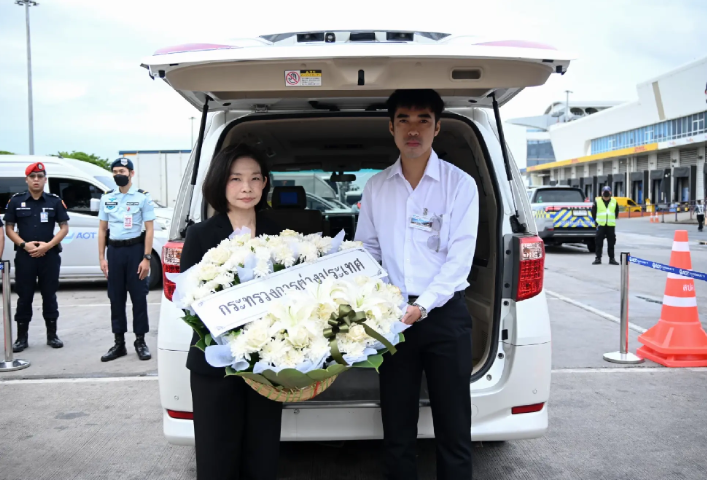
Thailand's Ministry of Foreign Affairs has successfully facilitated the return of travel content creator Bavorntat Pengsuk, popularly known as 'Hlun Solo', whose body arrived in the country following his death in Tbilisi, Georgia on 14 July. The 27-year-old YouTuber had amassed a substantial following through his travel documentation, capturing adventures and cultural experiences across multiple countries for his online audience. His unexpected passing in the Georgian capital prompted immediate diplomatic intervention to ensure proper handling of repatriation procedures and adherence to both Thai and Georgian legal protocols.
Deputy Prime Minister and Foreign Minister Sihasak Phuangketkeow delegated oversight of the repatriation to Prathuangtip Sirivithes, the acting director-general of the Department of Consular Affairs, according to an announcement made on Thursday by Jaithai Upakarnitikaset, director-general of the Department of Information. This assignment reflected the government's commitment to managing the sensitive matter with appropriate administrative attention and ensuring the family received necessary support throughout the complex international procedures involved in transporting remains across borders.
The Royal Thai Embassy in Ankara maintained consistent coordination with the deceased's family members, Georgian authorities, and local officials from the moment notification of the incident was received. This liaison role proved critical in navigating the administrative complexities that arise when Thai nationals die abroad, particularly in jurisdictions where Thai diplomatic presence requires additional coordination efforts. Embassy personnel were immediately dispatched to Tbilisi to accelerate the investigative process into the circumstances surrounding Bavorntat's death, a standard protocol designed to provide answers to grieving families while ensuring transparency in international cases.
Among the key responsibilities assumed by Thai diplomatic staff was expediting repatriation logistics and applying pressure on Georgian officials to resolve administrative bottlenecks that had delayed earlier procedures. Such delays are not uncommon in international repatriation cases, often stemming from differing bureaucratic processes, documentation requirements, or coordination challenges between nations. The embassy's intervention demonstrated the practical importance of having diplomatic representation capable of advocating for Thai citizens' interests and navigating foreign administrative systems.
Since Bavorntat's arrival back in Thailand, his family has arranged for a comprehensive forensic examination to be performed domestically. This decision reflects both standard medical-legal practice and the family's desire to obtain thorough documentation of the circumstances surrounding his death. The examination represents an important step in providing the family with conclusive information while creating an official record that may address questions about his passing.
Once the forensic procedures are completed and all necessary documentation finalized, arrangements will be made to transport Bavorntat's remains to Somdet district in Kalasin province, his hometown in northeastern Thailand. This region, part of the Isaan heartland, maintains strong traditions of family-centered burial practices and religious observance. The journey home carries significant cultural meaning for Thai families, representing the return of a loved one to their ancestral place for final rituals.
Bavorntat's family will conduct traditional Buddhist funeral rites in accordance with Thai customs and his family's beliefs. These ceremonies typically span several days and involve monks, family members, and community members in observances that reflect the Thai cultural framework for honoring the deceased and supporting the grieving family. Such rites provide both spiritual and emotional closure for those left behind and represent an important aspect of the grieving process within Thai society.
The case highlights the broader reality that Thai citizens traveling and working abroad, particularly content creators who operate independently across international borders, face inherent vulnerabilities. While Bavorntat's popular channel documented experiences in various countries, underscoring the appeal of travel content to audiences worldwide, his passing underscores the unforeseen risks associated with extended overseas travel. For families and the broader creator community, his death serves as a sobering reminder of the importance of maintaining communication channels with diplomatic services and ensuring proper documentation for emergencies.
From a diplomatic perspective, this repatriation demonstrates Thailand's institutional capacity to manage crisis situations involving nationals abroad, even when they occur in countries where Thai diplomatic infrastructure is indirect, such as through the Ankara embassy rather than a dedicated Tbilisi mission. The coordinated response reflected established protocols for such emergencies, involving multiple government departments working toward the common objective of bringing a citizen home with dignity and ensuring the family received appropriate support during an extraordinarily difficult period. For Malaysian and other Southeast Asian readers, the case illustrates how governments coordinate across borders to address the human dimensions of international tragedy, a concern affecting families throughout the region whose relatives work, travel, or study abroad.

