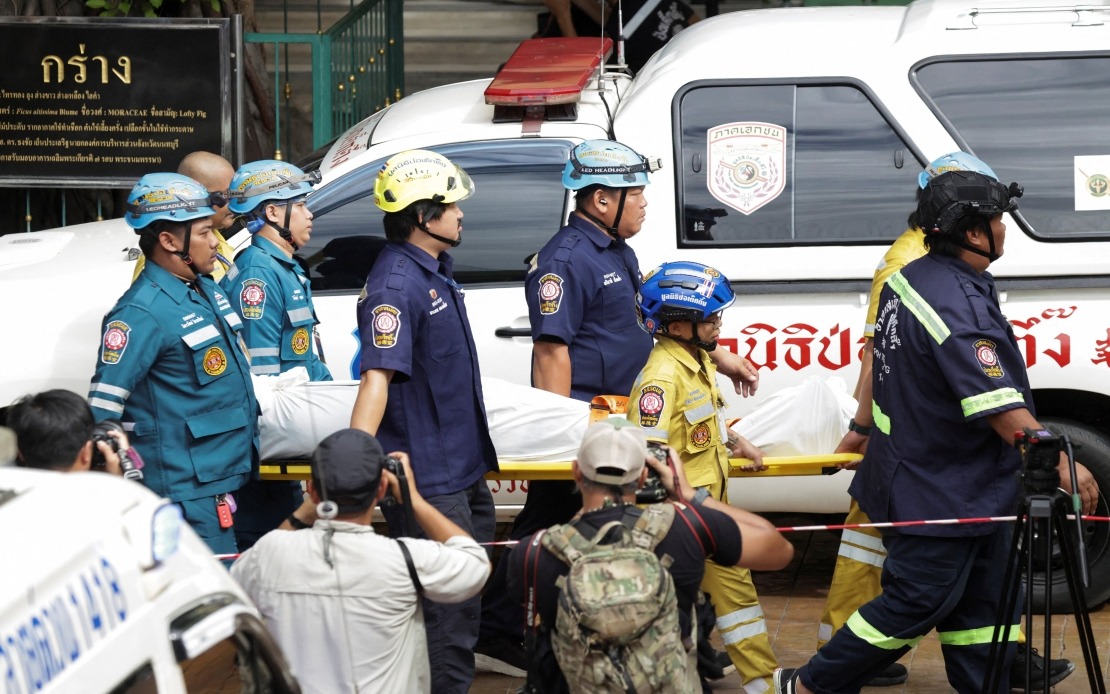
A school shooting in Nonthaburi province on Friday left six people dead and 15 injured, making it one of Thailand's deadliest incidents of gun violence in educational settings in recent memory. The student suspected of carrying out the attack at Debsirin Nonthaburi School opened fire around 10am, targeting both staff and pupils before the gunman was also found dead at the scene. The tragedy has once again thrust questions about firearms access and school safety into Thailand's public discourse, particularly as the incident unfolded with shocking speed and devastating consequences.
According to Royal Thai Police Deputy Inspector-General and Spokesperson Lieutenant General Trairong Piwpan, the initial death toll comprised three teachers and three students, while another 15 individuals sustained injuries during the rampage. The officer disclosed that preliminary investigations had established the suspect had discharged 26 rounds before even arriving at the school premises, raising critical questions about what preceded the school attack itself. This detail has proven significant in understanding the trajectory of the violence that morning and the psychological state of the perpetrator.
The investigation took a darker turn when officers discovered evidence suggesting the shooting at school may not have been the first violent act. After conducting a search of the suspect's residence in Bang Bua Thong district, police located the bodies of his grandfather and grandmother inside the home. Both elderly relatives had suffered fatal gunshot wounds to the head, suggesting a methodical and deliberate execution. Lieutenant General Trairong indicated that investigators believe the student likely killed his grandparents before proceeding to the school, though officials emphasised that the precise sequence of events and exact timing remained subjects of ongoing investigation.
Detailed examination of the crime scene at the suspect's home revealed a 9mm handgun and 34 additional rounds of ammunition stored separately from the magazine, suggesting significant planning and preparation. The quantities of ammunition located raise troubling questions about how a student gained access to lethal firearms and maintained such quantities without detection. Thai law enforcement has not yet released comprehensive details about the weapon's origin or how the suspect obtained it, information that may prove crucial in understanding potential security lapses within the licensing or registration system.
The incident echoes previous mass shooting tragedies across Southeast Asia, where access to firearms remains a persistent challenge despite regulations. Thailand has experienced sporadic episodes of gun violence in schools and public spaces, though incidents of this magnitude remain relatively uncommon. The tragedy at Debsirin Nonthaburi School stands as a sobering reminder of the potential for catastrophic violence when troubled individuals gain access to weapons and ammunition, particularly in institutional settings where large numbers of vulnerable people congregate.
Investigators are now working methodically to establish the underlying motive that drove the student to commit such extraordinary violence. Understanding whether the murders of his grandparents and the subsequent school attack represented a coordinated plan or emerged from escalating emotional distress will be crucial for mental health professionals and law enforcement analysts. The psychological profile of the perpetrator may offer insights that could inform prevention strategies in the future.
The injuries sustained by 15 other victims represent varied trauma and long-term consequences extending far beyond the immediate death toll. Some survivors may face permanent physical disabilities, while others will grapple with psychological scars from witnessing the violence and losing classmates and teachers. Schools across Thailand are likely to grapple with heightened security concerns and the emotional toll on their communities in the aftermath.
For Malaysian observers, the incident carries particular relevance given geographical proximity and shared regional concerns about public safety. While Malaysia has implemented relatively stricter firearm regulations than some neighbouring countries, the Thai tragedy underscores the ongoing vulnerability of educational institutions to acts of violence regardless of national context. School administrators throughout Southeast Asia may find themselves reviewing security protocols and emergency response procedures in light of the Nonthaburi incident.
Authorities have begun the painstaking process of piecing together the chronology of events and identifying potential warning signs that may have preceded the attacks. Whether the suspect exhibited behavioural indicators that concerned family members, school officials, or peers remains unclear at this stage. Mental health professionals emphasise that identifying at-risk individuals and providing appropriate intervention represents one of the most promising avenues for prevention, though implementation across schools and communities remains inconsistent.
The recovery and investigation process will extend for months as officials work to provide closure for grieving families and the broader community affected by the tragedy. Nonthaburi province faces the considerable challenge of supporting survivors, conducting thorough forensic analysis, and implementing enhanced security measures to restore public confidence in the safety of educational institutions. The incident will likely prompt policy discussions at national level regarding firearm access and school safety infrastructure.

