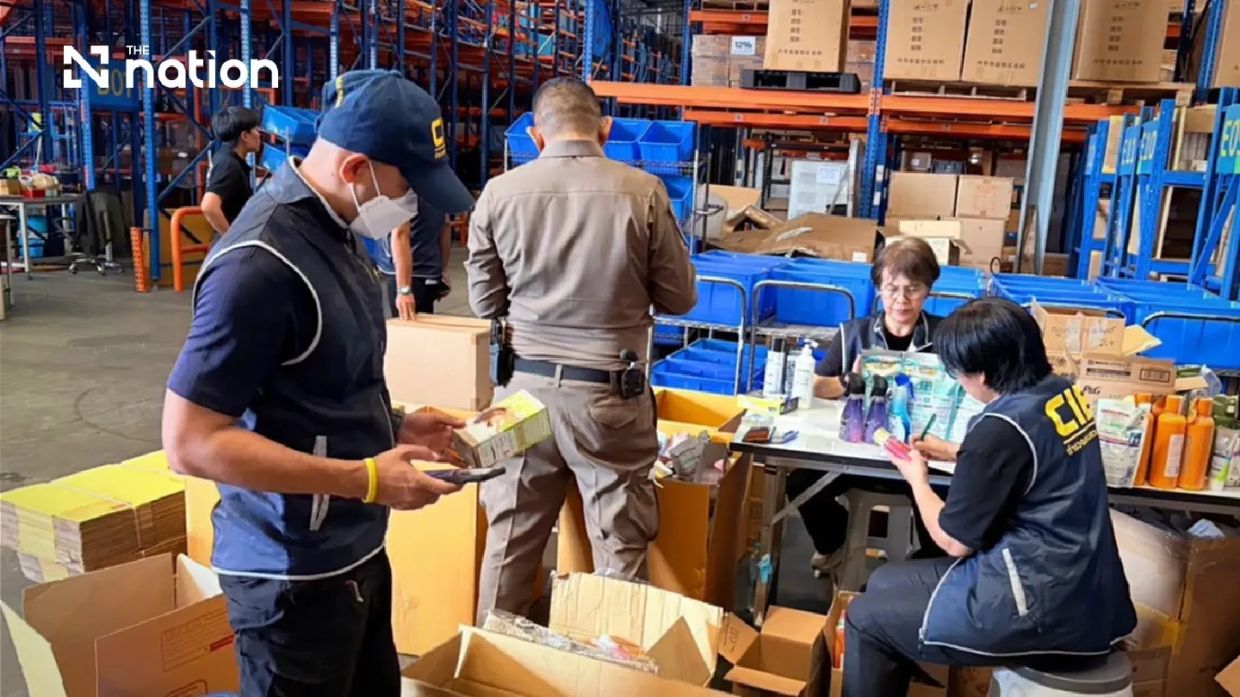
Thai law enforcement has dismantled a significant illegal import operation after discovering a sprawling warehouse in Bang Phli, Samut Prakan, stocked with more than 83,000 unapproved Japanese consumer products. The Consumer Protection Police Division (CPPD), under the direction of Pol Maj Gen Kongkrit Lertsittikul, executed the raid on Thursday, August 13, confiscating 116 different types of cosmetics, dietary supplements and medicinal items collectively valued at over 8.34 million baht. The haul represents one of the larger crackdowns on illicit online commerce in recent months, highlighting persistent vulnerabilities in Thailand's e-commerce supply chains and the risks posed by poorly regulated cross-border trade.
The investigation that led to the warehouse raid began with a cascade of consumer complaints regarding online sellers offering beauty and health products devoid of Thai-language labelling and lacking proper documentation. These red flags prompted authorities to trace the origin of the goods, which investigation ultimately linked to Japanese imports that had circumvented standard regulatory procedures. Unlike legitimate foreign products entering Thailand's market, these items had bypassed mandatory safety inspections and certifications from competent Thai authorities. The absence of such verification created conditions where potentially hazardous goods could reach consumers without proper risk assessment or transparent ingredient disclosure.
What emerged during the investigation was a sophisticated logistics operation designed to facilitate online commerce on an industrial scale. The warehouse in Bang Phli functioned as a centralised hub where imported goods were received, stored and prepared for distribution to numerous online sellers across various digital platforms. The operation had evolved into a full-service packing facility, processing between 200 and 300 items daily and charging online sellers a relatively modest 10 to 12 baht per box for these services. This arrangement allowed the warehouse operators to remain somewhat insulated from direct retail operations while still profiting substantially from the supply chain, a model that has become increasingly common among third-party logistics providers serving Thailand's booming e-commerce sector.
The longevity of this operation underscores how such networks can persist unchecked for extended periods. According to police findings, the warehouse had been conducting these activities for more than four years, suggesting that detection and enforcement have lagged considerably behind the proliferation of online commerce platforms. During this timeframe, the facility likely processed hundreds of thousands of individual items, reaching vast numbers of consumers who may have been unaware of the regulatory status of their purchases. This extended operation period indicates that the network had developed sufficient operational experience to avoid triggering regulatory scrutiny until consumer complaints eventually accumulated to actionable levels.
The legal implications for those involved are substantial. Investigators have referred the case to Sub-Division 4 of the CPPD for prosecution under multiple statutes, including Thailand's Cosmetics Act, Hazardous Substances Act, Food Act and Drug Act. These overlapping legal frameworks reflect how the seized products span multiple regulatory categories, each carrying distinct penalties and enforcement mechanisms. Individuals and entities involved in importing, storing and distributing these goods could face imprisonment and significant financial penalties, depending on which provisions are ultimately applied and how culpability is determined during legal proceedings.
For Malaysian and Southeast Asian readers, this operation carries important resonance regarding cross-border commerce dynamics. Thailand's experience illustrates how rapid e-commerce growth has outpaced regulatory capacity in the region, creating opportunities for import networks to circumvent safety frameworks. The cosmetics and supplements sector is particularly vulnerable because consumer demand remains high while detection mechanisms remain relatively underdeveloped. Many Southeast Asian nations operate similar legal structures for product safety, yet enforcement remains inconsistent, creating arbitrage opportunities for traders willing to navigate regulatory ambiguity.
The absence of Thai-language labelling emerged as a crucial enforcement tool in this case. Labelling requirements serve multiple functions beyond consumer information, including enabling authorities to trace supply chains and verify regulatory compliance at the point of sale. When products deliberately omit required local-language documentation, this signals intentional circumvention of regulatory frameworks. The CPPD's ability to mobilise this violation as probable cause for warehouse inspection demonstrates how multilayered regulations can provide enforcement handles even when direct detection of product hazards proves difficult.
Consumer protection implications extend beyond the immediate risk of using untested cosmetics or supplements. The operation's integration with online platforms indicates that buyers had no practical ability to identify non-compliant products before purchase. Online marketplaces in Thailand, like those across Southeast Asia, often feature hundreds of sellers offering similar product categories with minimal differentiation in how product information is presented. Consumers relying on seller ratings or platform endorsements may have insufficient information to assess regulatory compliance status.
The warehouse model also reveals structural vulnerabilities in Southeast Asia's emerging logistics infrastructure. Third-party logistics providers occupy an increasingly central position in e-commerce supply chains, yet regulatory oversight of these facilities remains underdeveloped compared to oversight of manufacturers and retail outlets. The 10 to 12 baht per-box packing fee suggests narrow margins that may incentivise operators to minimise compliance costs, creating conditions where safety standards erode gradually across supplier networks. Addressing this requires regulatory frameworks that impose explicit responsibility on logistics providers for product compliance verification.
Authorities throughout Southeast Asia are grappling with similar challenges as e-commerce accelerates regional trade volumes. Thailand's approach—reactive investigation triggered by consumer complaints, followed by enforcement action against warehouse operators and those engaged in distribution—represents one common enforcement pathway. However, the four-year operational span suggests that reactive investigation alone may prove insufficient to address the scale of informal import networks. More proactive monitoring mechanisms, potentially involving increased scrutiny of cross-border logistics providers and closer integration between customs authorities and consumer protection agencies, may be necessary to prevent similar networks from establishing such extensive operations.
The seizure operation also highlights the role that coordination between different enforcement agencies plays in addressing complex supply chain violations. This case involved the CPPD specifically, but effective prevention of such networks likely requires cooperation with customs authorities, import-export regulatory bodies, and online platform compliance teams. Strengthening such coordination mechanisms across Southeast Asia could create additional friction for operators attempting to move non-compliant products through regional supply chains. Several countries in the region have begun developing such frameworks, though implementation remains uneven and gaps persist at critical junctures in cross-border trade logistics.

