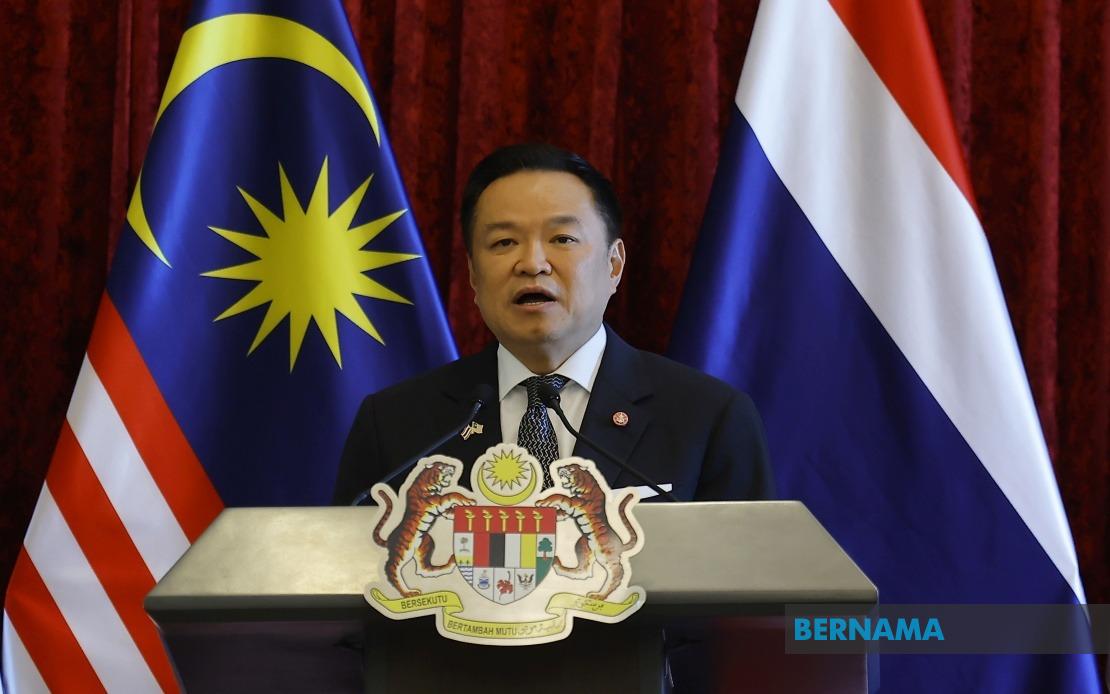
Thai Prime Minister Anutin Charnvirakul has placed ending violence in Thailand's southern border provinces among his government's highest priorities, underlining the region's critical importance to Bangkok's broader stability agenda. Speaking during a joint press conference with Malaysian Prime Minister Datuk Seri Anwar Ibrahim in Putrajaya on Thursday, Anutin outlined a framework centred on sustained bilateral cooperation to tackle both the immediate security challenges and longer-term development needs facing the sensitive borderlands shared by both nations.
The remarks signal a recognition within Bangkok's leadership that the decades-long insurgency in Pattani, Yala, and Narathiwat provinces cannot be resolved through military means alone. Anutin's framing of the problem—emphasising the interdependence between peace and development—reflects a strategic shift towards comprehensive approaches that address underlying grievances fuelling the conflict. This philosophical positioning carries weight given Thailand's historical reliance on security-first responses that, analysts argue, have yielded limited results in transforming the fundamental dynamics driving the insurgency.
For Malaysian policymakers and security strategists, Anutin's public commitment carries immediate relevance. The cross-border nature of violence in southern Thailand has long posed risks for Malaysia's northern states, particularly Kedah and Perlis, where spillover effects and transnational militant networks have occasionally manifested as security concerns. Malaysia's central role as facilitator of the Southern Thailand Peace Dialogue process—a position Anutin explicitly acknowledged and appreciated—positions Kuala Lumpur as an indispensable intermediary in regional stability architecture. This diplomatic prominence reflects Malaysia's geographic proximity, cultural ties, and credibility with multiple stakeholders in the peace equation.
The peace dialogue framework involves negotiations between the Thai government and the Barisan Revolusi Nasional (BRN), one of the principal armed groups operating in southern Thailand. This multilateral engagement structure requires skilled mediation precisely because the interests of state and non-state actors often diverge sharply. Malaysia's facilitation role, under the leadership of Datuk Mohd Rabin Basir—a former director-general of the National Security Council appointed to the position on July 1, 2024—draws on Kuala Lumpur's experience managing complex security dialogues and its reputation as a relatively neutral interlocutor within the Southeast Asian region. Basir's appointment underscores Malaysia's institutional commitment to sustaining momentum in the peace process despite the inherent challenges of negotiations with armed groups.
Thailand's commitment to the dialogue process is embodied in its chief negotiator, Thanat Suwannanont, director of the National Intelligence Agency (NIA). The choice of an intelligence official to lead Thailand's negotiating team reflects Bangkok's approach to the talks—combining intelligence gathering with diplomatic outreach. This dual-track strategy acknowledges that understanding the operational, organisational, and ideological dimensions of armed groups remains essential even while pursuing peaceful resolution. For Malaysia, working with Thai intelligence representatives requires careful calibration to ensure that security cooperation complements rather than undermines the trust-building necessary for dialogue.
Anwar's public assurance that Malaysia unequivocally rejects violence and stands ready to pursue accountability represents an important signal to Bangkok. This commitment addresses Thai concerns about cross-border criminal networks and militant sanctuaries, which have periodically strained relations between the two countries. By reiterating Malaysia's stance during a high-level bilateral engagement, Anwar reinforced the principle that regional security cooperation transcends narrow national interests and reflects shared commitments to stability and rule of law. For Malaysian civil society and international observers, this positioning also clarifies that facilitation of dialogue does not imply tolerance for violence or abdication of law enforcement responsibilities.
The emphasis on linking peace to development reflects an understanding that security gains prove ephemeral without addressing economic marginalisation and social grievances in southern Thailand. Insurgencies historically thrive in contexts of limited opportunity, weak state presence, and community alienation from national institutions. Development initiatives—from infrastructure investment to educational programmes and livelihood opportunities—can gradually shift incentive structures among affected populations. Malaysia, having invested substantially in northern state development and cross-border economic cooperation initiatives, possesses valuable experience in this domain that could inform Thai policy approaches.
Bilateral cooperation on border security and intelligence-sharing represents the operational backbone of Thailand-Malaysia coordination on this issue. Both nations maintain substantial military and police deployments along their shared frontier, and effective intelligence coordination can disrupt militant networks and prevent violent incidents. However, such cooperation functions most effectively when embedded within a broader peace architecture rather than pursued as an isolated security measure. Anutin's acknowledgement of Malaysia's multifaceted role—simultaneously facilitating dialogue, cooperating on security, and supporting development—reflects understanding that these dimensions reinforce rather than contradict each other.
The Southern Thailand Peace Dialogue has experienced multiple cycles of progress and stagnation since formal mechanisms were established. International mediation efforts, including those involving other ASEAN states and external actors, have occasionally injected momentum during critical junctures. Malaysia's facilitation role has proven particularly valuable during phases when trust between principal parties eroded, given Kuala Lumpur's relatively neutral standing and its willingness to invest diplomatic capital in sustaining engagement. However, peace processes involving armed groups face inherent obstacles, including splinter factions resistant to negotiated settlement, factional disputes within government approaches, and external pressures that periodically destabilise agreements.
For Malaysian readers and policymakers, the significance of Anutin's remarks extends beyond bilateral relations into the broader Southeast Asian security architecture. The stability of Thailand's southern borderlands directly affects Malaysia's own regional interests, from preserving cross-border commerce and tourism to maintaining the security environment necessary for development projects in northern states. Moreover, the peace process serves as a test case for ASEAN conflict resolution mechanisms and multilateral approaches to non-traditional security challenges. Malaysia's leading role in this process enhances its standing within the region as a responsible broker of contentious issues and positions it advantageously in broader diplomatic discussions.
Looking forward, sustaining momentum in the Southern Thailand Peace Dialogue requires consistent attention from political leadership in both countries, adequate resources for implementation of any agreements reached, and realistic timeframes for transforming decades of conflict into durable peace. Anutin's public reiteration of Thailand's commitment, coupled with explicit appreciation for Malaysian facilitation, suggests that Bangkok recognises the value of patient diplomacy. For Malaysia, maintaining this facilitation role demands continued diplomatic investment, institutional capacity-building within the mediation team, and careful management of domestic security concerns that might otherwise pressurize the government to shift priorities away from regional peace architecture.

