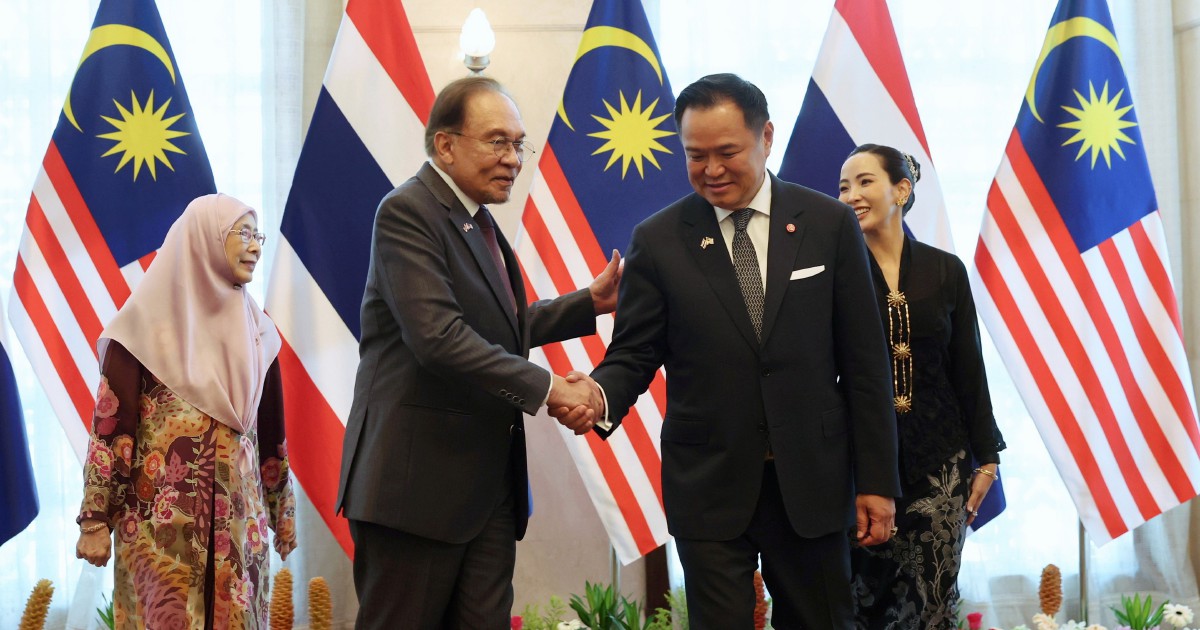
Thai Prime Minister Anutin Charnvirakul has publicly expressed his backing for Malaysian Prime Minister Datuk Seri Anwar Ibrahim as the nation heads toward a significant state election in Johor this Saturday. The gesture from Bangkok's leader underscores the growing collaborative ties between Thailand and Malaysia at the highest levels of government, with regional leaders increasingly vocal in their encouragement of neighbouring countries' electoral processes.
The timing of Anutin's message carries particular significance given the importance of the Johor election within Malaysia's political landscape. As one of the country's largest and most economically influential states, Johor serves as both a political bellwether and a strategic stronghold for any ruling coalition. The upcoming poll represents a critical test of support for Anwar's administration, which has governed through a complex multiparty arrangement since late 2022. A strong showing in Johor would provide the federal government with renewed legitimacy and strengthen Anwar's position heading into potential future parliamentary contests.
Thailand's outreach reflects a broader regional diplomatic pattern where Southeast Asian leaders have begun more openly demonstrating solidarity with their counterparts' domestic political endeavours. Anutin, who has navigated Thailand's own complicated political history and coalition-building challenges, likely understands the pressures facing Anwar in maintaining governmental stability through consensus rather than outright majority control. His well-wishes may thus represent something deeper than mere protocol—an acknowledgment of the shared complexities that regional leaders face in governing diverse, coalition-based administrations.
The statement from Putrajaya also illustrates Malaysia's continued importance within the ASEAN framework and bilateral relations. Thailand and Malaysia share longstanding ties across trade, tourism, and security matters, particularly concerning maritime boundaries and shared security challenges in the region. Electoral outcomes in major Malaysian states can have ripple effects throughout the regional economy and affect policy directions on cross-border issues, making Thailand's interest in Malaysian political stability entirely rational from a strategic perspective.
Anwar's administration has actively sought to strengthen Malaysia's regional engagement, particularly with nations like Thailand where new cooperative frameworks have been established. The deputy prime minister roles and ministerial positions within Malaysia's coalition government have been distributed to accommodate multiple parties, making effective governance and policy implementation dependent on maintaining delicate political balance. A decisive result in Johor would either consolidate this arrangement or potentially destabilise it, making regional observation of the election results particularly keen.
Johor's political complexion has undergone significant shifts in recent years, reflecting broader national trends. The state has historically been a stronghold for certain political forces, but recent electoral cycles have demonstrated shifting voter preferences and increased competition among rival coalitions. The parties contesting this weekend's election represent competing visions for state development, economic priorities, and governance approaches. Voters will be making choices not merely about state administration but also about their confidence in the federal government's direction.
From Thailand's perspective, maintaining constructive relationships with Malaysia's ruling government, regardless of which specific coalition holds power, remains essential for regional stability and bilateral cooperation. Anutin's gesture thus serves multiple purposes: it demonstrates Thailand's recognition of Anwar's legitimacy as Malaysia's premier, reinforces the principle of regional respect for electoral processes, and signals Bangkok's interest in continued positive relations regardless of Saturday's outcome.
The visit or communication from the Thai premier also reflects Malaysia's successful repositioning within the region following several years of domestic political turbulence. By the mid-2020s, Malaysian leaders have worked to restore the country's regional standing and deepen cooperation frameworks across Southeast Asia. Such public gestures of diplomatic support contribute to that broader narrative of stability and normalisation.
For Malaysian observers, Anutin's remarks represent an external validation of the government's legitimacy at a moment when domestic confidence may be fluctuating. International support from regional peers carries weight in domestic political calculations, particularly when administered by leaders themselves familiar with coalition governance and the compromises it requires. Thailand's backing thus carries genuine political significance beyond ceremonial courtesies.
The Johor election occurs against a backdrop of broader economic and social concerns that transcend state boundaries. Regional cooperation on issues such as supply chain resilience, digital economic integration, and labour mobility increasingly depend on stable governance in major states like Johor. An election result that strengthens governmental cohesion could facilitate smoother implementation of regional initiatives that benefit both Malaysia and Thailand.
Ahead of Saturday's polling, such expressions of regional solidarity contribute to the broader narrative surrounding the election. They frame Malaysia's internal political process as one watched by attentive regional partners invested in continued stability and cooperation. Anutin's wishes, while appearing ceremonial, actually reinforce important messages about regional governance norms and the interconnectedness of Southeast Asian political and economic health.
As voters in Johor prepare to cast their ballots, they do so with the knowledge that the wider region views the outcome as significant for broader Southeast Asian dynamics. Thailand's public support for Anwar reflects the consensus among regional capitals that Malaysia's political stability and effective governance matter not merely for Malaysian citizens but for the entire region's prosperity and security framework.

