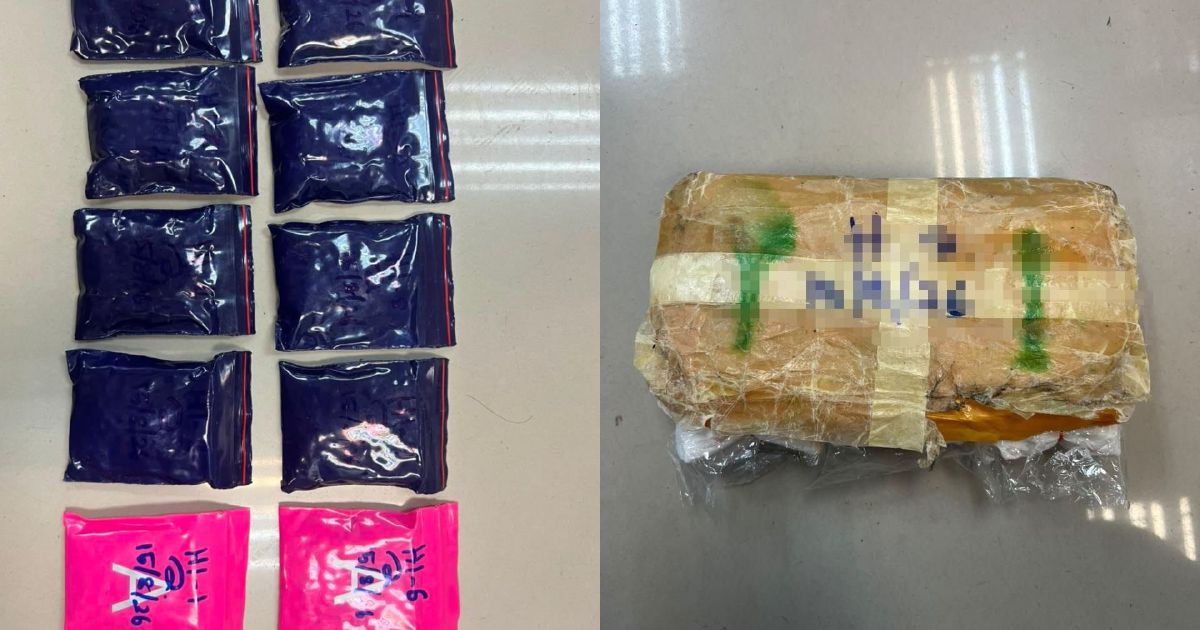
Law enforcement officers in Kelantan have apprehended a 45-year-old Thai national during a narcotics operation targeting the porous Malaysia-Thailand border region. The arrest took place in Kampung Rahmat, a residential area near Rantau Panjang, one of the most active border crossing points on the Peninsular Malaysia-Thailand frontier. Officers seized 6,000 yaba pills from the suspect, with authorities valuing the illicit cache at approximately RM60,000 on the street market.
Yaba, a synthetic drug combining methamphetamine and caffeine, has become a persistent challenge for Malaysian law enforcement agencies, particularly in border states. The stimulant is manufactured primarily in clandestine laboratories across northern Thailand and Myanmar, making it readily accessible for smuggling operations along the Thailand-Malaysia-Singapore corridor. The high demand among users in Malaysia, coupled with organised trafficking networks, ensures a steady flow of the drug across porous land borders.
The Pasir Mas district in northern Kelantan represents a critical vulnerability in Malaysia's drug enforcement architecture. Rantau Panjang, the gateway community where this operation took place, sits directly across from the Thai border town of Sungai Kolok. This proximity has historically made the area attractive for smuggling operations, as traffickers exploit informal pathways and the volume of legitimate cross-border commerce to conceal illicit shipments. The district has witnessed multiple significant drug seizures over recent years, underscoring its strategic importance in regional narcotics supply chains.
The method by which the suspect transported the yaba pills remains a crucial investigative detail. Whether the contraband was brought through official border checkpoints hidden within legitimate goods, or smuggled via informal routes avoiding customs scrutiny, will inform the broader operational response from authorities. Each scenario suggests different vulnerabilities in Malaysia's border security and customs framework that traffickers actively exploit.
Thieves and traffickers targeting yaba understand that the profit margins justify the risks. A single tablet on Malaysian streets commands a price of RM10 to RM15, meaning the confiscated shipment represented a wholesale value that could have generated RM60,000 to RM90,000 in retail revenue. For organised crime networks operating along the Thailand-Malaysia border, such transactions form the backbone of their business model, particularly as synthetic drugs offer higher profit margins and lower detection risks compared to traditional narcotics like heroin.
The arrest highlights the ongoing operational tempo of Kelantan's narcotics enforcement units, who manage a demanding surveillance and interdiction portfolio across one of Malaysia's most challenging frontiers. Officers must balance resources between traditional trafficking routes, increasingly sophisticated concealment techniques, and the sheer volume of people and goods crossing the border legitimately each day. Intelligence-led operations like the one that netted this Thai national require coordination between district police, federal drug enforcement agencies, and sometimes Thai authorities on the opposite side of the border.
Context matters significantly in understanding why border communities like Kampung Rahmat feature in drug trafficking narratives. Residents in these areas often occupy economically marginal positions, making the financial incentives of narcotics trafficking difficult to resist. Some individuals become unwitting couriers or facilitators, while organised syndicates deliberately recruit border residents who possess local knowledge and social networks that help conceal operations. The Thai suspect's presence in the village suggests either a prearranged transaction or contact with established local networks.
The yaba problem extends beyond individual arrests and reflects broader regional trends in synthetic drug manufacturing and distribution. Thai and Myanmar-based laboratories continue producing yaba at industrial scales, creating surpluses that feed markets throughout Southeast Asia. Malaysian ports, airports, and land borders face constant pressure from smuggling attempts, with law enforcement agencies reporting that for every major seizure, multiple smaller shipments likely slip through undetected.
This seizure contributes to official statistics that shape policy discussions in Malaysia. The Royal Malaysian Police's narcotics division uses data from operations like this one to justify resource allocation, identify high-risk areas, and communicate enforcement successes to the public. However, enforcement experts acknowledge that high-profile arrests represent only the visible portion of a much larger trafficking ecosystem operating beneath the surface.
Looking forward, the case underscores why Malaysia continues strengthening border infrastructure and deploying advanced detection technology at key crossing points. The Royal Malaysian Customs Department, immigration authorities, and police agencies have incrementally enhanced screening capabilities, though resource constraints and evolving smuggling tactics mean the operational challenge remains formidable. Regional cooperation through mechanisms like the ASEAN Secretariat and bilateral agreements with Thailand represents a complementary strategy, though effectiveness depends on consistent political will and resource commitment from all parties.
The arrested Thai national now faces Malaysian criminal proceedings under drug trafficking statutes that carry severe penalties, potentially including lengthy imprisonment and substantial fines. His case will likely become another data point in enforcement statistics while remaining largely unknown to the broader public, yet it exemplifies the daily contest between narcotics traffickers seeking to exploit border vulnerabilities and authorities determined to intercept contraband before it reaches street-level consumers throughout Malaysia.

