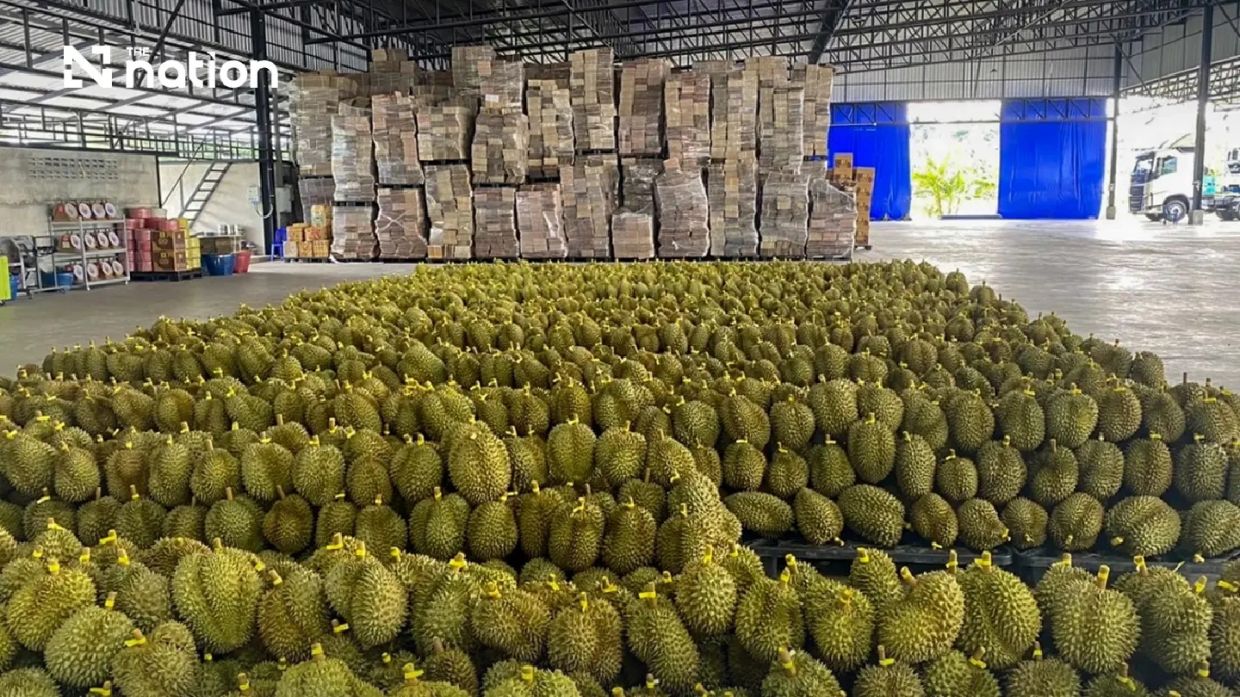
Thailand has achieved a historic milestone in its durian export performance, with fresh shipments to China surpassing THB100 billion in value during the first six months of 2026. The achievement represents a watershed moment for one of Southeast Asia's most economically significant agricultural sectors, as more than 872,000 tonnes of the prized fruit found their way across the border into Chinese markets. This figure underscores not merely the commercial success of Thai agriculture, but also a fundamental transformation in how the kingdom manages the complex logistics of exporting perishable goods to its largest trading partner in the region.
The breakthrough reflects a deliberate shift in Thailand's agricultural export governance, moving away from reactive problem-solving toward a comprehensive, systems-based approach to quality assurance. Agriculture Minister Suriya Jungrungreangkit spearheaded this overhaul during his initial 90 days in office, establishing what officials describe as integrated whole-chain quality management. The reforms streamlined inspection protocols that had previously created bottlenecks, freeing up resources for proactive trade facilitation measures that accelerate clearances and reduce delays at critical handling points along the supply chain. This operational efficiency has translated directly into increased export volumes and faster turnaround times for freight destined for Chinese consumers.
Central to the export surge are the stringent "Four Nos" protocols now enforced throughout production and distribution networks. These measures explicitly prohibit shipments containing immature fruit, any worm infestation, fraudulent origin labelling, or Basic Yellow 2 contamination—a synthetic dye that has triggered concerns among Chinese regulatory authorities in past seasons. By establishing these clear, non-negotiable standards at every node from farm to port, Thailand has effectively neutralized sources of past rejections that damaged buyer confidence and created costly delays. The specificity of these guardrails demonstrates a sophisticated understanding of Chinese import requirements and the particular sensitivities of that market.
The institutional framework underpinning these improvements reveals the depth of coordination required to manage agricultural exports at scale. The Department of Agriculture now functions as the principal coordinating body, working in concert with the National Bureau of Agricultural Commodity and Food Standards, provincial authorities, testing laboratories, private operators, and Chinese regulatory counterparts. This multi-stakeholder architecture represents a departure from siloed departmental approaches, creating transparency and accountability across the entire value chain. Electronic phytosanitary certificates linked to production data and laboratory results enable real-time tracking and rapid problem identification, reducing the friction that previously characterized bilateral trade.
Beyond the immediate export figures, Thailand's durian strategy carries significant implications for Southeast Asian agricultural competitiveness more broadly. Malaysia and other regional durian producers face intensifying pressure to match Thai standards and efficiency gains, particularly as Chinese demand for premium fruit continues expanding. The success of Thailand's systems-based approach suggests that regulatory modernization and coordinated supply chain management offer competitive advantages that transcend traditional cost considerations. For Malaysian policymakers observing developments across the border, the Thai model underscores the necessity of upgrading agricultural infrastructure and enforcement capabilities to maintain market position.
The durian sector's performance also illuminates broader patterns in Thai economic strategy. Agriculture remains central to rural employment and export earnings, yet faces persistent quality and safety challenges that undermine international competitiveness. By applying systematic governance improvements to durian—the most visible agricultural success story—Thailand creates a template for elevating other commodity exports facing similar market access obstacles. Rice, cassava, and processed foods could potentially benefit from comparable whole-chain quality frameworks, though the political will and institutional capacity to implement such changes remain uncertain.
Chinese demand dynamics provide essential context for understanding the significance of Thailand's achievement. Chinese consumers increasingly seek premium quality durian and related tropical fruits, driving prices upward and rewarding suppliers who can reliably meet stringent food safety standards. Thailand's position as the world's largest durian exporter affords it structural advantages, but these depend on maintaining the trust and confidence of Chinese importers and regulators. Any lapse in quality control or reversion to past contamination problems would likely trigger dramatic market access restrictions, as occurred during previous sanitary crises. The stakes are therefore exceptionally high, necessitating the vigilance embedded in current protocols.
Minister Suriya's public messaging around these achievements signals confidence in Thailand's agricultural future while subtly emphasizing the government's role in enabling commercial success. His framing of durian export growth as evidence of systematic institutional improvement rather than mere market luck reflects an attempt to position agricultural governance as a policy priority. The articulation of a full-year target of THB150 billion establishes clear performance metrics against which the administration's record will be judged, creating accountability that extends beyond typical ministerial tenure.
The sustainability dimension of Thailand's approach deserves particular attention. By linking farmer incomes to consistent quality standards and international market acceptance, the system theoretically creates economic incentives for long-term production excellence rather than short-term profit maximization. Operators competing in standardized quality environments face pressure to innovate and improve efficiency rather than pursue cost-cutting that compromises safety. This structural alignment between individual economic interest and systemic quality objectives offers a more durable foundation for export performance than regulatory mandates alone could achieve.
For Southeast Asian markets and trading blocs, Thailand's durian success carries lessons about the relationship between regulatory capacity and trade competitiveness. As regional integration deepens and trade barriers fall, non-tariff factors—standards, certification, traceability, and regulatory recognition—increasingly determine market access. Thailand's willingness to invest in sophisticated governance infrastructure suggests a recognition that traditional comparative advantages based on climate and geography must be complemented by institutional excellence. Similar investments across Southeast Asia could strengthen regional agricultural exports while potentially reducing quality-related disputes that occasionally strain bilateral trade relationships.
Looking forward, the question confronting Thai policymakers involves whether current momentum can be sustained and extended. Maintaining THB150 billion in annual exports demands continued vigilance, innovation in production methods, and responsiveness to evolving Chinese regulatory requirements. The system built during 2026 represents not an endpoint but rather an operational foundation requiring constant refinement and investment. Farmer participation and buy-in prove crucial; if smallholder producers perceive quality standards as burdensome rather than profitable, compliance rates may slip, threatening the entire value proposition that Thai durian currently offers to Chinese markets.

