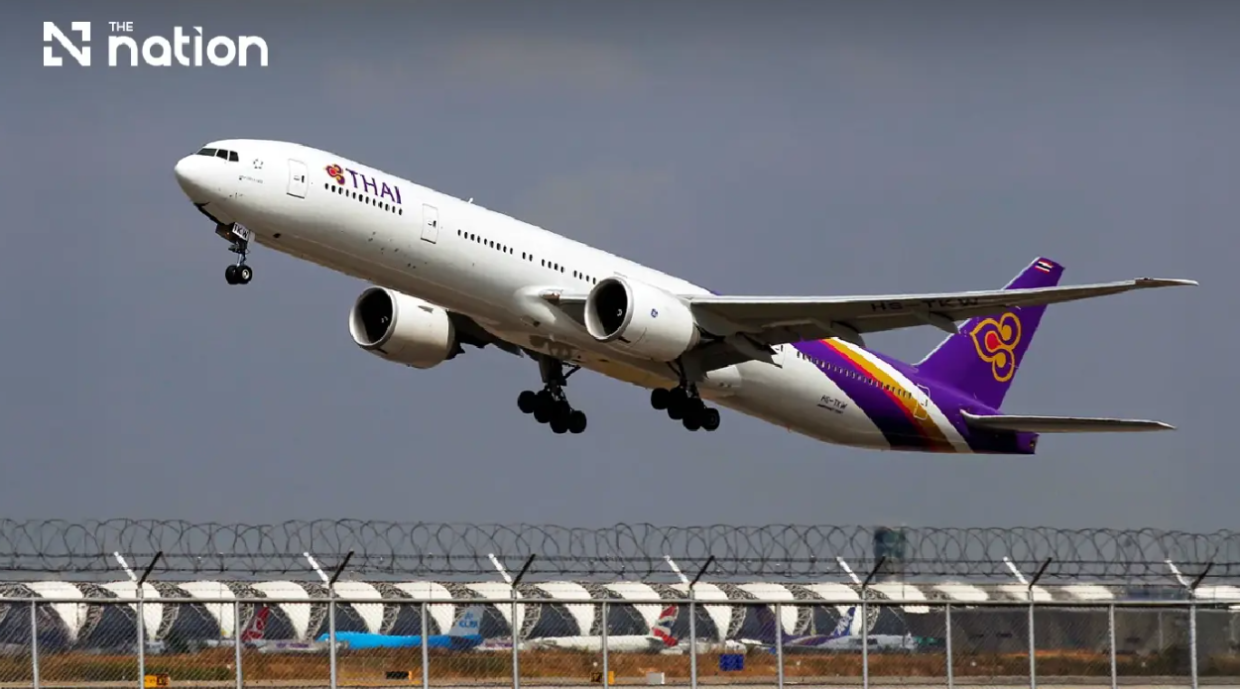
Thai Airways International has committed to complete cooperation with Australian law-enforcement agencies investigating the arrest of a cabin crew member at Melbourne Airport, with the airline's chief executive Chai Eamsiri insisting that company officials will not intervene in legal proceedings. The pledge comes after a 26-year-old Thai Airways employee was taken into custody on June 25 at Melbourne Airport following the discovery of heroin in her baggage, marking a significant embarrassment for one of Southeast Asia's major carriers and raising questions about screening protocols at both Thai and Australian airports.
The arrested crew member, who was working aboard flight TG465 from Bangkok to Melbourne, allegedly had more than one kilogramme of the drug in her possession when she arrived at Australia's second-largest airport. Australian authorities have valued the seized heroin at approximately A$500,000, equivalent to roughly 11.5 million baht, positioning this as a major drug importation case rather than a minor individual infraction. The scale of the alleged shipment suggests potential links to organised trafficking networks, though authorities have not yet disclosed whether the cabin crew member is suspected of acting independently or as part of a larger smuggling operation.
Chai emphasised that Thai Airways views the incident as damaging to the airline's reputation and has taken immediate disciplinary action by suspending the accused employee from her duties. The carrier has established a dedicated fact-finding and disciplinary panel tasked with completing a comprehensive investigation within seven days, with the possibility of concluding earlier if sufficient evidence emerges. Should the internal inquiry substantiate wrongdoing, the maximum penalty available under company procedures is dismissal, a measure that Chai indicated would be pursued if warranted by the panel's findings. This swift internal response reflects the airline's efforts to demonstrate governance and accountability at a time when public confidence in aviation staff may be questioned.
The Thai chief acknowledged that the case could create additional friction in travel procedures for Thai crew members and Thai nationals transiting through Australia, potentially subjecting travellers to heightened scrutiny at immigration and customs checkpoints. However, Chai expressed confidence that Australian authorities would evaluate cases on an individual basis rather than applying blanket suspicion to all Thai passengers, a sentiment that reflects the importance of Thailand's tourism and aviation industries to the Australian economy. The incident nonetheless highlights the vulnerability of international aviation systems to infiltration by individuals seeking to exploit their employment for illicit purposes.
Thai Airways operates with a workforce comprising more than 4,000 cabin crew members and over 1,000 pilots across its network. Chai acknowledged that despite comprehensive company rules and mandatory pre-flight briefings covering regulations, prohibited items, and relevant laws, individual misconduct remains difficult to eliminate entirely. The airline provides regular training to personnel on what constitutes lawful and unlawful conduct, yet the Melbourne incident demonstrates that awareness and compliance cannot be guaranteed across such a large workforce. In response, Chai indicated that management has instructed supervisory departments to strengthen oversight mechanisms, though the specific measures remain undisclosed.
The Australian Federal Police and the Australian Border Force have charged the suspect with importing a marketable quantity of a border-controlled drug and possessing a marketable quantity of a border-controlled drug. Each charge carries a maximum prison sentence of 25 years, indicating that Australian prosecutors regard this as a serious importation matter rather than personal possession for consumption. The accused was remanded in custody on June 26 and is scheduled to appear before Melbourne Magistrates' Court on September 14, a date that will likely attract significant media attention given the cross-border implications.
Thailand's Civil Aviation Authority has initiated its own review of the incident, contacting both the airport operator and Thai Airways to examine the facts and assess existing procedures. The CAAT confirmed that passenger and baggage screening at Thai airports adheres to the authority's requirements and complies with International Civil Aviation Organization standards, though this statement appears designed to deflect criticism rather than address systemic vulnerabilities. The authority clarified that aviation-security screening is primarily designed to prevent items that could endanger aircraft and occupants, positioning narcotics enforcement as the responsibility of dedicated law-enforcement agencies rather than civil aviation authorities. This distinction, while technically accurate, raises questions about the coordination between aviation security personnel and drug-detection units at major hubs.
CAAT indicated that it will monitor Thai Airways' preliminary investigation and may take action regarding the crew member's aviation certificate if misconduct is confirmed, a step intended to reinforce confidence in Thailand's civil aviation sector among international counterparts. The regulator emphasised that such disciplinary measures protect aviation safety standards and maintain the integrity of Thailand's aviation system in the eyes of trading partners and fellow ICAO member states. The regulatory response, however, addresses symptoms rather than underlying vulnerabilities in how international aviation staff are vetted and screened before employment.
For Malaysian readers and businesses with connections to Thai Airways, this incident carries several implications. First, it underscores the reality that major international carriers remain vulnerable to staff misconduct despite rigorous recruitment and training protocols, a concern relevant to Malaysian carriers such as Malaysia Airlines and AirAsia that operate similar workforce scales. Second, the case demonstrates how a single employee's actions can trigger broader diplomatic and procedural complications between nations, potentially affecting the movement of nationals and staff across borders. Finally, the incident illuminates the ongoing challenge of balancing security screening at airports with the practical reality of processing thousands of personnel daily—a tension that affects Southeast Asian aviation hubs including Kuala Lumpur International Airport, which handles similar volumes of international crew and passengers.

