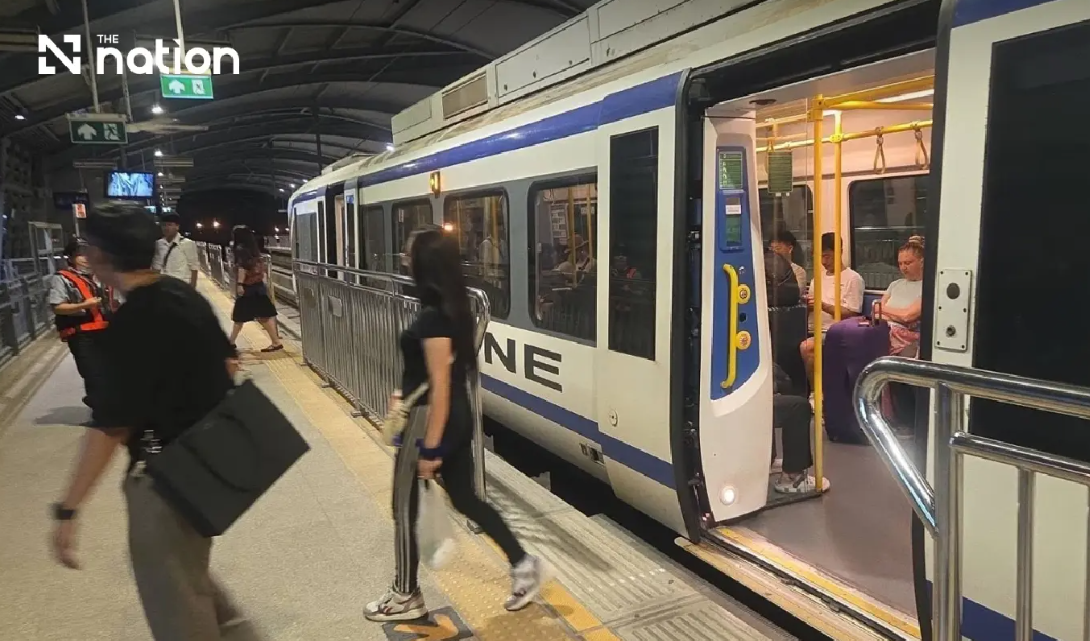
Bangkok's Airport Rail Link service between Phaya Thai and Suvarnabhumi stations returned to normal operations at 10.07pm on Wednesday after engineers successfully resolved a technical fault that had halted trains throughout the day. The incident marked a significant disruption to one of Thailand's critical transport infrastructure links, affecting thousands of commuters and airport passengers relying on the quick connection between the city and Suvarnabhumi Airport.
The State Railway of Thailand, working alongside the SRT Electrified Train Company and private operator Asia Era One, identified the source of the problem as a faulty track switch mechanism located at the turnback point within the Khlong Tan maintenance depot. The discovery came after specialists conducted thorough inspections of the equipment throughout the morning and afternoon. The repair effort required more than just fixing the switch itself; engineers also needed to clear an obstructing train from the maintenance facility, which had inadvertently blocked access to and from the main Airport Rail Link system, further complicating restoration efforts.
The scale of the operational response underscored the importance of the Airport Rail Link to Bangkok's transport network. SRT governor Anan Phonimdeang indicated that senior transport ministry officials, including the deputy transport minister, had directed railway authorities to coordinate across all relevant agencies to restore services at the earliest opportunity. This high-level involvement reflected broader concerns about maintaining Thailand's reputation for reliable transport infrastructure, particularly given the line's significance for international visitors and business travelers. The mobilization of specialists from both public agencies and private contractors throughout the day demonstrated the collaborative approach required to manage such critical infrastructure.
The track switch assembly at the maintenance depot's turnback point emerged as the critical component requiring attention. Asia Era One confirmed that once identified, the switch was inspected and repaired in accordance with stringent operational safety standards, with the State Railway of Thailand maintaining direct supervision over all remedial work. This emphasis on adhering to established safety protocols reflected awareness that any shortcut in repairs could compromise the integrity of subsequent operations and potentially endanger passengers. The company's commitment to conducting work under official oversight also served to reinforce public confidence that the disruption had been addressed through proper channels.
Beyond the immediate repair, Asia Era One announced a broader technical program aimed at preventing recurrence of similar faults. The operator plans a complete replacement of the track switch assembly at the depot's turnback point, rather than simply restoring the existing component to working order. Additionally, the company intends to conduct a comprehensive assessment of the maintenance depot area and other locations along the network that might be considered vulnerable to analogous failures. This proactive approach suggests that the incident revealed underlying weaknesses in infrastructure maintenance or design that extended beyond the single faulty component.
The operator has also committed to reviewing and updating its contingency timetable and backup operating plans. Under normal circumstances, the Airport Rail Link operates with six regularly scheduled trains, supplemented by two additional trains during peak demand periods, serving passengers between 5.30am and midnight daily. The existence of such contingency measures indicates that the system was designed with disruption scenarios in mind, yet the day's events apparently exposed gaps in how quickly alternative arrangements could be mobilized. By strengthening these protocols, Asia Era One aims to minimize service interruptions and maintain passenger confidence in the reliability of Airport Rail Link services.
The company explicitly stated that despite the operational disruption, passenger safety had not been compromised at any point during the incident. This clarification held particular importance given Thailand's focus on transport safety standards and the sensitivity surrounding any incidents affecting airport connectivity. The distinction between operational disruption and safety risk became central to managing public perception and maintaining traveler confidence in the line's fundamental reliability.
The technical investigation into the precise root cause of the track switch fault remains ongoing, with the State Railway of Thailand, SRT Electrified Train Company, and Asia Era One continuing detailed analysis. Such post-incident investigations typically examine not only the immediate mechanical failure but also underlying factors such as maintenance schedules, equipment age, environmental conditions, and operational procedures. The findings from this investigation could inform broader maintenance and replacement strategies across Thailand's railway network, particularly for aging infrastructure components.
For Malaysian travelers and operators, the incident underscores the importance of maintaining close oversight of cross-border transport connections. Bangkok's Airport Rail Link serves as a crucial node in regional transport networks, with many Malaysian business travelers and tourists relying on its efficiency and reliability. The swift restoration of service and the announced preventive measures should provide reassurance, though the day-long disruption highlights how quickly technical failures in seemingly routine infrastructure can cascade into significant operational challenges affecting thousands of users and multiple stakeholder agencies.

