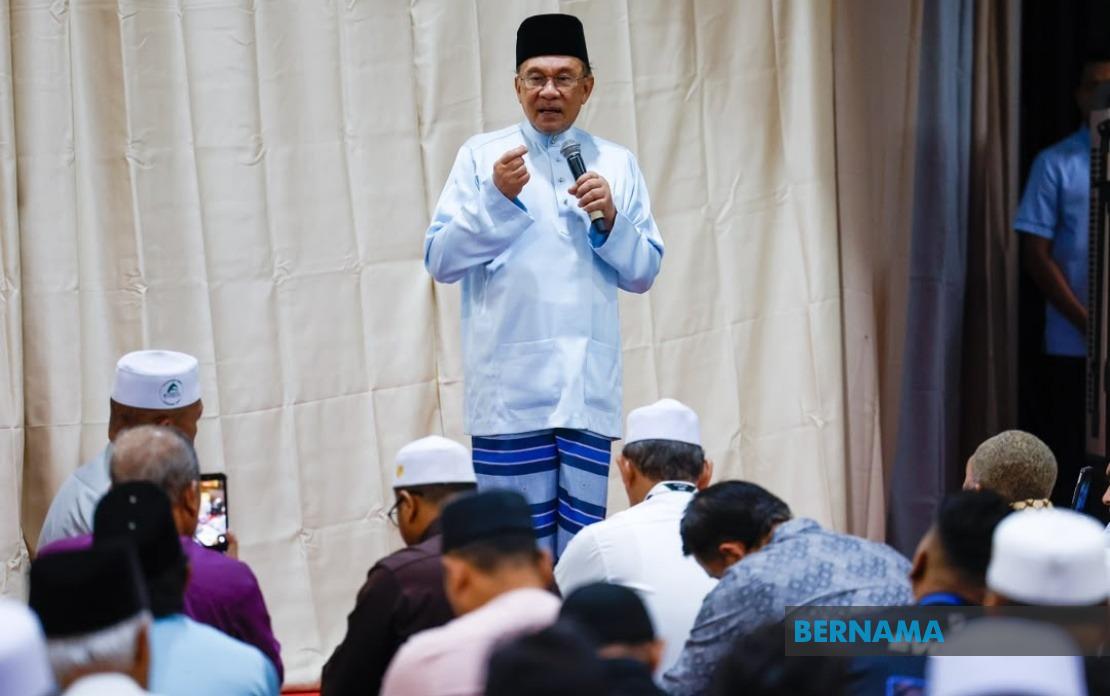
Prime Minister Datuk Seri Anwar Ibrahim has pushed back against suggestions that releasing the Royal Commission of Inquiry report on Lembaga Tabung Haji represents a politically motivated move, characterising the matter instead as a fundamental obligation to the Muslim community and their savings. Speaking at a community engagement event in Port Dickson, Anwar underscored that the government's transparency on the pilgrimage fund's governance failures reflects an ethical commitment to depositor protection rather than point-scoring against predecessors.
The RCI investigation into Tabung Haji has exposed systemic weaknesses in institutional oversight and risk management at the fund, which manages the savings of millions of Malaysian Muslims preparing for the hajj pilgrimage. Anwar, who concurrently holds the Finance Ministry portfolio, stressed that the findings warrant serious consideration and action by all levels of government and civil society. The report's publication represents an acknowledgement that past warnings about the fund's financial stability had not triggered adequate corrective measures when they should have.
Central to Anwar's defence is the acknowledgement that Bank Negara Malaysia had issued cautionary alerts regarding Tabung Haji's fiscal health in both 2014 and 2017, yet these signals did not generate proportionate institutional responses at the time. This pattern of unheeded warnings raises uncomfortable questions about governance chains and accountability structures that transcend any single administration's tenure. The Prime Minister's framing of the report release as a trust issue rather than a blame exercise reflects an attempt to elevate the conversation beyond familiar patterns of political recrimination.
Anwar's decision to allow all members of parliament to debate the RCI findings on August 11 signals an intention to transform the report into a substantive policy discussion rather than a closed-door executive matter. Parliamentary deliberation provides multiple vantage points for scrutinising the report's recommendations and exploring implementation pathways. This approach acknowledges that solutions to institutional failures require cross-party consensus and sustained legislative attention, not merely executive pronouncements.
For the roughly 11 million Tabung Haji account holders across Malaysia, the release of the RCI report carries immediate practical implications. Many account holders have experienced significant asset erosion in recent years, and the published findings may reshape expectations about recovery prospects and management reform. The report potentially influences regulatory adjustments affecting how the fund operates, invests, and communicates with contributors going forward. Depositors will likely scrutinise both the report's specifics and parliament's response before deciding whether institutional confidence has genuinely been restored.
The timing of the report's release, occurring during campaign preparations for state elections including Negeri Sembilan, inevitably invites scepticism about political considerations. Anwar's appearance alongside Menteri Besar Datuk Seri Aminuddin Harun at the Port Dickson event underscores the proximity of electoral calculations to high-level policy announcements. Yet the Prime Minister's insistence that the matter transcends electoral cycles addresses an ongoing tension in governance between demonstrating transparency and managing perceptions of partisanship.
Tabung Haji's troubled financial trajectory represents a broader governance challenge facing Malaysian institutions entrusted with citizen savings. The fund's difficulties stem from complex combinations of misalignment between investment strategies and market conditions, inadequate risk frameworks, and delayed corrective action by regulatory bodies. These systemic issues reflect patterns observable across multiple institutional contexts where warning signals from financial supervisors have historically prompted insufficient remedial response.
The government's willingness to publish an RCI report addressing sensitive institutional failures marks a departure from historical patterns of managed disclosure and bureaucratic opacity. However, publication alone does not guarantee implementation of recommendations or meaningful behavioural change among officials. Parliamentary debate provides a mechanism for translating findings into concrete policy adjustments, yet such conversion requires sustained political will beyond initial announcement periods. The August 11 parliamentary session will test whether multiple political factions genuinely prioritise depositor protection over partisan positioning.
For Southeast Asian observers, Malaysia's handling of the Tabung Haji situation offers insights into institutional accountability mechanisms within democratic frameworks. The balance between transparency obligations and political management reflects tensions present across the region's governments, which must navigate between reassuring citizens through disclosure and maintaining bureaucratic discretion. Malaysia's choice to publicise institutional failings demonstrates one approach to rebuilding confidence in state institutions, though success ultimately depends on demonstrable reforms rather than rhetorical commitments.
Anwar's framing emphasises trust as the crucial currency in relationships between government and the Muslim community, particularly regarding instruments designed specifically to serve religious obligations. Breaches of institutional trust, whether through governance failures or delayed disclosures, carry spiritual and financial dimensions that extend beyond conventional policy discussions. The Prime Minister's positioning of the report release as a trust-restoration exercise reflects understanding that public confidence in Tabung Haji cannot be rebuilt through technical adjustments alone, but requires demonstration that leaders prioritise depositor interests above political convenience.

