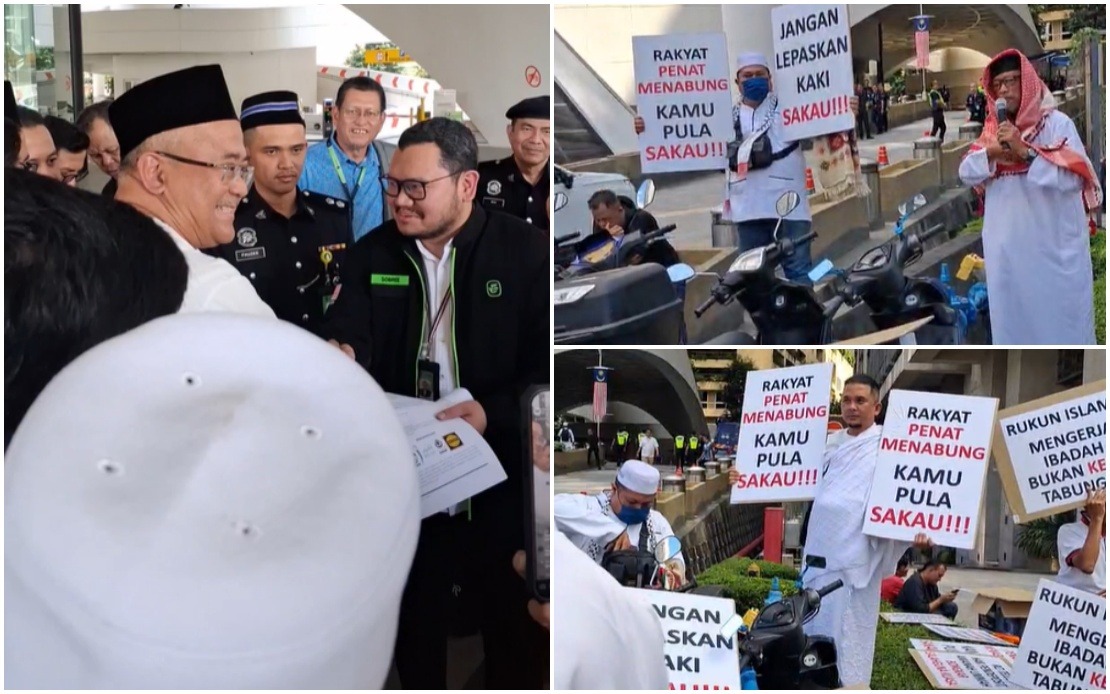
The Malaysian coalition supporting the MADANI government has made an emphatic call for the investigation into Tabung Haji's operations to remain insulated from political pressure and outside interference. Speaking at a solidarity gathering in Kuala Lumpur on August 7, Amir Zuhair Abdull Khalid, chairman of Daie MADANI, stressed that the Royal Commission of Inquiry report covering the period from 2014 to 2020 must be processed through established legal channels without obstruction from any quarter.
The RCI's findings have cast light on governance concerns spanning nearly seven years of the pilgrim fund's administration, an institution that manages contributions and savings for millions of Malaysian Muslims preparing for the Hajj pilgrimage. The stakes involved extend far beyond routine corporate governance; the inquiry touches on the fiduciary responsibility owed to ordinary depositors whose religious aspirations and financial security rest on institutional integrity.
Amir Zuhair's public statement represents an attempt to insulate ongoing investigations from the type of political heat that often surrounds high-profile corruption cases in Malaysia. His repeated emphasis on non-interference suggests concern about potential attempts by interested parties—whether political allies or opponents—to either shield or expedite prosecutions for narrow partisan advantage. He explicitly cautioned against applying pressure on the Malaysian Anti-Corruption Commission, the lead investigative body, indicating awareness of how such cases can become weaponized in Malaysia's contested political landscape.
The RCI report reportedly documents allegations that political interference shaped governance decisions and board appointments during the period under review. Such findings, if substantiated, would represent a fundamental breach of institutional autonomy and professional standards. The inquiry's documentation of this pattern underscores how political patronage can penetrate even organizations with explicit religious and social mandates, diverting them from their core mission.
Amir Zuhair framed the matter as one of national conscience rather than partisan advantage, emphasizing that allegations of wrongdoing must be adjudicated in court rather than decided through political pronouncements or media campaigns. This approach reflects a growing recognition among civil society elements that institutional credibility depends on demonstrable procedural fairness and judicial independence. The credibility of Tabung Haji itself—essential for continued public confidence—hinges on whether investigations appear to follow impartial processes toward genuine accountability.
A broader coalition of Islamic civil society organizations, including HIKAM, subsequently formalized ten specific demands addressing the RCI's recommendations. These demands encompassed immediate legal action against those allegedly culpable, recovery of any misappropriated funds and assets, comprehensive implementation of the inquiry's reform suggestions, and sustained governance improvements under the current administration. This orchestrated civil society response indicates that religious and community organizations view the RCI process as a watershed moment for institutional reform.
The coalition partners—WADAH, IKRAM, HALUAN, and ABIM—represent diverse constituencies within Malaysian Islamic civil society. Their unified positioning suggests that confidence in Tabung Haji has eroded significantly among these constituencies, and that they view potential half-measures or delayed implementation of accountability measures as unacceptable. For the government, this grassroots pressure from its own supporter base adds weight to the imperative for visible, credible action.
The distinction between political action and judicial determination remains central to this discourse. While the government may take administrative steps—such as accepting RCI recommendations, implementing governance reforms, or dismissing officials—only the courts can determine individual culpability and impose criminal sanctions. Amir Zuhair's insistence on this demarcation suggests that previous Malaysian cases may have suffered reputational damage when political figures appeared to predetermine outcomes before trials concluded.
For Malaysian depositors, particularly the elderly and lower-income pilgrims who represent a substantial portion of Tabung Haji's contributors, the investigation outcome carries profound personal implications. Any findings of mismanagement or fraud directly affect the security of funds earmarked for one of Islam's five pillars. This spiritual and financial dimension elevates the stakes beyond typical corporate accountability concerns and into questions of community trust in national institutions.
The call for transparent, interference-free investigation also resonates within Malaysia's broader anti-corruption agenda. Successive governments have committed to strengthening MACC independence and judicial integrity, yet high-profile cases continue to draw accusations of selective prosecution or political timing. By publicly disavowing interference and demanding procedural regularity, the MADANI coalition positioning positions itself as favoring institutional strength over short-term political advantage—a potentially costly stance if the investigation produces unwelcome results.
Regional observers will be watching whether Malaysia's investigative and judicial systems can deliver credible outcomes in this politically sensitive matter. Southeast Asian governance challenges frequently involve institutional capture and the politicization of accountability mechanisms. A transparent, impartial resolution of the Tabung Haji inquiry could establish a valuable precedent for how complex governance failures in large trust-based institutions can be addressed without sacrificing institutional independence to political expediency.

