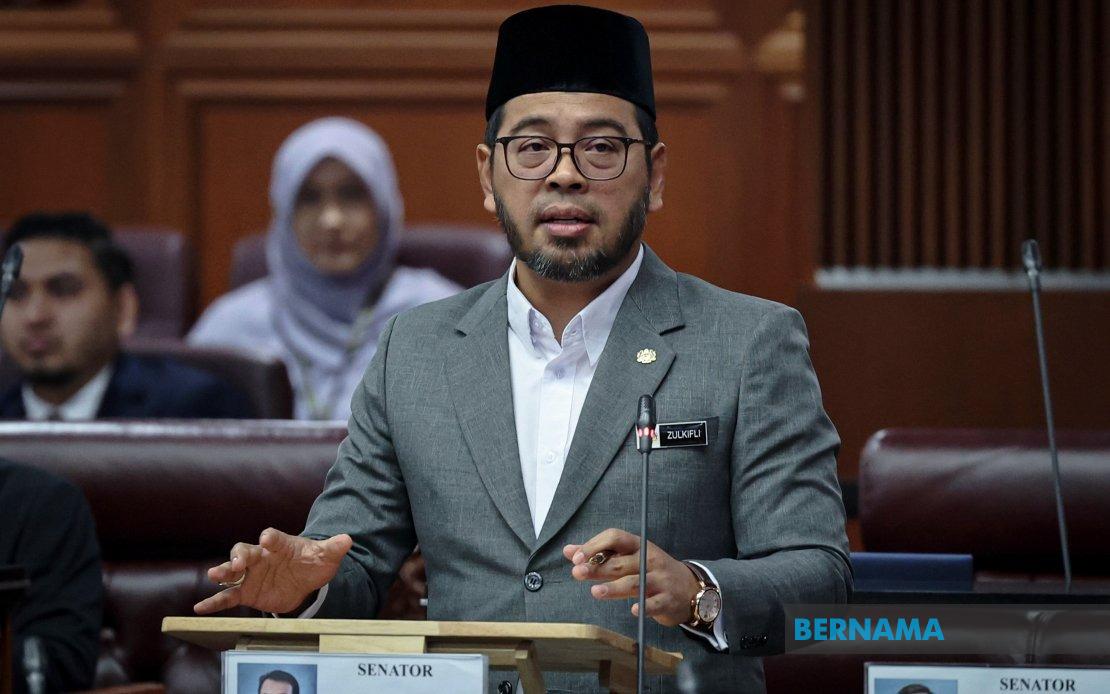
Tabung Haji depositors can rest assured that their zakat obligations have been properly fulfilled according to Islamic principles, according to Minister in the Prime Minister's Department (Religious Affairs) Dr Zulkifli Hasan. Speaking during a special parliamentary session on the Royal Commission of Inquiry report into the troubled savings institution, Zulkifli provided detailed assurances about the compliance of TH's zakat practices with established religious guidelines and expert oversight.
The minister's clarification addresses lingering concerns among the millions of Malaysian Muslims who have entrusted their savings with TH for pilgrimage preparations and retirement. TH's Syariah Advisory Committee determined in September 2020 that zakat payments made on behalf of depositors prior to 2019, before the wakalah framework was introduced, remained valid and religiously sound. This retroactive validation proves significant for depositors who may have questioned whether their contributions during this transition period met religious requirements.
Zulkifli anchored his assurances on established Islamic jurisprudence dating back decades. The National Fatwa Committee for Islamic Religious Affairs Malaysia issued a foundational decision on May 3, 1979, establishing that while TH itself is not subject to zakat as an institution, it bears an obligation to discharge zakat on behalf of its depositors. This distinction is crucial because it clarifies TH's role as an intermediary fulfilling a religious duty rather than being directly liable for zakat payments. The minister confirmed that TH has consistently adhered to this fatwa ruling throughout its operations.
The transition periods and different contractual arrangements within TH have generated technical complexity around zakat calculations. From 2016 to 2019, when TH operated under the Wadiah Yad Damanah contract, the institution calculated and paid business zakat, known collectively as khultah, based on the pooled funds of all depositors that were actively traded. This collective approach differs from individual zakat assessments and requires sophisticated accounting mechanisms to ensure accuracy and fairness across the depositor base.
Following recommendations from the Royal Commission of Inquiry, TH's zakat practices were presented to the National Council for Islamic Religious Affairs Muzakarah Committee for additional scrutiny and endorsement. The Muzakarah Committee reviewed these matters in June 2024 and subsequently forwarded its findings to the Conference of Rulers in October 2024, reflecting the highest levels of Islamic institutional review in Malaysia. This multi-layered validation process demonstrates the seriousness with which religious authorities have examined TH's compliance frameworks.
The governance structure underpinning TH's zakat operations provides an additional layer of assurance to concerned depositors. All zakat activities are guided by the Zakat Guidelines, which have been formally approved and continuously monitored by TH's Syariah Advisory Committee. This committee comprises specialists in Syariah law and Islamic finance, ensuring that complex financial instruments and practices receive expert evaluation against religious principles. The existence of such specialized oversight distinguishes TH's approach from less rigorous institutional arrangements.
For Malaysian Muslims, the zakat issue carries profound spiritual and financial significance. Zakat represents one of Islam's five pillars, a mandatory religious obligation distinct from voluntary charity. Many depositors have contributed to TH precisely because the institution offered a framework for managing both their savings and their zakat duties simultaneously. Any uncertainty about whether these payments had been properly discharged could undermine confidence in the institution's religious legitimacy, regardless of its financial performance.
Beyond zakat reassurances, the minister also outlined improvements underway in TH's hajj management policies, which formed a significant component of the RCI's recommendations. TH is implementing a refined hajj eligibility and waiting period framework designed to create clearer planning pathways for intending pilgrims. These changes align with the Islamic concept of istito'ah, or financial ability, emphasizing that only those with genuine capacity should commit to hajj. The emphasis on early preparedness reflects lessons learned from TH's operational challenges and aims to prevent future financing difficulties.
The broader context of the RCI examination matters for understanding these developments. Established in 2021 and formally constituted in January 2022, the RCI investigated TH's operations between 2014 and 2020, a period marked by significant financial deterioration and governance lapses. The resulting 211-page report, released publicly on July 29 this year, contained 25 specific recommendations for institutional reform. As of late July, TH had implemented 75 percent of these recommendations, indicating substantial progress in addressing identified weaknesses.
The restoration of TH's financial position remains an ongoing national undertaking, given that millions of Malaysians hold deposits with the institution for hajj purposes and retirement savings. The emphasis on Syariah compliance and religious governance serves multiple objectives: it addresses immediate depositor concerns about zakat validity, reinforces TH's legitimacy as an Islamic financial institution, and demonstrates that institutional reform encompasses not merely financial mechanics but also religious integrity. For Malaysian Muslims navigating the complex intersection of faith-based savings vehicles and modern financial regulation, these assurances provide meaningful reassurance about the soundness of their relationship with TH.
Moving forward, the sustained engagement between TH management and Malaysia's Islamic institutional architecture—including the Syariah Advisory Committee, the Muzakarah Committee, and the Conference of Rulers—suggests a commitment to maintaining religious credibility alongside operational improvement. This multi-institutional validation approach, while sometimes appearing bureaucratically layered, ultimately serves to build confidence among Malaysia's Muslim population that their religious obligations and financial interests receive serious consideration within TH's restructuring process.

