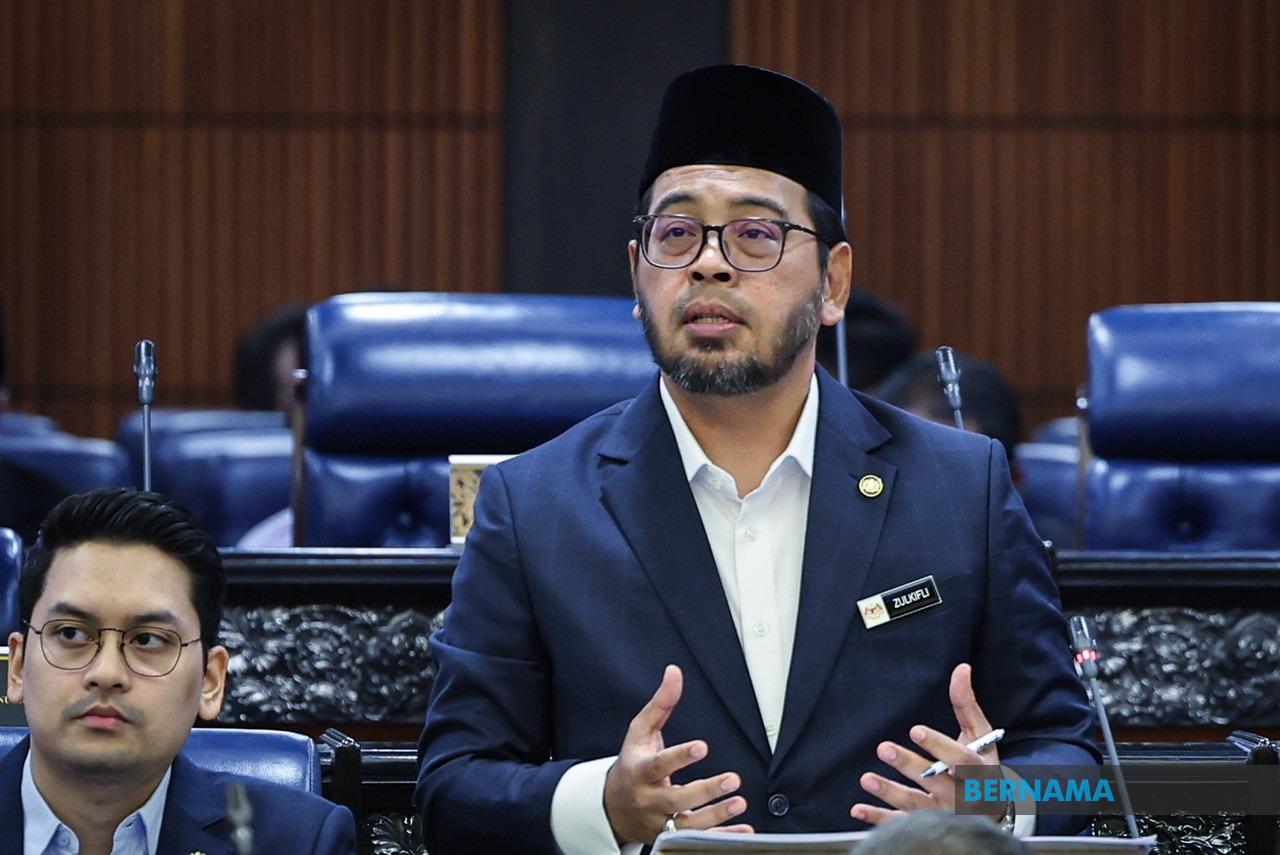
Malaysia is moving to overhaul governance at Tabung Haji (TH) through substantive amendments to its founding legislation, addressing systemic weaknesses uncovered by a comprehensive investigation into the Islamic pilgrimage fund's operations. Minister in the Prime Minister's Department (Religious Affairs) Dr Zulkifli Hasan announced that proposed revisions to the Tabung Haji Act 1995 will introduce explicit legal standards for accounting practices, define clear penalties for financial misstatement, and establish a more robust regulatory framework—all designed to prevent recurrence of the problems documented in the Royal Commission of Inquiry (RCI) report covering TH's management from 2014 to 2020.
The RCI's 211-page investigation, made public on July 29 following government approval, revealed concerning lapses in financial stewardship and governance at one of Malaysia's largest faith-based institutions. Rather than confine the inquiry's findings to internal government review, authorities chose to release the full report, signalling the seriousness with which policymakers regard the need for transparency and public accountability. This disclosure has become the focal point of parliamentary scrutiny, with members of Parliament given the opportunity to examine and debate the RCI's conclusions in a special sitting of the Dewan Rakyat.
A key structural change involves regulatory oversight of TH's investment and fund management activities. A dedicated task force, chaired by the TH chairman and including both the Bank Negara Malaysia governor and Securities Commission chairman, has been tasked with examining how TH's portfolio operations should be supervised going forward. According to Dr Zulkifli's parliamentary briefing, this task force has recommended that the Securities Commission assume regulatory authority over TH's fund management and investment functions, while haj administration itself would continue under the Religious Affairs Ministry's purview. Critically, TH will retain its status as a unified institution rather than being fragmented into separate entities—a safeguard against disruption to its core pilgrimage services.
Compensation practices at TH have emerged as a particular concern highlighted by the RCI. The inquiry found that bonus payments to staff had grown excessive relative to institutional performance metrics, creating misaligned incentives and drawing public criticism. In response, TH has implemented a revised bonus policy that ties compensation more directly to overall financial health and individual staff achievement of key performance indicators. Under the reformed structure, such payments now require joint sign-off from both the Religious Affairs and Finance Ministers, introducing an additional layer of ministerial oversight.
Financial transparency represents another dimension of the planned reforms. The RCI advocated for clearer mechanisms governing how TH calculates and announces profit distributions to depositors—a matter of considerable significance for the millions of Malaysian Muslims who hold savings accounts with the fund. TH has already begun complying with this recommendation by announcing profit rates based on fully audited annual financial statements since 2022, bringing greater certainty to depositors about the timing and reliability of these announcements. Furthermore, TH's financial statements have demonstrated full alignment with relevant accounting standards since 2018, suggesting that some preparatory work toward compliance was underway before the formal RCI recommendations.
Board governance and leadership selection constitute further areas targeted for legislative refinement. The RCI recommended comprehensive revision of the TH Act to establish explicit eligibility criteria and expertise-driven appointment procedures for board directors. Notably, the RCI proposed that sitting politicians should be barred from serving as TH chairman or board members—a significant governance principle aimed at reducing political influence over an institution that manages public religious savings. TH has begun implementing these principles by adopting "fit and proper" leadership criteria modelled on frameworks employed by Bank Negara Malaysia, prioritising integrity, professional competence, and relevant experience as selection determinants.
Dr Zulkifli's parliamentary statement reflected an implicit acknowledgement that Malaysia possesses sufficient technical talent and administrative expertise to staff TH without relying on political patronage. His assertion that "many capable, competent and trustworthy technocrats and individuals of integrity" are available to lead TH underscores a broader push toward professionalisation of governance at major public institutions. This reorientation reflects international best practice in the administration of funds serving vulnerable populations—in this case, depositors who entrust their life savings to TH in preparation for the hajj pilgrimage, one of Islam's most important spiritual obligations.
The implications for Malaysia's broader governance architecture are substantial. TH manages approximately RM74 billion in assets on behalf of roughly 9.5 million depositors, making it one of the country's most significant financial institutions by deposit base. Failures in its oversight directly affect millions of Malaysians and carry reputational consequences for Malaysia's stewardship of Islamic finance. By bringing TH's investment operations under Securities Commission supervision—traditionally associated with private capital markets—the government is extending professional regulatory standards across the boundary between Islamic finance and conventional finance regulation, potentially creating a template for how other large faith-based financial entities should be monitored.
The RCI process itself offers insights into Malaysia's institutional approach to accountability. Rather than treat the inquiry's findings as merely internal administrative matters, the government's decision to release the full report and facilitate parliamentary debate suggests a maturing commitment to public transparency regarding institutional failures. This stands in contrast to earlier eras when such matters might have been handled quietly or partially concealed. The willingness to publicly examine failings at a religiously significant institution—TH serves Muslim Malaysians across all ethnic groups and income levels—indicates that governance reform is being positioned as a matter of principle rather than partisan politics.
Implementation of these reforms will require careful coordination across multiple agencies. Dr Zulkifli noted that all RCI recommendations have undergone review for incorporation into the proposed amendments, though the legislative process itself typically involves further consultation and refinement. The task force examining Securities Commission oversight represents recognition that investment regulation requires sector-specific expertise distinct from either religious affairs administration or general finance ministry functions. This functional specialisation in regulatory governance has become increasingly common in sophisticated financial systems, though its application to Islamic institutions with embedded religious missions presents distinctive challenges requiring nuanced policy design.
The broader context involves Malaysia's evolving position within global Islamic finance markets. As the country seeks to maintain leadership in Islamic banking and finance, governance standards at large Islamic institutions have become increasingly visible to international investors and stakeholders. Enhanced transparency and professional management at TH therefore carry significance beyond domestic constituency relations, potentially strengthening Malaysia's reputation as a jurisdiction capable of managing substantial faith-based financial operations according to contemporary governance standards. The RCI report and subsequent reforms signal to both Muslim and non-Muslim investors that Malaysia takes institutional oversight seriously, regardless of an institution's religious purpose or constituency.

