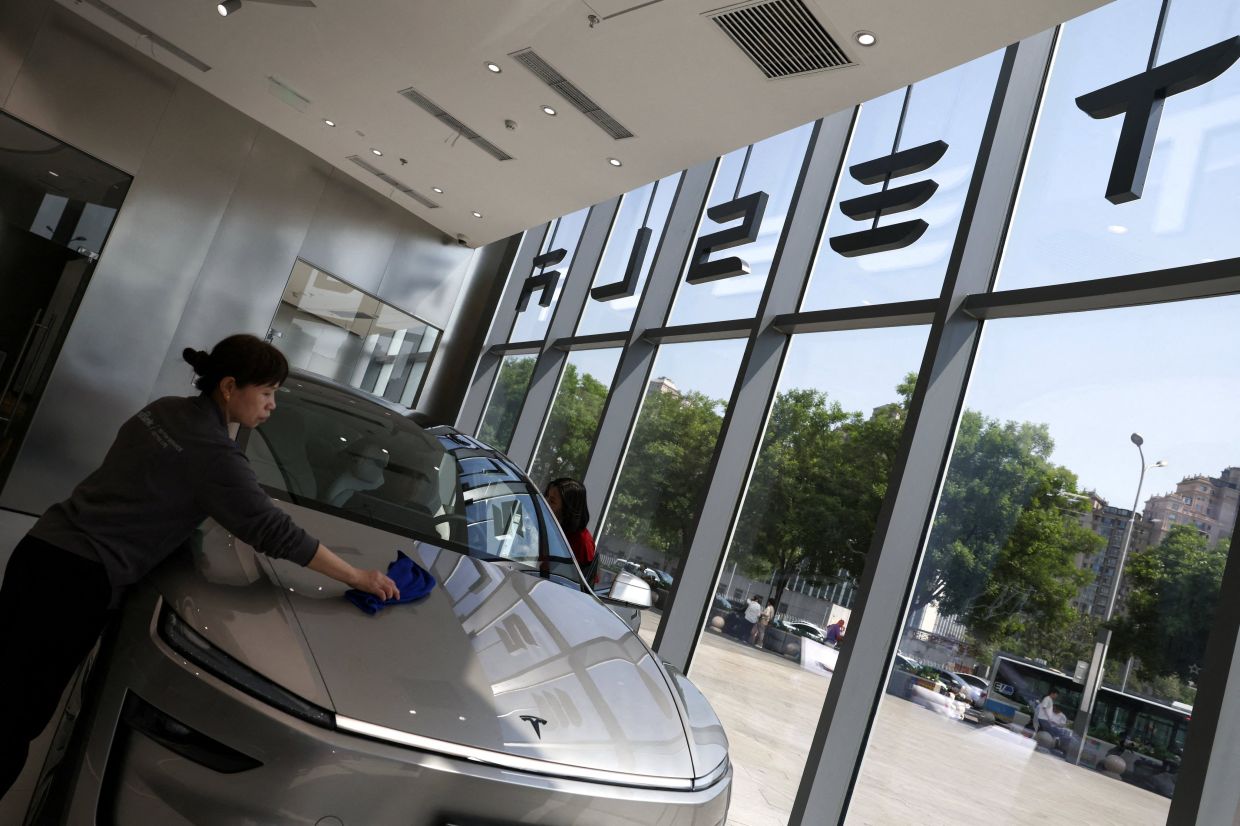
Tesla has announced the most significant product recall in mainland China's electric vehicle sector, with the American manufacturer committing to address door-handle defects across approximately 2.98 million vehicles. The unprecedented scale of the recall underscores mounting pressure from Chinese regulators and consumers alike, who have grown increasingly concerned about vehicle safety features following a series of high-profile incidents involving faulty door mechanisms.
The backdrop to this recall involves a regulatory shift gaining momentum across China's automotive industry. Chinese authorities have moved to restrict the use of retractable door handles—a design feature that Tesla and other premium automakers have championed for their sleek aesthetics—citing substantial safety hazards. This regulatory intervention follows a tragic incident in late 2024 in Sichuan province, where a Xiaomi SU7 Ultra caught fire and its occupant, a 31-year-old driver, became trapped inside the vehicle. Despite the desperate efforts of bystanders attempting to pry open the doors, the retractable mechanism rendered the vehicle inaccessible, ultimately proving fatal.
In February of this year, China's Ministry of Industry and Information Technology formalized its position by announcing plans to ban retractable door handles nationwide. The new regulations, which will take effect from 2026 onwards, mandate that all vehicles must feature both internal and external door handles capable of mechanical operation in all circumstances. This requirement ensures accessibility even during catastrophic scenarios such as complete power loss or severe accidents—situations where electronic systems may malfunction and leave occupants vulnerable.
While Tesla is not the sole manufacturer impacted by China's stringent new safety framework, the company has shouldered the largest recall obligation announced to date. This reflects Tesla's substantial market penetration in China and its reliance on retractable door-handle designs across multiple vehicle models. The broader implications extend beyond Tesla alone; the recall signals that Chinese regulators are prepared to enforce compliance rigorously, setting a precedent for the entire automotive sector operating within the country's borders.
Tesla's remediation strategy involves a multifaceted approach combining hardware modifications and software enhancements. Beginning September 25, all recalled vehicles will receive warning labels affixed to internal door handles, alerting drivers to the potential safety concern and recommended procedures. Simultaneously, the company will deploy an over-the-air software update targeting the window-control system. This update has been designed to automatically lower vehicle windows following a collision, theoretically providing an alternative escape route for occupants should the mechanical door handles become inoperable.
Parallel to the door-handle recall, Tesla is simultaneously conducting a separate, large-scale recall affecting 2.74 million Model 3 and Model Y vehicles manufactured at its Shanghai facility. This additional recall focuses on driver-assistance and automated steering capabilities, implementing software corrections to ensure these safety systems engage appropriately when drivers fail to respond swiftly during collision scenarios. The dual recalls underscore systemic concerns regarding both passive safety design and active driver-assistance performance across Tesla's Chinese fleet.
The Shanghai manufacturing facility occupies a critical position within Tesla's global supply chain and production strategy. In 2025 alone, this single plant produced approximately 851,000 vehicles destined for both the Chinese domestic market and international export. This output represents more than half of Tesla's entire global production volume for the year, which itself declined 8.6 percent to 1.63 million units. The dependency on Shanghai production amplifies the significance of compliance with Chinese regulatory requirements—any disruption or extended recall process directly impacts Tesla's worldwide delivery targets and financial performance.
Industry observers in Shanghai recognize the broader significance of this enforcement action. Zhang Wenjie, who operates a vehicle maintenance workshop in the city, noted that safety concerns surrounding door mechanisms have escalated dramatically since late 2024, driven by heightened regulatory scrutiny and consumer awareness. Wenjie suggested that the wave of recalls initiated by Tesla and domestic Chinese manufacturers will ultimately catalyze systemic improvements in automotive design standards and quality assurance practices across the industry.
China's intervention reflects a broader global trend toward stricter vehicle safety regulations, particularly concerning novel technologies and design innovations that may compromise occupant protection. The retractable door-handle controversy illustrates the tension between aesthetic modernization and functional redundancy—a challenge that manufacturers worldwide must navigate. Chinese regulators have effectively prioritized mechanical reliability and fail-safe mechanisms over styling preferences, establishing expectations that extend beyond Tesla to every automaker operating in this massive market.
For Malaysian and Southeast Asian stakeholders, China's regulatory action carries significant implications. Many regional consumers aspire to purchase vehicles meeting or exceeding Chinese safety standards, effectively making China's regulations an influential reference point. Additionally, several Chinese automakers with growing Southeast Asian presence—including those competing directly with Tesla—will need to implement equivalent safety modifications, potentially affecting pricing and product availability across the region.
Tesla's position as China's second-largest market worldwide, surpassed only by the United States, renders Chinese regulatory compliance a non-negotiable priority for the company's operational viability. The massive recall, while unprecedented in scale, represents a manageable cost compared to market exclusion or sustained regulatory conflicts. The broader significance lies in how successfully Tesla executes remediation while maintaining consumer confidence in its Chinese operations during a period of intensified competitive pressure from domestic electric vehicle manufacturers.
The confluence of these recalls and regulatory mandates signals that China's EV industry is transitioning from growth-at-any-cost priorities toward mature market expectations encompassing comprehensive safety assurance. This maturation benefits consumers across Asia-Pacific, as manufacturers addressing China's rigorous standards typically apply equivalent safety measures to vehicles sold throughout the region. As Tesla and competitors implement these corrections, the baseline safety expectations for electric vehicles across Southeast Asia will inevitably rise accordingly.

