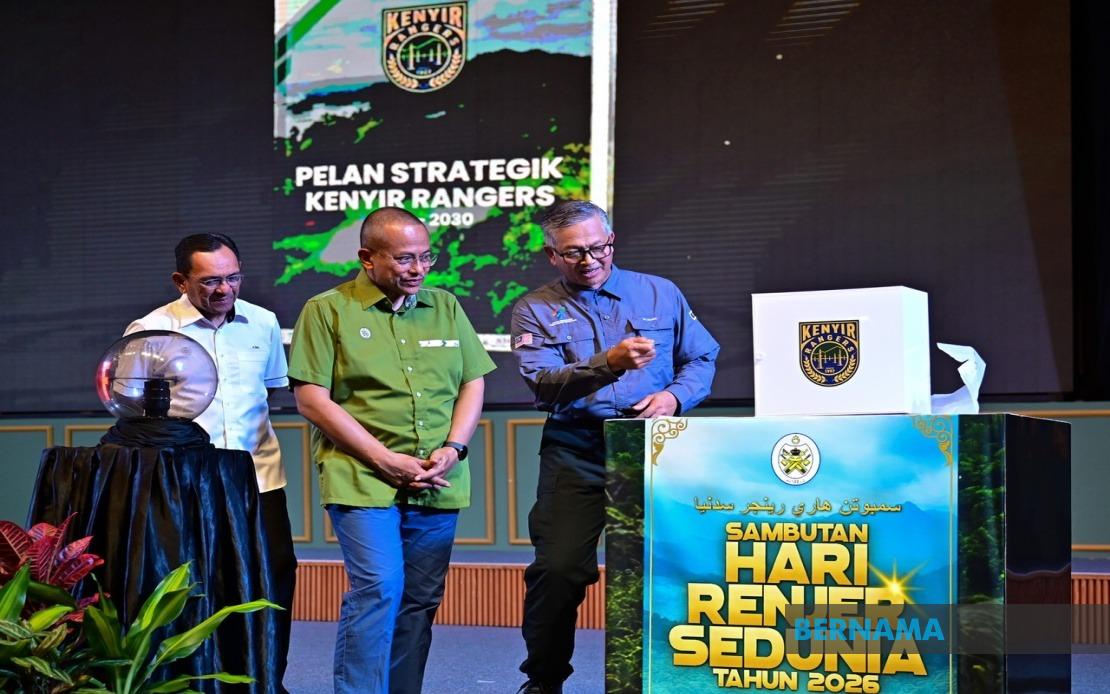
Terengganu Menteri Besar Datuk Seri Dr Ahmad Samsuri Mokhtar has stressed the urgent necessity for integrated action across multiple agencies to mitigate the rising toll of human-wildlife conflicts threatening both communities and animals along the state's vital transport corridors. Speaking at the opening of the state-level World Ranger Day 2026 celebration at Wisma Darul Iman, Ahmad Samsuri emphasised that addressing these incidents requires systematic collaboration, particularly between the Wildlife and National Parks Department and the Malaysian Highway Authority, to develop and implement coherent prevention strategies.
The call for heightened coordination comes in the wake of a serious incident on August 5, when a couple suffered injuries after their Toyota Estima collided with a herd of elephants at Kilometre 274.6 of the East Coast Expressway 2, situated just beyond the Cheneh Toll Plaza on the route towards Kuala Terengganu. This collision represents a sobering reminder of the vulnerability facing both wildlife and motorists navigating major highways that bisect crucial animal habitats and migration corridors across Terengganu's landscape.
Among the concrete measures Ahmad Samsuri proposed is the deployment of enhanced patrol operations at identified conflict zones, combined with targeted implementation of electric fencing along highway stretches adjacent to known wildlife habitats and traditional animal movement routes. While acknowledging the substantial financial burden associated with installing protective fencing across entire expressway networks, he suggested that authorities should pursue a strategic, phased approach focusing resources on high-risk segments where wildlife encounters occur with greatest frequency.
The Menteri Besar recognised the logistical challenges inherent in protecting hundreds of kilometres of expressway infrastructure, yet indicated that selective deployment of electric barriers represents a viable intermediate solution. Rather than viewing fencing as a catch-all remedy, he encouraged exploration of complementary technological innovations capable of detecting animal movements and alerting motorists in real-time, potentially preventing collisions before they occur.
Seasonal patterns emerge as a critical consideration in highway safety during periods of elevated rainfall and monsoon conditions, when animals abandon their conventional habitats seeking shelter and fresh water sources. Ahmad Samsuri highlighted the necessity for strengthened patrol intensity precisely during these vulnerable periods, when elephant herds and other wildlife become increasingly mobile and unpredictable in their movements across fragmented landscapes interrupted by major transport infrastructure.
The tragic dimensions of wildlife-vehicle collisions extend beyond statistics, affecting both human families and species survival prospects. By emphasising that both animal and human lives deserve equal consideration and protection, Ahmad Samsuri articulated a conservation philosophy that transcends traditional dichotomies between development and environmental stewardship. The LPT2 incident exemplifies how modern infrastructure, whilst essential for economic connectivity and regional development, inevitably creates conflict zones where wildlife conservation and public safety intersect.
The integration of advanced monitoring technology represents a forward-looking dimension of Ahmad Samsuri's proposed strategy. Such systems could operate as early-warning mechanisms, notifying wildlife management teams of herd movements and simultaneously alerting highway authorities to reduce speed limits or activate safety protocols in affected zones. This technological layer complements traditional physical barriers and enforcement measures, creating redundancy within the safety system.
Terengganu's situation reflects broader Southeast Asian challenges as nations balance rapid infrastructure development with biodiversity conservation. The state's position along critical elephant migration corridors means that resolving these conflicts carries implications extending beyond local boundaries, potentially influencing transnational wildlife management policies affecting shared populations. Successful interventions in Terengganu could provide valuable models for other Malaysian states and regional neighbours confronting similar pressures.
The World Ranger Day platform offered an appropriate venue for articulating these concerns, underscoring the pivotal role frontline conservation personnel play in mediating human-wildlife tensions. Rangers operating on highways and near protected areas possess irreplaceable ground-level knowledge essential for designing effective, contextualised intervention strategies that account for local ecological conditions and wildlife behaviour patterns.
Coordination between the Wildlife and National Parks Department and Malaysian Highway Authority extends beyond operational matters into budgetary allocation, liability frameworks, and institutional mandates that historically operate within separate jurisdictional domains. Ahmad Samsuri's advocacy suggests recognition that bureaucratic silos impede comprehensive problem-solving, necessitating formal mechanisms ensuring these agencies function as integrated partners rather than isolated entities.
The financial sustainability of proposed measures warrants consideration. Electric fencing, patrol enhancements, and technological implementation require sustained funding beyond initial capital expenditure. Ahmad Samsuri's acknowledgement of costs reflects realistic assessment of resource constraints facing state governments, yet his emphasis on cost-benefit analysis and strategic prioritisation suggests feasibility within existing budgetary frameworks.
From a broader policy perspective, these initiatives signal shifting attitudes toward wildlife protection within development-oriented governance frameworks. Rather than treating animal habitats as obstacles to transportation networks, the Menteri Besar's statements position wildlife conservation as an integral component of sustainable infrastructure management, where human and animal interests receive balanced consideration. This perspective carries implications for future highway planning decisions, potentially encouraging environmental impact assessments that fully account for wildlife corridor disruption and propose mitigation measures at design stage rather than reactively addressing problems post-construction.

