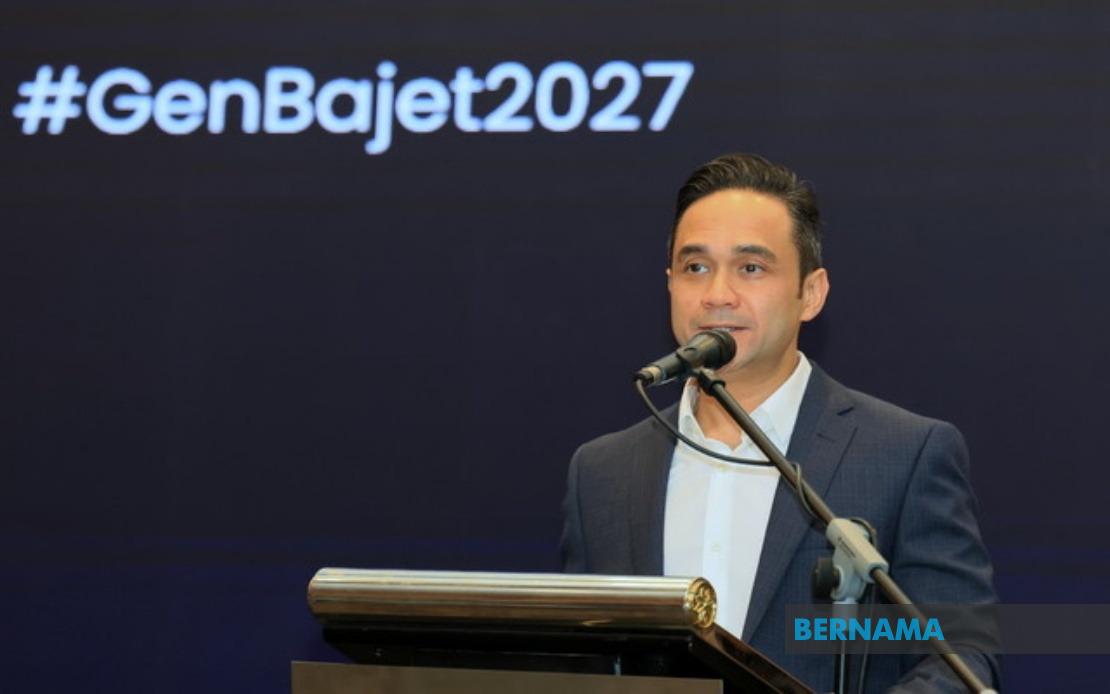
The Bumiputera Agenda Steering Unit (TERAJU) is making a concerted push to secure substantial budgetary resources in the 2027 allocation cycle, emphasising that financial support is indispensable for executing the Bumiputera Economic Transformation Plan 2035 (PuTERA35) in its entirety. Speaking from Cyberjaya, Nik Nazree Nik Abdul Rahman, senior director of TERAJU's Strategic Services Division, underscored the organisation's conviction that adequate funding mechanisms remain the linchpin for translating policy frameworks into tangible economic outcomes for the Bumiputera community.
The PuTERA35 initiative represents an ambitious, decade-spanning strategic roadmap commencing in 2024 and extending through 2035, positioning itself as a cornerstone component of the government's broader MADANI Economy framework. This comprehensive blueprint encompasses 132 distinct initiatives structured around three foundational pillars and twelve strategic drivers, each designed to address specific dimensions of Bumiputera economic participation and enterprise development. The plan's scope reflects a fundamental shift in approach—moving beyond incremental interventions toward systematic economic restructuring that targets increased Bumiputera ownership, control and meaningful participation across economic sectors.
According to Nik Nazree, the financial commitments embedded within Budget 2027 will prove decisive in determining whether these 132 initiatives can reach their anticipated implementation targets for the crucial 2030 milestone. He stressed that resource allocation represents far more than a bureaucratic formality; rather, it constitutes the operational foundation upon which high-impact developmental programmes depend. Without corresponding financial support, even meticulously designed policy frameworks risk remaining aspirational rather than transformative, he indicated.
Crucially, TERAJU leadership has identified energy transition as a particularly promising sector meriting prioritised investment and capacity-building attention. This sector, Nik Nazree emphasised, presents unprecedented commercial opportunities for Bumiputera enterprises seeking to establish competitive positioning within Malaysia's evolving energy infrastructure. The renewable and clean energy landscape, increasingly central to regional economic competitiveness and global environmental commitments, offers pathways for Bumiputera businesses to gain meaningful footholds in high-value activities that extend beyond traditional economic domains.
Beyond energy, TERAJU advocates for expanded capital market engagement specifically targeting Bumiputera enterprise development. The organisation acknowledges that financial intermediation through equity markets remains significantly under-leveraged as a mechanism for Bumiputera business expansion. By facilitating improved access to capital market instruments—whether through direct listings, venture capital structures or hybrid financing mechanisms—the initiative aims to unlock growth trajectories currently constrained by conventional financing limitations. This represents a strategic pivot toward market-based solutions supplementing traditional government assistance frameworks.
Monitoring mechanisms underpinning PuTERA35 implementation operate through multiple governance channels, including dedicated working committees and oversight by the Bumiputera Economic Council, which functions under the chairmanship of Prime Minister Datuk Seri Anwar Ibrahim. This multi-tiered supervisory structure reflects recognition that effective large-scale economic transformation requires institutionalised coordination across multiple government agencies and stakeholder constituencies. Regular review cycles provide opportunities to recalibrate strategies responsive to emerging implementation challenges and shifting economic circumstances.
Current performance metrics present a complex narrative warranting careful interpretation. TERAJU reports achieving 67 per cent implementation progress against PuTERA35 targets, a figure suggesting substantial operational momentum. However, Nik Nazree pointedly noted that quantified implementation progress alone furnishes an incomplete assessment. The more pertinent question concerns whether implementation activities are yielding the qualitative outcomes the programme ultimately seeks—namely, demonstrable strengthening of Bumiputera enterprise competitiveness and measurable improvement in community socio-economic indicators. This distinction between activity completion and outcome achievement signals TERAJU's commitment to results-oriented evaluation rather than mere process compliance.
Recognising the importance of rigorous performance assessment, TERAJU intends to release a comprehensive implementation performance report by year-end 2024, offering an interim evaluation of progress across the two-year period since PuTERA35's August 2024 launch. This report will provide policymakers and stakeholders with empirical data regarding which initiatives are generating anticipated impacts, which require recalibration, and where accelerated resource allocation might prove most productive. Such evidence-based evaluation supports more informed budgetary deliberations for subsequent years.
For Malaysian policymakers and the broader Bumiputera community, the Budget 2027 allocation decision carries significance extending beyond routine budgetary cycles. The outcomes will signal government commitment to either maintaining momentum on comprehensive economic restructuring or potentially contenting themselves with incremental adjustments. Given the plan's ten-year horizon and interconnected initiative portfolio, funding interruptions risk creating implementation cascades where delayed initiatives compound across multiple programme pillars. Sustained, adequately-resourced execution therefore emerges as essential for the structural economic transformation PuTERA35 envisions.
Regional observers tracking Malaysia's economic policy evolution will likely scrutinise Budget 2027's Bumiputera component closely, as the outcomes may foreshadow broader government priorities regarding state-led economic restructuring initiatives. Southeast Asia's diverse experience with targeted economic empowerment programmes offers instructive precedents regarding both the possibilities and pitfalls of large-scale interventions. Malaysia's PuTERA35 experience—supported or constrained by budgetary resources—may provide important lessons for neighbouring economies similarly grappling with inclusive growth imperatives and economically disadvantaged constituency development.

