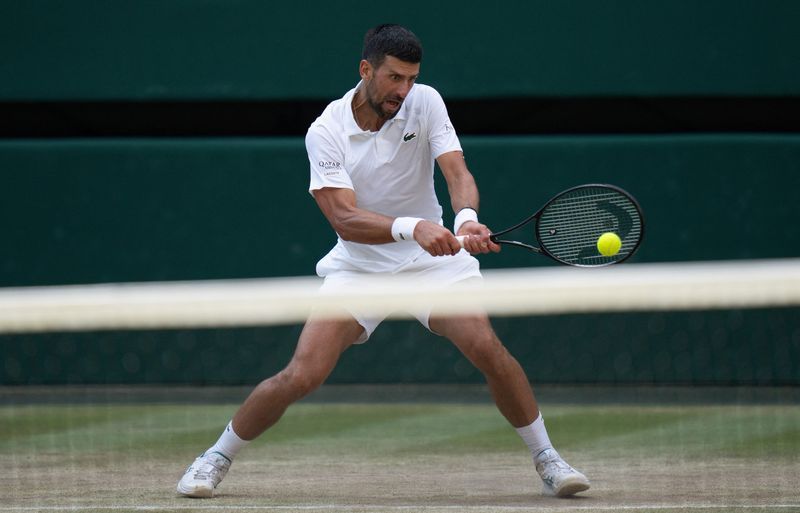
The Professional Tennis Players Association has amplified its warnings about the unsustainable demands placed on competitors by professional tennis's burgeoning fixture list, drawing attention to a cascade of high-profile withdrawals from the Canadian Open that it argues encapsulates a systemic problem threatening the sport's future. The advocacy body characterised the absence of several marquee competitors—among them world number one Jannik Sinner, 24-times Grand Slam champion Novak Djokovic, and rising star Carlos Alcaraz—as symptomatic of broader pressures that compress recovery intervals between events and accelerate the onset of career-threatening injuries.
On the men's side, the Montreal tournament was further depleted by the withdrawal of Canadian hopeful Felix Auger-Aliassime before his opening encounter. The women's draw equally suffered, with defending champion Victoria Mboko, Wimbledon finalist Karolina Muchova, Emma Raducanu and Jasmine Paolini all sidelined through injury. These cascading absences have prompted stakeholders to confront uncomfortable questions about the viability of the current calendar structure, which has expanded significantly in recent years despite longstanding player concerns about workload.
The PTPA, which has emerged as a vocal counterweight to traditional tennis governance structures, marshalled statistical evidence to support its position. Over an eight-year period, the association and its medical director, Dr. Robby Sikka, analysed injury patterns from more than 30,000 professional matches across all competitive tiers. The dataset revealed troubling trajectories: upper-body injuries surged 42 percent during the first quarter of 2024 compared with the equivalent 2025 period, while arm-specific injuries spiked an alarming 112 percent relative to the 2025 seasonal average. These figures underscore a acceleration in both frequency and severity that the PTPA directly attributes to structural factors within the sport's administration.
The ATP's OneVision strategic initiative stands at the centre of the PTPA's critique. Under this framework, seven of nine Masters 1000 tournaments—traditionally the sport's most prestigious tier below Grand Slams—were expanded from their conventional formats to 12-day events. The 2025 season marked the first full implementation across all designated tournaments, a modification that organisers have championed as a means of enhancing competitive opportunities and commercial appeal. However, the PTPA contends that this elongation has systematically eroded the capacity for adequate rest, training refinement and logistical preparation between successive tournaments, compressing an already demanding calendar into an even tighter operational envelope.
For Malaysian readers and Southeast Asian observers attuned to developments in global sports governance, the confrontation between commercial expansion and athlete welfare reflects tensions increasingly visible across professional athletics worldwide. The Australian Open, which operates as a crucial fixture in regional calendars and attracts significant Asian participation, sits within a calendar ecosystem shaped by these same institutional pressures. Players from the region, from established competitors to emerging talents, face identical structural constraints, meaning the resolution of these tensions carries direct implications for Southeast Asian representation at the sport's highest echelon.
The PTPA's call for substantive calendar restructuring encompasses several specific demands aimed at rebalancing commercial and health imperatives. The association advocates for mandatory commitments to be reduced, permitting players authentic discretion over their participation patterns. Beyond this, the PTPA argues for player representation in scheduling decisions, rejecting the current model wherein tournament organisers and governing bodies exercise primary authority over fixture calendars. The group has explicitly urged the ATP to reconsider and potentially reverse the 12-day Masters 1000 format, positioning this reversal as foundational to any meaningful injury mitigation strategy.
The ATP has previously responded to comparable pressure by emphasising player autonomy, contending that competitors retain the capacity to select which tournaments to enter and maintain agency over their own careers. The governing body further notes ongoing efforts to develop incentive structures that encourage players to participate in an appropriate—though not maximised—number of competitive encounters throughout the season. These counterclaims reflect a fundamental disagreement about whether individual player choice, when aggregated across the professional circuit, generates optimal outcomes for athlete health or whether systemic interventions are necessary to correct structural misalignments between commercial interests and physical wellbeing.
The framing of this dispute as one between "short-term commercial interests" and long-term player health, as the PTPA articulated, cuts to the philosophical core of professional tennis governance. Tournament promoters, broadcast networks and the ATP itself generate substantial revenue from expanded event formats and densified calendars. Yet the association's research suggests that maximising fixture density and event duration may paradoxically undermine the sport's resilience by depleting its roster of healthy, performing competitors. Should elite athletes increasingly withdraw through injury, the commercial value proposition itself erodes, creating a perverse dynamic where short-term revenue maximisation generates medium-term value destruction.
The absence of rapid responses from ATP and WTA Tour representatives to requests for comment suggests the governing bodies are contemplating their positioning carefully. Any reversal of recent expansions would constitute a significant policy retreat, potentially signalling vulnerability to player advocacy and inviting deeper scrutiny of other commercial decisions. Conversely, sustained resistance to PTPA demands risks further erosion of player confidence and could catalyse more organised collective action. Tournament operators likewise face pressure, having already encountered criticism over late withdrawals that destabilise scheduling and broadcast commitments.
For the wider tennis ecosystem, including emerging markets and developing regions where talent cultivation depends on accessible competitive pathways, the calendar debate carries indirect but meaningful consequences. Compressed and injury-plagued careers disproportionately affect players from less-resourced backgrounds, who have fewer opportunities to rehabilitate or maintain competitive status. The concentration of tournaments in specific regions and seasons may also inadvertently limit geographic diversity in participation. Any structural reform that improves baseline conditions for competitive longevity and recovery would thereby expand opportunity architecture for global talent pools.
Looking ahead, the PTPA's emphasis on data-driven decision-making may prove decisive. By translating subjective player concerns into quantified injury metrics, the association has reframed the debate from one of preference or tradition to one of measurable harm and risk management. Tournament operators and broadcasters increasingly face investor and regulatory scrutiny regarding duty-of-care obligations toward their competitors. Should injury trends continue escalating, liability considerations and reputational risk may ultimately prove more persuasive than player advocacy alone in precipitating calendar reform. The Canadian Open withdrawals, while immediately disruptive to that particular tournament, may ultimately function as a catalyst for systemic recalibration across professional tennis.

