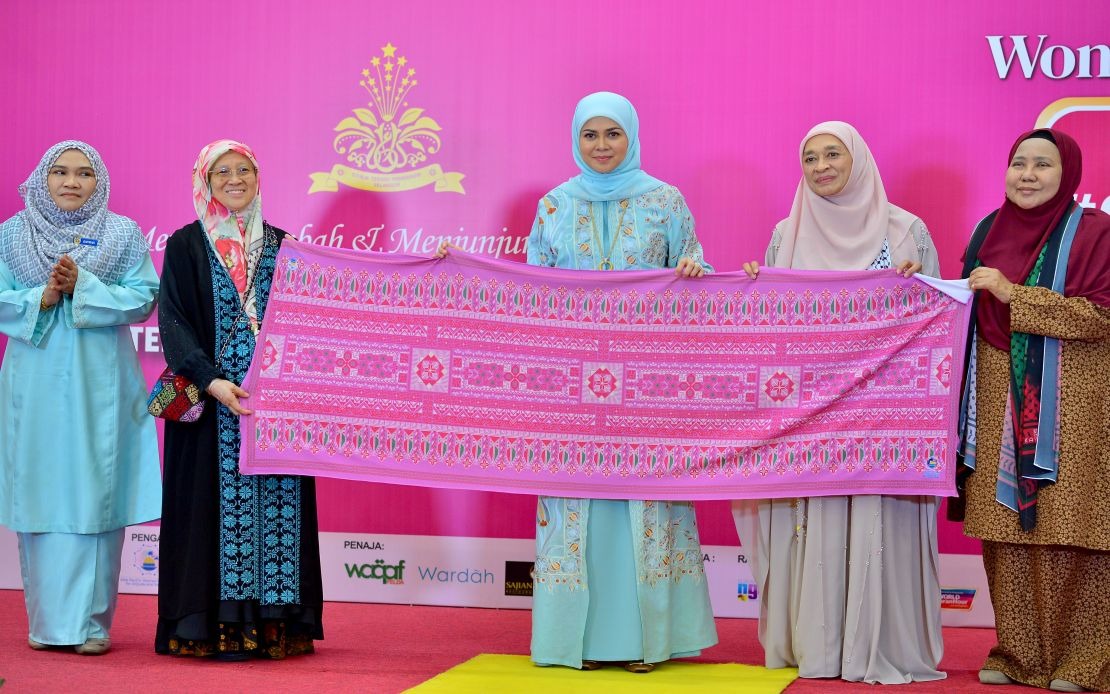
Tengku Permaisuri Norashikin of Selangor officially inaugurated the Women Summit & Women #QuranHour 2026 at the Dahlia Auditorium in Sultan Salahuddin Abdul Aziz Shah Mosque in Shah Alam on Monday morning, marking a significant milestone in a nationwide initiative aimed at empowering women through Islamic education and spiritual development. The programme, which drew approximately 400 participants from Selangor alongside representatives from Singapore, Indonesia, and other regions, represents an expanding commitment to building a generation of women grounded in Quranic values and resilience.
The event was jointly organised by Yayasan Warisan Ummah Ikhlas (WUIF) and the Asia Pacific Women's Coalition for Al-Quds and Palestine (ApWCQP), organisations dedicated to strengthening Islamic knowledge and supporting Palestinian causes within the broader Muslim world. Tengku Permaisuri Norashikin was welcomed upon her arrival at 9.30am by WUIF chief executive officer Marhaini Yusoff and ApWCQP president Dr Fauziah Mohd Hasan, alongside other prominent speakers and Islamic scholars, including 2014 International Quran Recitation Champion Tirmizi Ali and International Islamic University Malaysia Associate Professor Dr Nora Mat Zin from the Department of Psychiatry.
Central to this year's programme is the thematic focus of "Women of Grit," a concept drawn from the experiences of Palestinian women, particularly those in Gaza, who maintain their faith and commitment to family and education amidst ongoing conflict and personal loss. The organisers deliberately chose this theme to highlight how women across diverse circumstances demonstrate fortitude not merely through endurance of hardship, but through their capacity to preserve moral and spiritual values while navigating profound adversity. This approach grounds the summit's messaging in contemporary global realities while anchoring discussions in Islamic principles.
Gharizah Hashim, director of the Women Summit & Women #QuranHour 2026, articulated the programme's deeper philosophy during remarks to media representatives. Beyond conventional notions of strength forged through struggle, the initiative emphasises cultivating inner calm, fostering wise decision-making grounded in divine guidance, and nurturing the capacity to emerge from trials transformed rather than merely hardened. The vision extends beyond individual transformation to encompassing women's roles as stabilising forces within families and active contributors to broader society and the global Muslim community.
The programme's architecture reflects recognition that contemporary women face increasingly layered challenges spanning personal, familial, professional, and societal dimensions. Rather than offering generic motivational frameworks, organisers positioned Quranic study and reflection as vehicles through which women can develop clarity regarding life purpose, cultivate compassion toward others, and build psychological and spiritual resilience grounded in revealed knowledge. This integration of mental health awareness, exemplified through participation by a senior psychiatry lecturer, indicates the programme's holistic approach to women's wellbeing.
A particularly significant expansion dimension involves the Rumah Ngaji network, a decentralised system of free Quranic study circles operating throughout Malaysia with support from local community sponsors. Marhaini Yusoff emphasised that the presence of Rumah Ngaji representatives from multiple states at the Shah Alam summit signals the beginning of a more systematic, state-level rollout of women's empowerment initiatives grounded in Quranic education. This devolved approach allows programmes to adapt to regional contexts while maintaining coherent overarching objectives.
For Malaysian and Southeast Asian observers, the summit's significance extends beyond religious education into broader questions of how Muslim-majority societies develop human capital and social cohesion. The participation of representatives from Singapore and Indonesia indicates growing regional interest in knowledge-sharing and collaborative approaches to women's development within Islamic frameworks. Such cross-border engagement reflects the interconnectedness of Muslim communities across Southeast Asia and shared interest in contemporary applications of traditional Islamic knowledge.
The programme's positioning of Palestinian women's experiences as inspirational reference points carries particular resonance in Malaysia, where solidarity with Palestinian causes commands substantial public support across diverse religious and political constituencies. By anchoring discussions of women's resilience in this geopolitical context, organisers connect individual spiritual development with engagement in broader humanitarian and justice-oriented concerns, a framing that may resonate especially strongly among younger participants.
The presence of prominent Islamic scholars and award-winning Quran reciters underscores the summit's emphasis on intellectual rigour and excellence within Islamic studies. The inclusion of Associate Professor Dr Nora Mat Zin introduces psychological and psychiatric dimensions, signalling recognition that contemporary Islamic education must engage with modern understandings of mental health, trauma, and wellbeing rather than treating these as separate from spiritual development.
Looking forward, the planned expansion through the Rumah Ngaji network suggests the organisers envision sustainable infrastructure for ongoing women's education and empowerment at grassroots level throughout Malaysia. This approach addresses a recognised gap in accessible Islamic education opportunities for women while building community-based networks that can provide ongoing support beyond individual programme events. The emphasis on local sponsorship indicates confidence in communities' capacity to sustain such initiatives independently.
For policymakers and civil society organisations across Southeast Asia engaged in women's development, the summit model offers a distinctive case study in how religious and cultural frameworks can be mobilised to advance gender-focused human development goals. Rather than positioning Islamic education and women's empowerment as opposing concepts, the initiative demonstrates their potential integration, a message that may hold particular interest for countries with substantial Muslim populations seeking culturally grounded approaches to social development.
The broader implications of such programmes extend to questions of social cohesion and community resilience in increasingly fragmented societies. By creating spaces where women from diverse backgrounds gather to engage with shared spiritual resources, the summit cultivates social capital and mutual support networks that extend beyond formal programme structures. Such connections prove particularly valuable during crises or periods of social stress, contributing to community-level adaptive capacity and mutual aid systems that complement formal social services.

