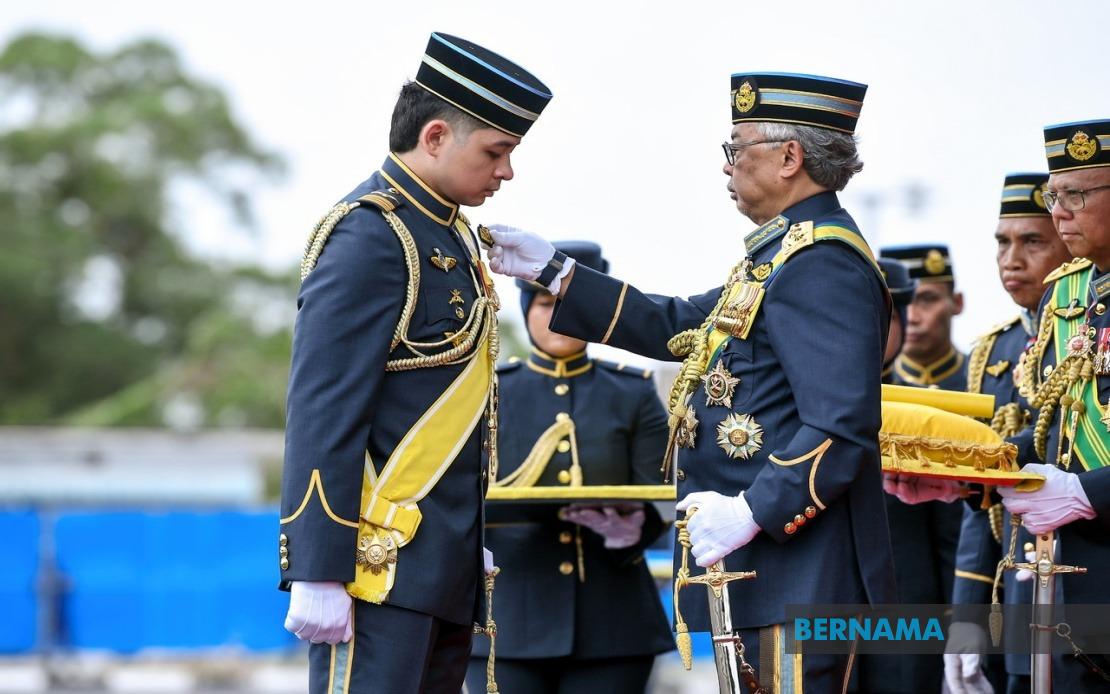
The Tengku Mahkota of Pahang, Tengku Hassanal Ibrahim Alam Shah Ibni Al-Sultan Abdullah Ri'ayatuddin Al-Mustafa Billah Shah, has created a milestone in Malaysian royal history by becoming the first member of the royal family to successfully complete the Basic Helicopter Flying Course at the Royal Malaysian Air Force Air College in Alor Setar. This achievement underscores a deepening engagement between the Pahang monarchy and the nation's military institutions, signalling a commitment to hands-on participation in defence and aviation matters that extends beyond ceremonial roles.
The flying wings were formally presented at a ceremony held at the Air College parade ground, where 40 participants in total were recognised for completing their training. Among these graduates were 37 young pilots and two weapon systems officers drawn from across the Malaysian Armed Forces' three service branches. The awarding of wings to such a diverse cohort reflects the Air College's continuous role in developing aviation talent across the military establishment, with courses spanning helicopter operations, fixed-wing flying, and specialised weapons systems roles.
Tengku Hassanal undertook the 67(A)/26 Basic Helicopter Flying Course, which ran from early June through the end of July, employing the EC120B Colibri helicopter as the primary training platform. Throughout his course, he demonstrated proficiency across multiple critical assessments, successfully navigating the Basic Handling Test, Instrument Flying Test, Final Navigation Test, and Final Handling Test. These examinations form the rigorous backbone of helicopter pilot certification, ensuring that graduates possess the technical skills, decision-making ability, and composure required for safe, competent flight operations.
The significance of this achievement extends beyond an individual accomplishment. Royal engagement in military training at this operational level sends a powerful symbolic message about the institutional importance of the armed forces within Malaysian governance structures. It also provides the palace with direct insight into military capabilities, training standards, and personnel development—knowledge that proves valuable for informed institutional dialogue and strategic oversight. For the Pahang monarchy specifically, this hands-on military experience strengthens the connection between the royal household and the broader defence ecosystem.
The formal presentation ceremony was presided over by the Sultan of Pahang, Al-Sultan Abdullah Ri'ayatuddin Al-Mustafa Billah Shah, who serves as Colonel-in-Chief of the Royal Malaysian Air Force. His personal attendance and involvement in conferring the wings underscored the royal family's invested interest in military excellence. The ceremony also witnessed the distribution of six special awards recognising outstanding achievement among the graduating cohort, with recipients acknowledged for excellence in flying proficiency, academic performance, disciplinary conduct, and leadership qualities.
Air Force Chief General Tan Sri Muhamad Norazlan Aris, in addressing the assembled graduates and guests, emphasised the personal qualities that underpin successful military aviation. He highlighted perseverance, fighting spirit, mental resilience, and disciplined conduct as the foundational attributes enabling the cohort to complete their demanding curriculum. His remarks acknowledged the sacrifices inherent in military training, noting the crucial support provided by family members whose prayers and encouragement sustain personnel through months of intensive preparation.
Central to the Air Force Chief's address was a perspective on the commencement rather than conclusion of responsibility. He framed the awarding of flying wings not as a finishing point but as the formal beginning of a significantly elevated duty and accountability. This conceptual positioning carries weight within military culture, where the wings become a tangible representation of both privilege and obligation. The metal insignia worn on the chest carries the accumulated expectations of the service branch, the broader armed forces, and ultimately the nation itself.
The timing of this achievement merits consideration within Malaysia's broader defence and modernisation context. The Royal Malaysian Air Force has in recent years prioritised training standardisation and capability development across its pilot corps. The Air College at Kuala Lumpur, officially Kuala Lumpur (KTU), functions as the primary institutional hub for this work, graduating successive cohorts trained to international standards. The presence of royal participation in these programmes demonstrates confidence in the institution's quality and relevance.
For Malaysian defence observers and regional analysts, the involvement of high-ranking royal family members in operational military training reflects a governance model that increasingly emphasises substantive engagement with defence institutions. This contrasts with purely ceremonial involvement and suggests a monarchical commitment to understanding, appreciating, and supporting the technical and operational dimensions of national defence. It also provides the royal household with credibility and legitimacy when engaging with military leadership on matters of policy, strategy, and institutional development.
The broader cohort of graduates completing their courses alongside the Tengku Mahkota represents Malaysia's continuing investment in pilot development and military aviation capacity. The variety of courses presented—encompassing helicopter operations, fixed-wing basic flying, and weapons systems officer training—reflects the Malaysian military's need for diverse aerial capabilities. Each course graduate represents an increment to operational readiness and a tangible investment in personnel development that supports force modernisation objectives.
Looking forward, the successful completion of flying training by a senior royal figure may establish a precedent for broader royal family engagement in professional military competency development. Such participation, if extended, could deepen institutional bonds between the monarchy and defence establishments, while simultaneously providing younger royals with hands-on understanding of military operations and challenges. For the Tengku Mahkota specifically, his helicopter pilot qualification represents a rare demonstration of commitment to national service that transcends traditional courtly roles.
The presentation of flying wings concludes formal training but initiates a career phase characterised by ongoing operational flying, continuing professional development, and assumed responsibilities as a qualified military aviator. The Tengku Mahkota's transition from trainee to winged pilot marks not merely personal achievement but a moment of significance for Malaysian military culture, the Pahang monarchy, and broader perceptions of how royal institutions engage with professional military frameworks in contemporary governance.

